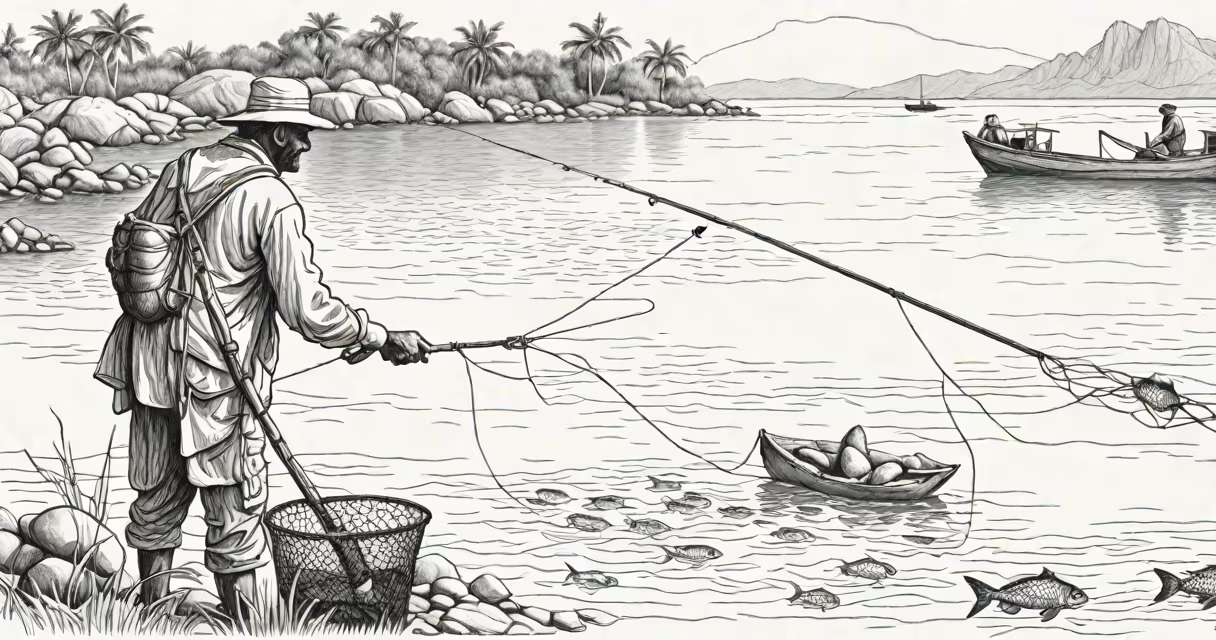
A sustainable fishery maintains fish populations at healthy levels while preserving marine ecosystems and supporting long-term economic benefits for fishing communities. It ensures species aren't overharvested and habitats remain intact.
Sustainable fishery relies on science-based catch limits, monitoring of fish stocks, and regulations that prevent overfishing. It balances ecological health with human needs, ensuring fish remain available for future generations.
The Food and Agriculture Organization of the United Nations (FAO) defines sustainable fisheries as those that "maintain or improve the long-term productivity of fishery resources." This includes protecting spawning grounds, reducing bycatch, and managing fishing effort to match system capacity.
Management begins with assessing fish population size and growth rate. Scientists use data from trawl surveys, satellite tracking, and catch records to estimate stock status. If a species is declining, harvest limits are reduced or closed seasons are imposed.
Fisheries set Total Allowable Catch (TAC) values based on these assessments. For example, the Atlantic cod population off New England was overfished in the 1990s. After implementing strict TACs and seasonal closures, biomass rebounded by 2020, according to NOAA's National Marine Fisheries Service.
Effective monitoring uses onboard observers, electronic monitoring systems, and logbooks. In Alaska, all commercial fishing vessels must report catches in real time via mandatory Vessel Monitoring Systems (VMS). This transparency reduces illegal, unreported, and unregulated (IUU) fishing.
Sustainable fisheries depend on four core elements: accurate stock assessment, enforceable quotas, habitat protection, and adaptive management. These components work together to prevent collapse and allow recovery.
Types of sustainable practices include:
| Practice | Description | Example |
|---|---|---|
| Size-selective gear | Allows juvenile fish to escape, preserving reproduction potential | Alaska pollock trawlers use nets with larger mesh sizes |
| Seasonal closures | Protects fish during spawning periods | California halibut season closes in winter to protect breeding adults |
| Marine protected areas (MPAs) | Designated zones where fishing is restricted or banned | Chagos Archipelago MPA in the Indian Ocean bans industrial fishing |
| Bycatch reduction devices (BRDs) | Hardware that lets non-target species escape nets | Shrimp trawlers in the Gulf of Mexico use TEDs (Turtle Excluder Devices) |
One non-obvious fact: sustainability isn't just about catching fewer fish-it's about catching the right ones. A fishery can reduce total catch by 30% yet still be unsustainable if it disproportionately removes large, old females critical to reproduction. The International Council for the Exploration of the Sea (ICES) warns that removing mature individuals disrupts population resilience, even if numbers appear stable.
Many assume "sustainable" means "wild-caught" or "organic." But wild doesn't equal sustainable. Overfished species like bluefin tuna or Atlantic salmon are often labeled "natural" or "free-range," but their harvest exceeds system capacity.
Another confusion: aquaculture is not automatically sustainable. While fish farming can reduce pressure on wild stocks, poorly managed farms cause pollution, disease spread, and habitat destruction. For example, shrimp farming in Southeast Asia led to mangrove deforestation, which degraded coastal protection and carbon storage.
True sustainability requires lifecycle analysis. The Marine Stewardship Council (MSC) certifies fisheries based on three criteria: healthy fish stocks, minimal environmental impact, and effective management. As of 2023, only 18% of global fisheries met MSC standards, according to their annual report.
In 2019, I visited a small-scale fishery in Maine that transitioned from gillnetting to hook-and-line methods for cod. The change reduced bycatch by 60% and improved market value due to cleaner, higher-quality fillets. The fishers reported better yields over time because they weren't depleting juvenile stocks.
One fully worked example: the Alaskan sockeye salmon fishery. Since 1999, it has maintained a consistent catch of around 10 million fish annually. Managers use escapement goals-ensuring at least 40% of spawning adults return to rivers. This balance allows the population to replenish itself. The fishery holds MSC certification and supports over 10,000 jobs in rural communities.
When evaluating a fishery, ask: Is the catch below the maximum sustainable yield (MSY)? Are juveniles protected? Is bycatch minimized? Answers to these questions determine whether a fishery meets the standard.
Sustainable fishery is not a single action-it's a system of decisions rooted in science, ethics, and long-term planning. It protects oceans, livelihoods, and food security.