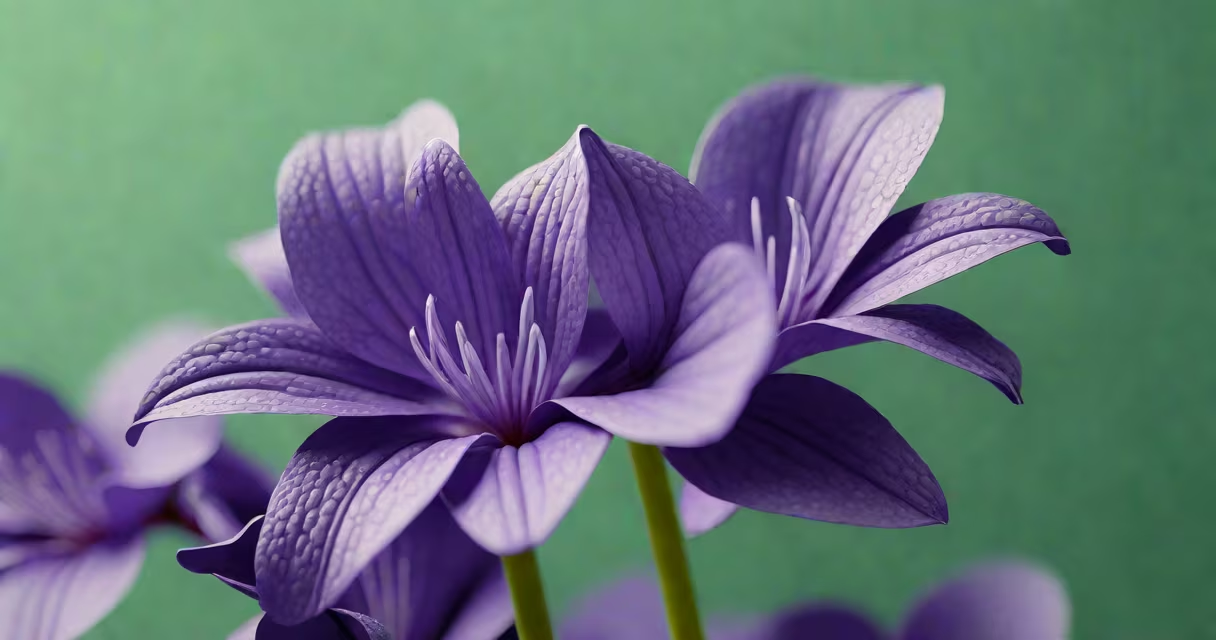
The violet is a flower that symbolizes loyalty, rooted in classical mythology and religious tradition. Its small, fragrant blooms carry enduring associations with faithfulness, devotion, and quiet constancy.
Violets have long been linked to steadfastness in relationships. In ancient Greece, they were associated with modesty and humility-traits often seen as foundations of loyal character. The Roman poet Virgil wrote of violets in his pastoral poetry, using them to represent unspoken affection and lasting commitment. By the Middle Ages, violets appeared in Christian art and literature as symbols of Christ's humility and divine love, reinforcing their connection to enduring loyalty.
During the Victorian era, the language of flowers-floriography-assigned specific meanings to blossoms. Violets were explicitly coded as signs of faithfulness and sincerity. A single violet tucked into a bouquet or worn as a pin signaled deep loyalty, especially in romantic or familial contexts. This practice persists today: giving a violet to someone you trust implicitly remains a meaningful gesture.
The violet's symbolism stems from both appearance and cultural narrative. Its deep purple hue evokes dignity and quiet strength. Unlike showy blooms, violets grow low to the ground, often hidden in grass-a metaphor for loyalty that doesn't seek attention. Their scent is subtle, not overpowering, reflecting loyalty that is consistent rather than performative.
Botanically, violets belong to the genus *Viola*. Over 500 species exist worldwide, including woodland varieties like *Viola odorata* (sweet violet), which has been cultivated since the 16th century. These plants thrive in shaded, moist environments-conditions that mirror loyalty's preference for steady, enduring settings over dramatic displays.
A notable example is the use of violets in royal symbolism. Queen Victoria reportedly wore violets during her mourning period for Prince Albert. Her choice was not random-violets represented unwavering fidelity. This act elevated the flower's status in British culture, where it became a private emblem of enduring love and loyalty among the elite.
While the violet is most closely tied to loyalty, several other flowers share similar symbolic weight. The table below outlines key species and their cultural associations:
| Flower | Color | Primary Symbolism | Cultural Origin |
|---|---|---|---|
| Violet | Purple, blue, white | Loyalty, faithfulness, humility | Greek, Christian, Victorian |
| Red Rose | Deep red | Love, devotion, passionate loyalty | Medieval Europe, Persian tradition |
| White Lily | White | Purity, enduring commitment | Christian, Ancient Egyptian |
| Orchid (specific types) | Pink, white, lavender | Enduring affection, rare loyalty | East Asian, European horticulture |
Each flower reflects a different expression of loyalty. Violets emphasize quiet, consistent devotion. Red roses convey passionate, intense loyalty. White lilies suggest moral loyalty through purity. Orchids, while less common, represent loyalty that endures despite rarity or difficulty.
Many assume that red roses are the universal symbol of loyalty. While they do represent deep romantic devotion, their association with passion overshadows their role in long-term commitment. The rose's historical use in courtship rituals-such as in Shakespeare's plays-focuses on desire, not reliability.
Another misconception is that loyalty flowers must be bold or colorful. In reality, the most enduring symbols often favor subtlety. The violet's small size and understated beauty reflect a loyalty that doesn't demand recognition. As noted in *The Language of Flowers* by Kate Greenaway (1884), "The smallest bloom may hold the greatest promise."
A lesser-known fact: violets were historically used in perfumes and medicinal preparations. Their essential oil was believed to calm anxiety and promote emotional stability-traits aligned with loyal behavior. This practical use reinforced their symbolic role in emotional support systems.
In 2018, a couple in Portland, Oregon, chose violets as the central floral element in their wedding vows. They selected *Viola odorata* for its scent and deep purple petals. The groom, a veteran, said he wanted a flower that represented "quiet service and lasting promise." He had worn a violet buttonhole during his deployment, a personal token of loyalty to his wife.
The florist arranged the bouquet with six violets-symbolizing the six years they had been engaged-and added a single sprig of ivy, another plant traditionally linked to fidelity. The ceremony included a reading from the Book of Ruth, where loyalty is central: "Where you go, I will go..." The guests later reported that the violets' fragrance lingered in the air long after the event ended.
This example shows how the violet functions beyond myth-it becomes a lived symbol. Its use in personal rituals confirms its ongoing relevance in expressing loyalty.
When considering what flower symbolizes loyalty, the violet stands out due to its layered history, botanical resilience, and cultural consistency. Its meaning is not derived from fashion but from centuries of human experience with fidelity, silence, and quiet endurance.