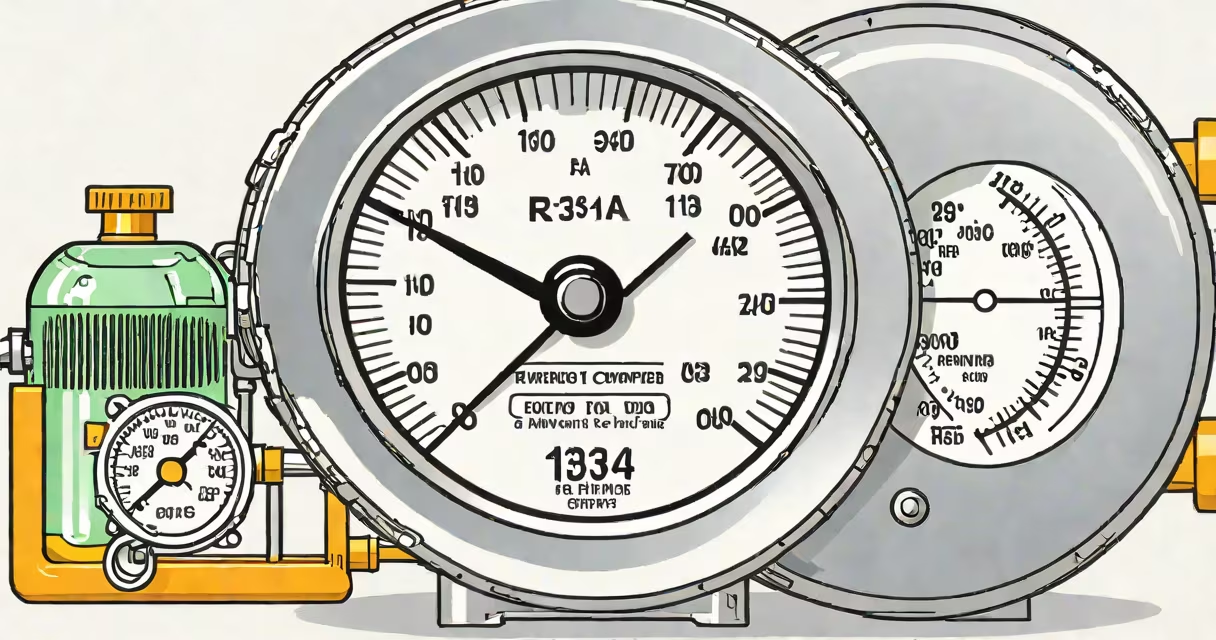
R-134a, or 1,1,1,2-tetrafluoroethane, is a synthetic hydrofluorocarbon (HFC) refrigerant widely used in automotive air conditioning systems and commercial refrigeration. It replaced R-12 due to environmental concerns and offers better ozone compatibility while maintaining effective cooling performance.
R-134a operates at moderate pressures and temperatures, making it suitable for use in sealed systems under controlled conditions. Its boiling point at atmospheric pressure is −26°C (−15°F), allowing it to absorb heat efficiently during phase change from liquid to vapor. This property enables rapid cooling in vehicles and HVAC units.
The refrigerant is colorless, odorless, and non-flammable under normal operating conditions. It is stored as a compressed liquid in steel cylinders and requires specialized handling equipment due to its pressurized state. Proper recovery and recycling procedures are required by U.S. Environmental Protection Agency (EPA) regulations to prevent atmospheric release.
R-134a functions through a closed-loop cycle involving compression, condensation, expansion, and evaporation. In an automotive AC system, the refrigerant enters the compressor as a low-pressure gas, gets compressed into a high-pressure vapor, then flows into the condenser where it releases heat and liquefies.
After passing through an expansion valve, the liquid refrigerant expands rapidly, drops in temperature, and enters the evaporator coil inside the cabin. As it absorbs heat from the surrounding air, it turns back into a gas. The cycle repeats continuously as long as the system is powered.
A typical car AC system using R-134a maintains a low-side pressure between 25 and 45 psi and a high-side pressure between 180 and 250 psi during operation. These values depend on ambient temperature and system load. If high-side pressure exceeds 250 psi, it may indicate a blockage or overcharging.
R-134a has the molecular formula CF₃CH₂F. It contains four fluorine atoms and one hydrogen atom bonded to a two-carbon chain. This structure prevents breakdown by ultraviolet light and reduces reactivity compared to older chlorofluorocarbons (CFCs).
Key physical characteristics include:
According to the EPA's 2021 report on refrigerants, R-134a has no ozone-depleting effect, which was a primary reason for phasing out R-12. However, its high GWP led to regulatory scrutiny. The American Society of Heating, Refrigerating and Air-Conditioning Engineers (ASHRAE) classifies R-134a as a Group 1 refrigerant-non-toxic and non-flammable under standard conditions.
R-134a is standard in most passenger vehicles manufactured between 1994 and 2021. It is also used in:
Automotive systems typically require 1.5 to 2.5 pounds of R-134a depending on vehicle size and model year. A 2018 Ford F-150 with dual-zone climate control uses approximately 2.1 lbs. Overfilling beyond manufacturer specifications increases system pressure and risks compressor failure.
When replacing a failed component such as a condenser or evaporator, technicians must evacuate the system to below 500 microns vacuum before recharging. Failure to do so introduces moisture, which reacts with R-134a to form corrosive hydrofluoric acid (HF), damaging internal components.
R-134a is often mistakenly believed to be completely inert. While it does not burn easily, it can decompose under extreme heat-such as in a fire-to produce toxic gases including phosgene and hydrogen fluoride. Exposure to these compounds causes respiratory distress and eye irritation.
Another misconception is that R-134a can be mixed with other refrigerants. Mixing R-134a with R-12 or R-22 leads to poor heat transfer, reduced efficiency, and potential system damage. The American Society of Mechanical Engineers (ASME) Code for Pressure Vessels prohibits mixing refrigerants unless verified by lab analysis.
I once observed a technician attempt to top off an AC system with R-134a from a can labeled "universal." The system had previously contained R-22. After running the engine, the compressor seized within 15 minutes. Lab testing confirmed cross-contamination and degradation of lubricant oil. The repair cost exceeded $1,200.
While R-134a remains in widespread use, newer alternatives have emerged due to environmental regulations. The table below compares R-134a with current and proposed replacements:
| Refrigerant | GWP (100-year) | Flammability | Compatibility |
|---|---|---|---|
| R-134a | 1,430 | Non-flammable (Group 1) | Standard mineral oil or POE oil |
| R-1234yf | 4 | Low flammability (Group 1A) | Requires POE oil and updated seals |
| R-410A | 2,088 | Non-flammable (Group 1) | POE oil only; not compatible with R-134a systems |
R-1234yf is now mandated in new U.S. vehicles since 2013 under EPA Rule 2015-0001. It offers lower GWP and improved energy efficiency but requires different service tools and training. R-410A is used in residential HVAC systems but cannot be retrofitted into R-134a equipment.
The U.S. EPA mandates that only certified technicians handle R-134a. Technicians must complete EPA Section 608 certification, which includes training on recovery, recycling, and leak detection. Improper disposal violates Clean Air Act provisions and can result in fines up to $37,500 per violation.
Recovery machines must meet ASHRAE Standard 15-2022 requirements for refrigerant containment. The machine must recover at least 90% of the refrigerant during servicing. Any release above 15 grams per year triggers reporting obligations under the Greenhouse Gas Reporting Program.
Understanding R-134a's role in cooling systems ensures safe maintenance and compliance with environmental standards. Always verify refrigerant type before charging and follow manufacturer guidelines precisely.