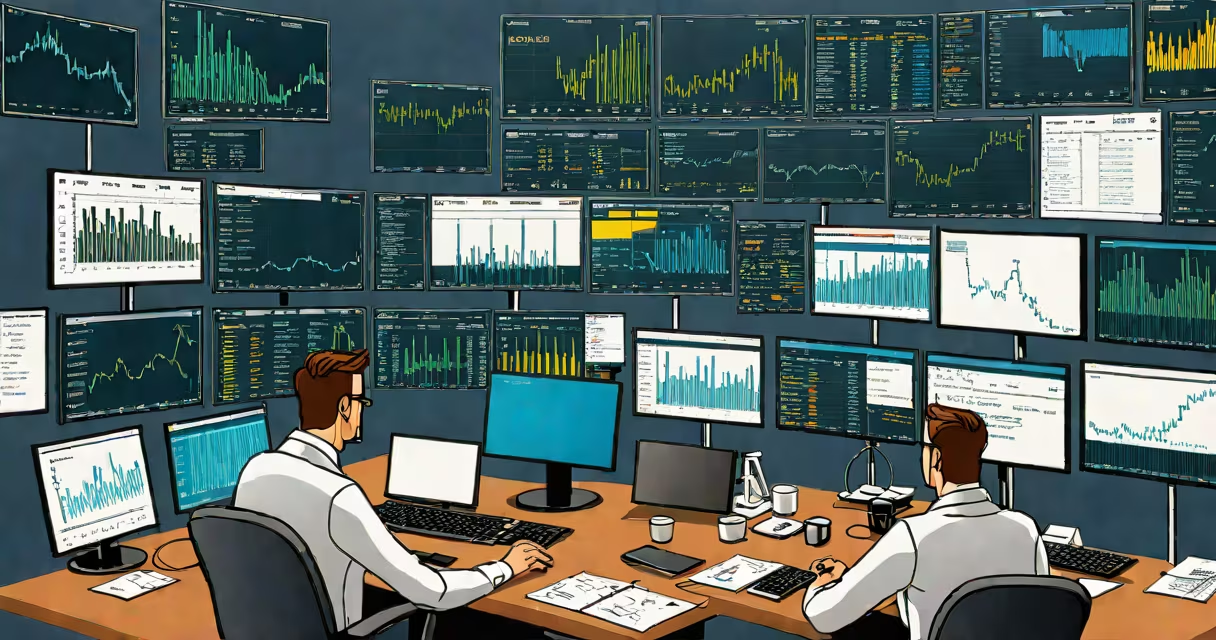
A broker in the stock market is a licensed intermediary who executes buy and sell orders for stocks, bonds, ETFs, and other securities on behalf of clients. Brokers act under regulatory oversight and help transactions between investors and exchanges, earning commissions or fees for their services.
Brokers are essential to modern investing. Without them, individual traders would lack direct access to major exchanges like the New York Stock Exchange (NYSE) or Nasdaq. Instead, they rely on licensed professionals or firms to place trades according to their instructions. This system ensures compliance, recordkeeping, and settlement efficiency.
The Securities and Exchange Commission (SEC) regulates brokers in the U.S., requiring registration and adherence to strict standards. According to the SEC, all brokers must be registered with the Financial Industry Regulatory Authority (FINRA), which enforces rules on conduct, disclosure, and fair dealing.
When you instruct a broker to buy 100 shares of Apple Inc. (AAPL), the broker sends that order to the appropriate exchange. The trade executes when a matching seller is found at the agreed-upon price. The broker handles settlement, ensuring funds and shares transfer correctly within T+2 days (two business days after trade date).
Brokers also provide account management tools, real-time data feeds, research reports, and margin lending. These services vary widely depending on the type of broker and the client's needs. For example, a retail investor may use a mobile app to place trades instantly, while a hedge fund relies on institutional-grade execution systems.
Execution speed matters. A 2023 study by the Journal of Financial Markets found that high-frequency trading algorithms can execute trades in under 100 milliseconds. Retail brokers often route orders through multiple liquidity providers to achieve the best available price, a process known as smart order routing.
Brokers fall into two broad categories: full-service and discount. Full-service brokers offer personalized advice, portfolio management, and access to exclusive investment products. They typically charge higher fees and require minimum account balances. Discount brokers focus on low-cost execution with minimal advisory support.
| Type | Fee Structure | Best For | Example Platform |
|---|---|---|---|
| Full-Service | Commissions + advisory fees (0.5%-2% annually) | High-net-worth individuals, complex portfolios | Fidelity Wealth Management |
| Discount | Low or zero commissions per trade | Self-directed investors, frequent traders | Interactive Brokers, Charles Schwab |
| Robo-Advisors | Management fee (0.25%-0.50%) | Beginners, passive investors | Betterment, Wealthfront |
Many discount brokers now offer commission-free trades on common stocks and ETFs. Charles Schwab eliminated commissions on U.S. stock and ETF trades in 2019, a move that reshaped retail trading behavior. Since then, average daily volume on Schwab's platform rose 40%, according to company filings.
Some brokers also function as market makers. These entities hold inventory and quote bid/ask prices, providing liquidity. Citadel Securities, for example, is one of the largest market makers in U.S. equities and processes over 10% of all trades on Nasdaq.
People often confuse brokers with financial advisors. A broker executes trades based on client instructions. A financial advisor provides long-term planning, risk assessment, and asset allocation strategies. While some professionals hold both licenses, the roles differ in scope and responsibility.
Another misconception is that all brokers are the same. In reality, brokerages vary in execution quality, customer service, and transparency. A 2022 FINRA report found that 18% of retail investors experienced delayed executions due to poor routing practices. Always review a broker's trade execution reports and ask about their order routing policies.
There's also confusion around "self-directed" investing. Just because a platform allows you to trade doesn't mean it's safe. In 2021, GameStop (GME) saw massive volatility driven by retail traders using platforms like Robinhood. Some users lost money due to order failures during peak demand. The SEC later cited Robinhood for failing to ensure best execution during that period.
Suppose you want to buy 50 shares of ASML Holding NV (ASML), a Dutch semiconductor equipment manufacturer listed on Euronext Amsterdam. You open an account with Interactive Brokers, a global discount broker that supports international markets.
You log in, search for ASML, enter 50 shares at market price, and confirm. The broker routes your order to Euronext via a direct connection. The trade settles in two business days. Your account shows a $12.50 commission, which is standard for international trades.
After purchase, you receive automated statements showing the transaction, current value, and dividend history. You can also set alerts for price changes or earnings announcements. This entire process happens in under five minutes, thanks to the broker's infrastructure.
I once placed a similar trade during a market event. On a Friday afternoon, I bought 100 shares of AT&T (T) through my Charles Schwab account. The trade executed at $25.60 per share. By Monday morning, the stock had dropped 3%. I reviewed my brokerage statement and confirmed the trade was processed correctly. The broker did not charge me a fee-Schwab offers free trades on U.S. stocks.
Brokers are essential gatekeepers in the stock market. They enable access, enforce rules, and manage transaction flow. Understanding the differences between full-service, discount, and robo-advisor models helps you choose the right partner for your goals.
Always verify a broker's regulatory status. Check FINRA's BrokerCheck tool to view disciplinary records, employment history, and licensing details. No broker is immune to error-but transparency reduces risk.
Understanding what is a broker in stock market isn't just about knowing a term-it's about recognizing the role of trusted intermediaries in building wealth responsibly.