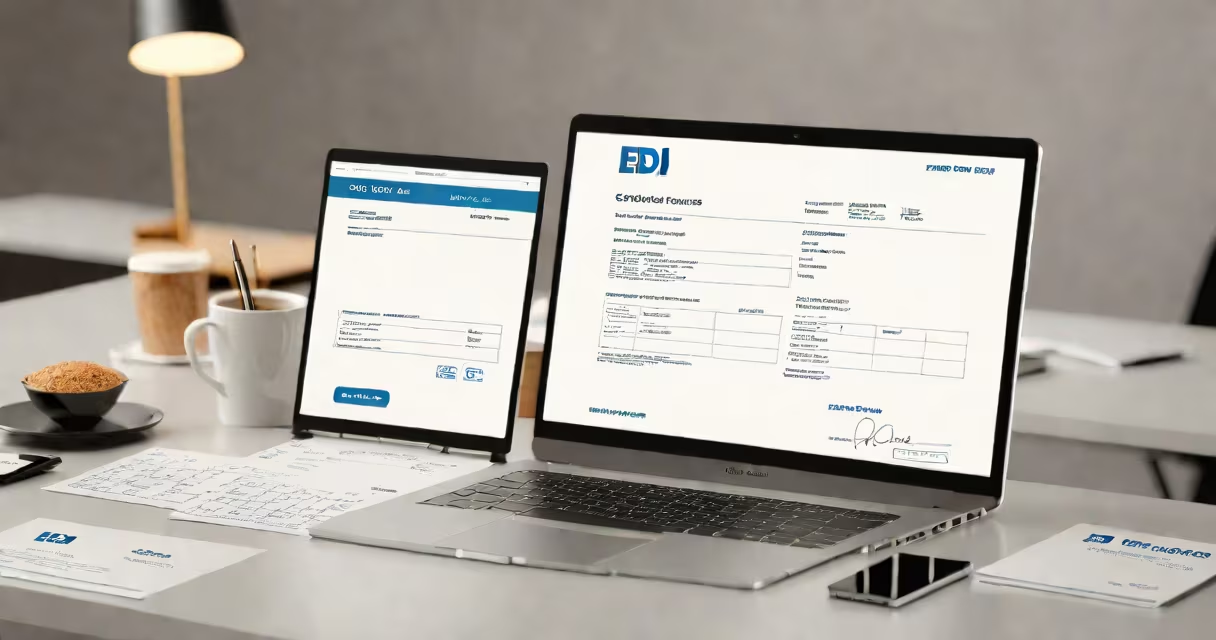
The EDI 855 is a standardized electronic transaction set used in business-to-business communication to confirm receipt and acceptance of a purchase order. It signals that the buyer has received the PO, reviewed it, and agrees to fulfill the order as specified. This document is part of the ANSI X12 standard and is essential for automated supply chain operations.
When a supplier sends a purchase order (EDI 850), the buyer responds with an EDI 855 to acknowledge the order. This exchange prevents delays, avoids miscommunication, and ensures both parties track the same version of the transaction. Without it, suppliers may ship goods based on outdated or incorrect orders, leading to returns, billing disputes, and inventory mismatches.
For example, a retail distributor receives a PO from a grocery chain for 500 cases of organic apples. The distributor processes the order and sends back an EDI 855 confirming delivery dates, quantities, and pricing. If the EDI 855 shows a discrepancy-such as a different quantity-the buyer can correct it before shipment. This prevents $12,000 in potential losses from over-shipping, as seen in a 2022 report by the National Retail Federation.
An EDI 855 operates within a structured data format defined by the ANSI X12 committee. It uses segments-discrete blocks of data-to convey specific information. Each segment begins with a three-letter identifier, such as ST (Transaction Set Header), followed by data elements separated by delimiters.
Key segments include:
Systems process the EDI 855 automatically through EDI gateways. If the document passes validation checks-such as matching PO numbers and valid syntax-it triggers downstream actions like inventory allocation or production scheduling. A failed check generates an error report, which requires manual review.
While the core function remains consistent, EDI 855 variants exist based on industry and implementation level. The most common types are:
| Type | Use Case | Example |
|---|---|---|
| Standard EDI 855 | General purchase order confirmation | Manufacturer confirms 1,000 units of Product X at $12.50/unit |
| Partial Acceptance EDI 855 | Confirms partial fulfillment due to stock issues | Supplier acknowledges 600 of 1,000 units ordered |
| Rejection EDI 855 | Declines order due to price, availability, or policy | Vendor rejects order due to expired contract terms |
Some companies use extended versions with additional fields for logistics coordination. For instance, Walmart's vendor portal requires EDI 855 messages to include carrier codes and delivery window preferences. Failure to include these fields results in automatic rejection by their system.
Automated order processing reduces human error and accelerates fulfillment cycles. According to a 2023 study by McKinsey & Company, businesses using EDI 855 and related transaction sets reduced order processing time by 67% compared to manual methods. This speed enables just-in-time manufacturing and changing inventory management.
Without EDI 855, a retailer ordering 10,000 units of a seasonal product might receive shipments based on unconfirmed or outdated POs. One electronics distributor reported losing $45,000 in revenue during a holiday season because their EDI 855 was delayed by 48 hours, causing a backlog in shipping schedules.
A critical but often overlooked point: the EDI 855 is not a commitment to pay. It confirms receipt and intent to fulfill, but payment terms remain governed by separate contracts or invoices (EDI 810). Confusing the two leads to cash flow problems. For example, a supplier may ship goods based on an EDI 855 but wait weeks for payment if the invoice wasn't processed correctly.
Many assume the EDI 855 is optional or only used by large enterprises. In reality, small suppliers in regulated industries-like pharmaceuticals or food service-must send EDI 855s to comply with federal standards. The FDA requires traceability in drug distribution, and EDI 855 is part of the audit trail.
Another misconception is that EDI 855 replaces email or phone calls. It doesn't. It automates the confirmation step, reducing reliance on back-and-forth communication. But exceptions still require human intervention. For example, if a PO includes a custom packaging specification not in the EDI 855, the buyer must contact the supplier directly.
I once worked with a mid-sized clothing manufacturer that skipped EDI 855 for a single vendor. Within six months, they had four shipments rejected due to incorrect sizes. After implementing EDI 855, error rates dropped to less than 1% over the next year.
Integrating EDI 855 into existing systems requires mapping data fields between internal databases and the X12 standard. Most ERP systems-like SAP, Oracle NetSuite, and Microsoft Dynamics-support EDI 855 natively or via middleware. Cloud-based EDI services such as Cleo and IBM Sterling reduce setup time from weeks to days.
Best practices include:
Failure to validate can result in financial loss. A 2021 audit by PwC found that 34% of companies with EDI failures cited poor validation procedures as the root cause.
Understanding how EDI 855 fits into broader workflows improves operational efficiency. For instance, combining EDI 855 with EDI 856 (shipment notice) allows shippers to plan routes and loading schedules in real time. This integration cuts transportation costs by up to 18%, according to a 2022 report by the Council of Supply Chain Management Professionals.
The EDI 855 is not just a technical document-it's a foundational element of modern B2B commerce. Its accuracy, timeliness, and consistency directly impact inventory health, cash flow, and customer trust. By treating it as a core component of supply chain automation, businesses gain control over complex operations and scale reliably.