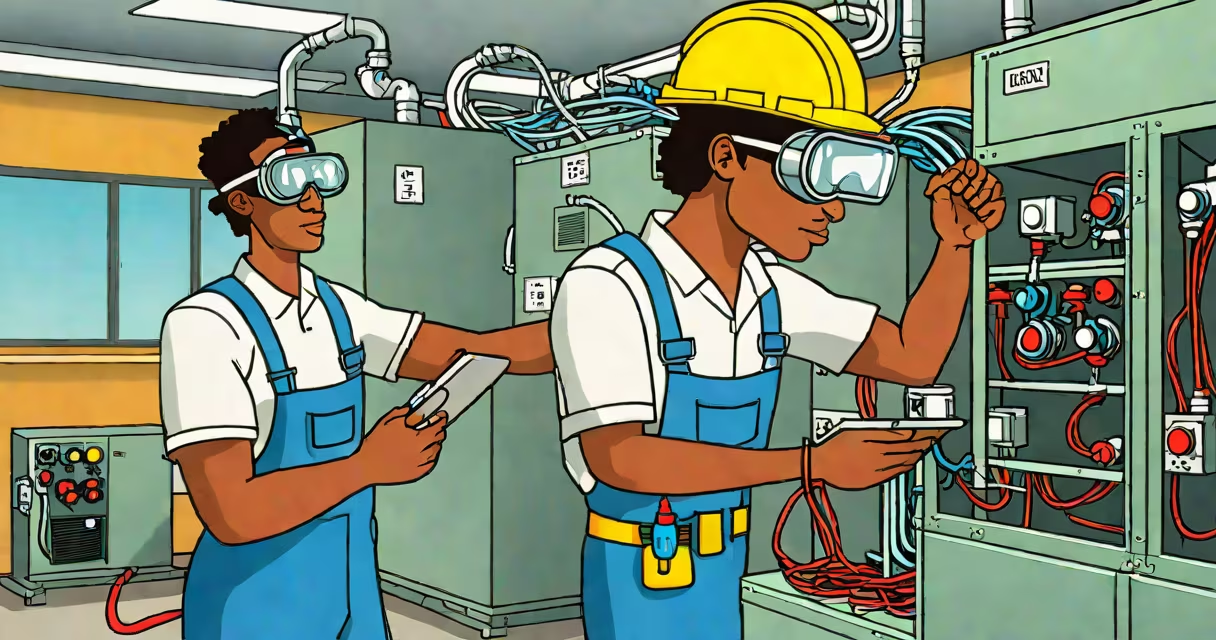
HVAC training is structured education and hands-on instruction that prepares individuals to install, maintain, and repair heating, ventilation, air conditioning, and refrigeration systems. It combines technical theory with practical application, leading to industry-recognized certifications and employment in residential, commercial, and industrial settings.
Training begins with foundational knowledge in thermodynamics, electrical systems, and refrigerants. Students learn how heat moves through materials, how electrical circuits control system components, and which refrigerants meet environmental standards. This core understanding enables technicians to diagnose issues accurately and implement safe, efficient solutions.
Programs typically last between six months and two years, depending on whether they lead to a certificate or associate degree. Many include internships or apprenticeships with licensed contractors, offering real-world experience under supervision. Completion leads to credentials recognized by employers and regulatory bodies.
Most HVAC training follows a blend of classroom learning and lab-based practice. Instructors use schematics, diagnostic tools, and actual equipment to simulate common problems. Students learn to read blueprints, interpret pressure gauges, and troubleshoot control boards using multimeters.
For example, a typical lab session might involve diagnosing a system that fails to cool. Trainees measure refrigerant pressure, check for airflow obstructions, inspect compressor function, and verify thermostat signals. They document findings and propose repairs based on manufacturer specifications and safety codes.
Training environments replicate real job conditions. A student might spend two hours replacing a faulty expansion valve in a split-system AC unit, following EPA Section 608 certification procedures. This repetition builds muscle memory and confidence in handling complex tasks under time constraints.
Training options vary by duration, focus, and credential level. The table below outlines common pathways:
| Program Type | Duration | Credential | Focus Areas |
|---|---|---|---|
| Certificate program | 6-12 months | Industry-recognized certificate | Basic installation, maintenance, and troubleshooting |
| Associate degree | 2 years | AS in HVAC Technology | Electrical systems, advanced diagnostics, blueprint reading |
| Apprenticeship | 4 years | State-licensed journeyman status | On-site work, mentorship, code compliance |
| Online hybrid | Flexible (self-paced) | Continuing education units (CEUs) | Refresher courses, specialty topics like geothermal systems |
Certificate programs often serve as entry points for those seeking quick employment. Associate degrees provide deeper technical grounding and better long-term advancement potential. Apprenticeships combine paid work with formal study, allowing trainees to earn while they learn.
Non-obvious fact: Not all HVAC schools offer EPA Section 608 certification prep. The Environmental Protection Agency requires technicians who handle refrigerants to pass a written exam covering safety, recovery methods, and environmental impact. Programs that include this training reduce job readiness time by up to 30%, according to the National Center for Construction Education & Research (NCCER).
HVAC training is essential in construction, facility management, and energy efficiency sectors. Buildings require climate control systems for comfort, health, and operational continuity. Technicians ensure systems run efficiently, reducing energy waste and preventing costly breakdowns during peak seasons.
Commercial buildings such as hospitals and data centers rely on precise temperature and humidity control. A single HVAC failure can disrupt sensitive operations. For example, a server room cooling system malfunction in 2022 caused a 12-hour outage at a regional healthcare provider, costing $450,000 in lost services and patient care delays. Trained HVAC professionals prevent such incidents through routine inspections and proactive maintenance.
Many employers require proof of training before hiring. The U.S. Bureau of Labor Statistics reports that 78% of HVAC technicians hold formal credentials, with higher pay and greater job stability compared to untrained workers. Certification also qualifies individuals for government-backed energy retrofit programs, such as those funded by the Inflation Reduction Act.
People often confuse HVAC training with general mechanical or electrical work. While overlap exists, HVAC systems have unique requirements. Refrigerant handling, for instance, involves strict federal regulations. Technicians must complete EPA Section 608 certification to legally service systems containing regulated refrigerants.
Another misconception is that HVAC training is only for high school graduates. Community colleges and trade schools accept applicants with GEDs or equivalent qualifications. Some programs even offer remedial math and science courses to prepare students for technical coursework.
Firsthand observation: During a visit to a vocational center in Phoenix, Arizona, I watched a class of 16 students complete a simulated emergency shutdown sequence involving a refrigerant leak. The instructor emphasized proper PPE use, isolation of the affected zone, and reporting protocols. One student failed to secure the isolation valve correctly-resulting in a simulated release. The error was caught during peer review, reinforcing the value of structured training in error prevention.
When comparing HVAC training to IT training sites, the difference lies in delivery and outcome. While both fields require technical skills, HVAC training emphasizes physical dexterity, tool proficiency, and site-specific problem solving. IT training sites focus on software, networking, and cybersecurity frameworks. The two domains share minimal overlap in required competencies.
Understanding what is HVAC training clarifies its role as a gateway to a stable, in-demand career. With over 100,000 job openings projected annually through 2030, according to the U.S. Department of Labor, trained technicians remain important to infrastructure resilience and energy efficiency goals.