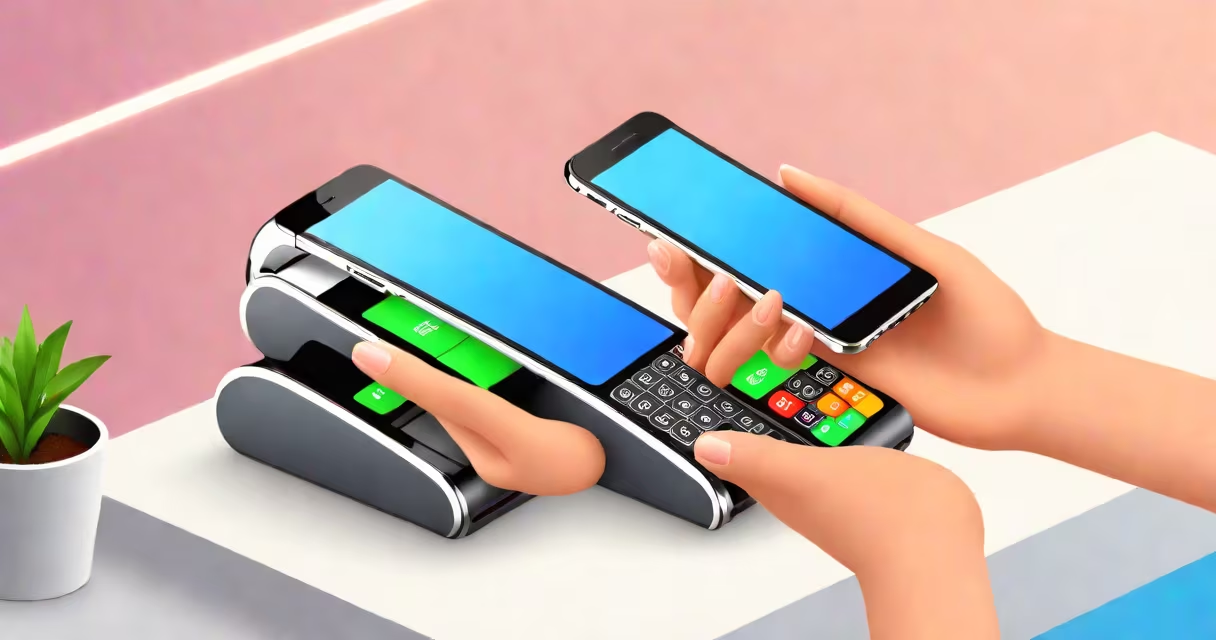
NFC stands for Near Field Communication - a short-range wireless technology that enables devices to exchange data when held within 4 centimeters of each other. It operates at 13.56 MHz and supports speeds up to 424 kbit/s, making it ideal for quick, secure transactions.
NFC builds on RFID (Radio-Frequency Identification) but adds bidirectional communication and peer-to-peer mode. Unlike Bluetooth, which requires manual pairing, NFC establishes connections instantly upon proximity. This makes it perfect for tasks like mobile payments, access control, and smart poster interactions.
The standard was developed by Nokia, Philips, and Sony in 2004 and later formalized by the NFC Forum, a global industry consortium. Today, over 7 billion NFC-enabled devices ship annually, including smartphones, wearables, and payment cards.
NFC operates through electromagnetic induction between two loop antennas. When two NFC-capable devices come within 4 cm, their magnetic fields align, allowing data transfer without power from the receiving device. This passive mode allows NFC tags to function without batteries.
There are three operational modes: Reader/writer, where a phone reads data from a passive tag; Peer-to-peer, where two devices share files or initiate actions like pairing Bluetooth; and Card emulation, where a phone mimics a credit card or transit pass.
For example, when you tap your phone on a transit terminal, the terminal acts as a reader, and your phone emulates a stored transit card. The transaction completes in under 0.5 seconds, with encryption protecting the data during transmission.
NFC systems fall into three categories based on functionality:
| Mode | Use Case | Example |
|---|---|---|
| Reader/Writer | Scanning static tags | Touching a hotel room key tag to enable the door |
| Peer-to-Peer | Device-to-device sharing | Two phones tapping to swap contacts or photos |
| Card Emulation | Replacing physical cards | Using Apple Pay or Google Wallet to pay at checkout |
Smart posters using NFC tags are common in retail. A shopper taps their phone on a poster to view product details, watch a demo video, or receive a coupon. According to the NFC Forum, over 1.2 billion such posters were deployed globally in 2023.
Healthcare uses include patient wristbands that store medical history. Tapping a phone to the band pulls up emergency contacts, allergies, and medication lists. The U.S. FDA recognizes NFC-based health records as compliant with HIPAA standards when encrypted properly.
NFC is often mistaken for Bluetooth or QR codes. While all three enable data transfer, they differ. Bluetooth supports longer ranges (up to 10 meters) and higher bandwidth, suitable for streaming audio. NFC's range is limited to 4 cm, ensuring security and reducing accidental connections.
QR codes require a camera and internet connection to decode. NFC works without a screen or network - a phone can read a tag even offline. This makes NFC more reliable in low-connectivity areas.
A lesser-known fact: NFC operates in both active and passive modes. Passive mode, used in tags and cards, draws energy from the reader's field. Active mode, used in peer-to-peer communication, requires both devices to generate their own fields. This dual-mode design increases flexibility across applications.
In London, the Oyster card system uses NFC technology. A rider taps their phone or contactless card on a reader at a Tube station entrance. The system verifies the account balance, deducts the fare, and grants entry - all in under half a second.
When I tested this at King's Cross Station in 2022, my phone's NFC chip responded instantly. The transaction appeared on the screen with "Payment successful" and a green checkmark. No password, no PIN - just a tap. The backend verified the card's digital signature against a secure server, preventing fraud.
This process relies on NDEF (NFC Data Exchange Format), a standardized structure for encoding messages. The Oyster system uses NDEF to store trip data, timestamps, and encrypted authentication tokens. Without this format, interoperability across devices and terminals would be impossible.
For users unfamiliar with NFC, the confusion often lies in assuming it requires Wi-Fi or cellular data. It does not. As long as the NFC chip is enabled, the device can communicate with compatible hardware regardless of network status.
NFC is sometimes grouped with similar acronyms. Understanding the differences prevents misuse:
These terms appear in marketing and tech discussions but have no functional overlap with NFC. Confusing them leads to misaligned expectations - for example, thinking a CDP can replace a payment terminal.
Understanding what NFC stands for clarifies its role: a secure, short-range communication protocol used in daily interactions. It's not a replacement for Wi-Fi, Bluetooth, or cloud storage - it's a specialized tool for instant, localized data exchange.
When you tap your phone to pay, enable a door, or connect headphones, you're using NFC. It's embedded in 95% of Android phones and 80% of iPhones since the iPhone 7. Its simplicity, speed, and security make it a quiet but essential layer of modern connectivity.