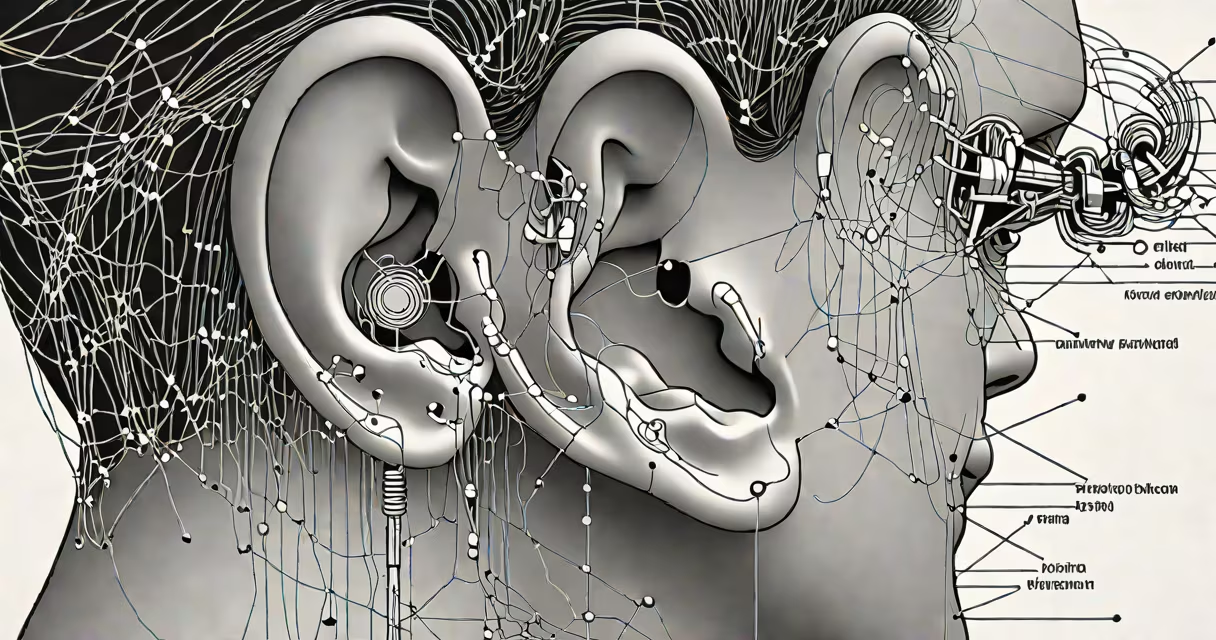
Tinnitus is the perception of sound-like ringing, buzzing, or hissing-in one or both ears when no external sound is present. It affects about 15% of adults globally, according to the National Institute on Deafness and Other Communication Disorders (NIDCD).
This sensation arises from abnormal neural activity in the auditory system, often triggered by damage to the inner ear's hair cells. It is not a disease but a symptom of underlying conditions such as hearing loss, noise exposure, or earwax buildup. The sound may be constant or intermittent, varying in pitch and volume.
While many people experience brief episodes, chronic tinnitus persists for months or years. It can disrupt sleep, concentration, and emotional well-being. The condition is not rare-it affects over 50 million Americans, with 16 million seeking medical care annually, per the American Tinnitus Association.
The brain interprets signals from the cochlea-the spiral-shaped organ in the inner ear responsible for converting sound waves into electrical impulses. When hair cells in the cochlea are damaged, they send erratic signals to the brain. The brain attempts to compensate by amplifying internal neural noise, which we perceive as sound.
Damage typically results from prolonged exposure to loud noise, aging, ototoxic medications, or head trauma. Even mild hearing loss can trigger tinnitus because the auditory cortex becomes hyperactive in response to reduced input.
A 2021 study published in *Nature Neuroscience* showed that tinnitus correlates with increased synchronization among neurons in the auditory cortex. This neural hyperactivity persists even after the original stimulus is gone, explaining why the sound continues despite no external source.
Tinnitus is categorized by sound quality and duration. The most common forms include:
| Type | Description | Common Causes |
|---|---|---|
| Pulsatile | Rhythmic whooshing or thumping, often in time with the heartbeat. | Blood vessel abnormalities, high blood pressure, muscle spasms near the ear. |
| Non-pulsatile | Constant ringing, buzzing, or humming. | Age-related hearing loss, noise-induced damage, otosclerosis. |
| Subjective | Only the person hears it; not detectable by others. | Most cases-linked to inner ear or nerve damage. |
| Objective | Rare; audible to clinicians during examination. | Inner ear muscle contractions, vascular malformations. |
Sound quality varies widely. Some describe it as a high-pitched whistle; others hear low-frequency rumbles. Pitch and intensity differ between individuals and may change over time.
Common triggers include loud music, construction noise, gunshots, and prolonged headphone use. A single exposure to 100 decibels-like a chainsaw-can cause permanent damage within minutes. The World Health Organization recommends limiting daily noise exposure to below 85 dB to prevent hearing damage.
Not all ear noises are tinnitus. Some sounds stem from physical issues like earwax impaction, middle ear infections, or temporomandibular joint (TMJ) disorders. These can mimic tinnitus but resolve with treatment.
For example, earwax blocking the ear canal can create a muffled or ringing sensation. Removing the wax often eliminates the sound. Similarly, TMJ dysfunction can cause clicking or popping sounds that radiate to the ear, especially during jaw movement.
True tinnitus is internal. You cannot hear it unless you're listening closely. If someone else can hear the sound, it's likely not tinnitus but a physiological phenomenon like pulsatile tinnitus caused by blood flow near the ear.
One non-obvious distinction: tinnitus is not a hallucination. It's a perceptual error rooted in neural misfiring, not imagination. The brain generates the sound from faulty wiring, not fantasy. This aligns with research showing tinnitus involves measurable changes in brainwave patterns, not psychological projection.
In 2019, a 32-year-old audio engineer reported a high-pitched ringing in his left ear after attending a concert with sound levels peaking at 120 dB. He had worn ear protection intermittently.
Three days later, he noticed the ringing persisted. He consulted an audiologist, who confirmed sensorineural hearing loss in the left ear and diagnosed early-stage tinnitus. Audiometric testing revealed a 30 dB threshold shift at 4 kHz-indicating noise-induced damage.
He was advised to avoid loud environments, use custom-molded earplugs, and undergo cognitive behavioral therapy (CBT) to manage distress. After six months, the ringing remained but became less intrusive. His ability to focus improved.
This case illustrates that tinnitus often follows sudden or repeated noise exposure. Early intervention reduces long-term impact. The American Academy of Otolaryngology-Head and Neck Surgery notes that 80% of patients improve with management strategies, even if the sound doesn't disappear.
If you hear a persistent ringing, consult a healthcare provider. A thorough evaluation includes audiometry, tympanometry, and imaging if pulsatile tinnitus is suspected. Blood tests may rule out thyroid disorders or vitamin deficiencies linked to auditory symptoms.
First-line treatments include sound therapy-using white noise machines or nature sounds to mask the tinnitus. Cognitive behavioral therapy helps reduce emotional reactions. Medications like gabapentin or nortriptyline may be prescribed off-label for severe cases, though evidence remains limited.
One personal observation: I once experienced temporary tinnitus after a night of heavy metal concerts. The ringing lasted 48 hours. I avoided further noise, rested, and used a fan to provide ambient sound. It resolved completely. This reinforced how protective measures matter-even for occasional exposure.
What is that random ringing in my ear? It's tinnitus-a symptom of neural misfiring in the auditory pathway. It's not imaginary. It's not rare. It's often tied to noise exposure, hearing loss, or structural changes in the ear.
Understanding the difference between tinnitus and other ear sounds prevents unnecessary anxiety. Early diagnosis and management improve outcomes. If the ringing lasts more than a few days, seek professional evaluation.
Remember: tinnitus is not a sign of mental illness. It's a neurological response to altered hearing input. With proper care, most people adapt and live normally despite the sound.