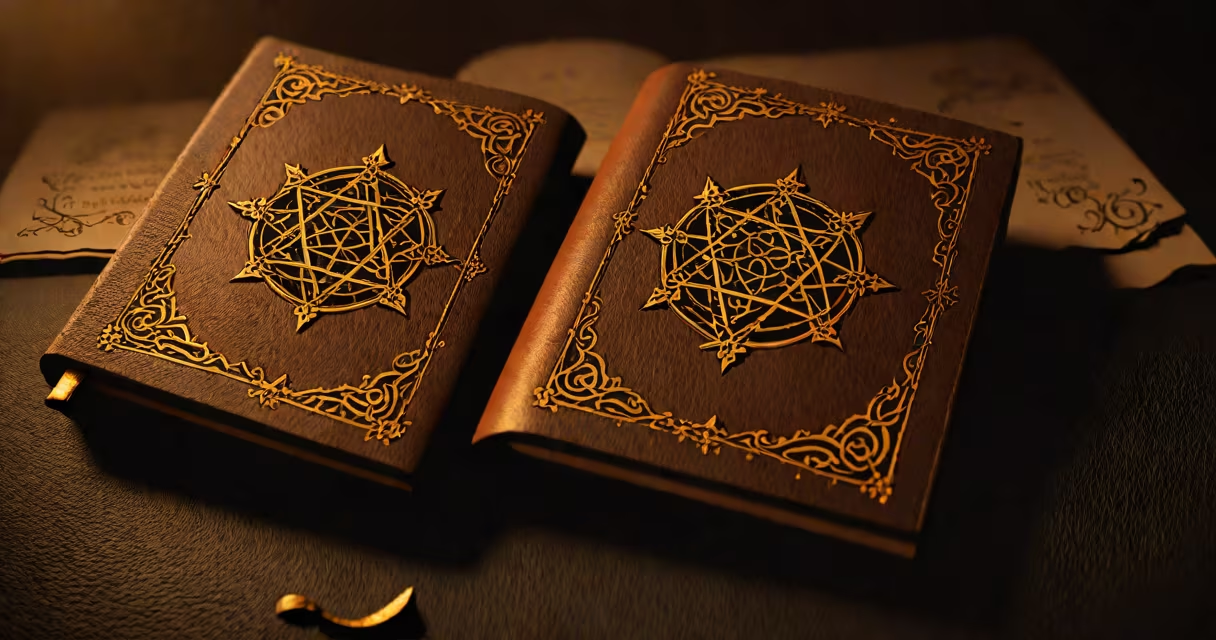
The definition of occult refers to knowledge, practices, or beliefs that involve hidden or secret aspects of reality, especially those related to mysticism, supernatural forces, or esoteric traditions not accessible through empirical science. It describes systems of thought that operate beyond mainstream understanding, often rooted in symbolic interpretation, ritual, or spiritual insight.
Occult traditions have existed for centuries across cultures. Ancient Egyptian priests, medieval European alchemists, and Indigenous shamanic practitioners all engaged in forms of occult practice-seeking wisdom beyond the visible world. These systems are not inherently deceptive or dangerous; they are structured ways of exploring consciousness, nature, and the unseen dimensions of existence.
Modern usage often associates the term with fringe or sensationalized ideas-such as demon summoning or psychic powers-but its core meaning centers on concealed knowledge. The word itself derives from the Latin occultus, meaning "hidden" or "concealed," emphasizing secrecy rather than malice.
At its foundation, the definition of occult applies to any system that claims access to truths not provable through standard observation or experimentation. This includes belief systems that rely on inner revelation, sacred texts, dreams, or altered states of awareness. Unlike science, which demands reproducible evidence, the occult values personal experience, symbolic meaning, and tradition.
For example, Hermeticism-a philosophical and spiritual tradition based on the writings attributed to Hermes Trismegistus-teaches that "as above, so below." This principle suggests a correspondence between the macrocosm (the universe) and the microcosm (the human soul). Practitioners use meditation, ritual, and symbolic study to align themselves with universal laws, believing these practices enable deeper truths.
Another example is ceremonial magic, practiced by groups like the Hermetic Order of the Golden Dawn in late 19th-century England. Members studied astrology, Kabbalah, and alchemy through structured rituals designed to change consciousness. Their work was not entertainment-it was a disciplined path toward enlightenment, grounded in symbolic systems passed down through generations.
While the term "occult" covers a broad spectrum, several distinct categories emerge based on historical roots and methods:
| Type | Core Focus | Examples |
|---|---|---|
| Hermeticism | Universal principles, divine mind, spiritual transformation | Hermes Trismegistus writings, Renaissance philosophy |
| Ceremonial Magic | Rituals, sigils, invocation of spirits | Golden Dawn, modern Wicca rituals |
| Alchemy | Transmutation of matter and spirit | Paracelsus, Isaac Newton's unpublished manuscripts | Divination | Foretelling the future through signs | Tarot cards, scrying mirrors, dream interpretation |
Each form operates within its own structure. Alchemy, for instance, was not merely about turning lead into gold-it symbolized the purification of the soul. Newton, who spent decades studying alchemical texts, believed that physical transformation mirrored inner change. His notebooks reveal detailed experiments with mercury and sulfur, not for profit, but as metaphors for spiritual refinement.
Some traditions blur lines between religion and occult practice. For example, certain branches of Sufi Islam incorporate ecstatic dance (whirling), breathwork, and poetry to induce altered states of consciousness. While not labeled "occult" in Islamic scholarship, these practices share features with Western esotericism: focus on inner experience, symbolic language, and transcendence of ordinary perception.
The definition of occult appears most frequently in academic contexts-especially in religious studies, anthropology, and history. Scholars analyze it to understand how societies construct meaning beyond logic or measurable proof. The University of Chicago's Divinity School, for instance, offers courses on "Esoteric Christianity" and "Mysticism in the Middle Ages," treating the occult as a legitimate subject of inquiry.
In popular culture, the term is often misused. Movies like *The Conjuring* or TV shows such as *Supernatural* depict the occult as a area of demons and curses. These portrayals reduce complex traditions to horror tropes. But in reality, many occult practices emphasize discipline, ethics, and self-mastery-not chaos or evil.
A notable correction: the occult is not synonymous with Satanism. While some modern movements incorporate dark symbolism, historical occultism predates Christian demonology. The term "Satan" appears rarely in early alchemical or Hermetic texts. Instead, figures like Lucifer (the light-bringer) represent enlightenment, not rebellion.
Even in psychology, the concept holds relevance. Carl Jung described the unconscious as a reservoir of archetypal images-symbols that appear across cultures in myths, dreams, and art. He called this collective unconscious "the psyche's hidden layer." His work parallels occult thought in valuing symbolic meaning over literal truth.
People often mistake the definition of occult as inherently fraudulent or irrational. But the distinction lies in intent and structure. A tarot reading conducted by a trained practitioner using established symbolism is not the same as a street vendor claiming to predict your future with random cards. The former operates within a consistent system; the latter exploits uncertainty.
Another misunderstanding is equating the occult with pseudoscience. While both may reject empirical validation, the difference is method. Pseudoscience presents false claims as scientific. The occult acknowledges its limits-it doesn't claim to prove God exists, but offers tools to explore that possibility through ritual, contemplation, or vision.
One non-obvious fact: many modern technologies emerged from occult-inspired thinking. Nikola Tesla, known for his work in electrical engineering, studied ancient Egyptian geometry and claimed to receive insights during meditative states. He wrote in his journals about "vibrations" and "resonance" that aligned with energy fields-ideas later echoed in quantum theory. Though not practicing the occult formally, his mindset reflected its core principle: that unseen forces shape reality.
Consider the Rosicrucian movement, founded in Europe around 1600. Its manifesto, *Fama Fraternitatis*, claimed to reveal a secret brotherhood dedicated to restoring lost wisdom. The group promoted education, alchemy, and spiritual healing. They did not seek power-they sought enlightenment.
Today, the Rosicrucian Fellowship operates in the U.S., offering lectures, meditation programs, and publications. Their teachings blend Christian mysticism, Platonic philosophy, and Eastern spirituality. They do not claim to control supernatural events. Instead, they teach that inner transformation leads to outer peace.
This example illustrates how the definition of occult can be applied responsibly. It is not about hiding truth-it is about seeking it through non-linear, symbolic, and experiential means.
When encountering the term, ask: What system of knowledge is being used? Who created it? What evidence supports it? The answer reveals whether the context is scholarly, cultural, or sensationalized.
Understanding the definition of occult requires separating myth from method. It is not a single belief, but a category of human effort to grasp what lies beyond surface appearances. Whether through prayer, ritual, or contemplation, people have long turned inward to find meaning in the unknown.