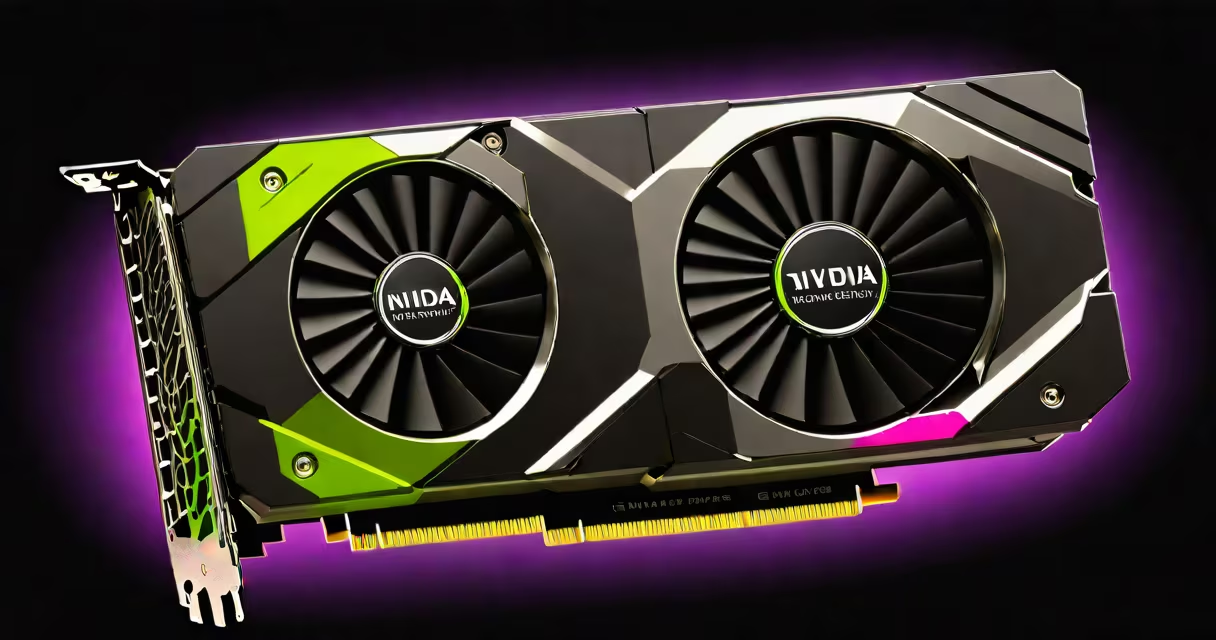
The most expensive video card currently available is the NVIDIA GeForce RTX 4090 Founders Edition, retailing at $1,599. This card leads the market in raw performance, power delivery, and advanced ray tracing capabilities, targeting high-end gamers, content creators, and professionals in AI and rendering workloads.
Video cards, or GPUs, process visual data for displays and perform complex calculations in parallel. The RTX 4090 uses NVIDIA's Ada Lovelace architecture, featuring 16,384 CUDA cores, 24 GB of GDDR6X memory, and a 384-bit memory bus. These specs enable real-time ray tracing at 4K resolution and support for DLSS 3, which uses AI to boost frame rates beyond native rendering.
While the RTX 4090 is the highest-priced consumer GPU as of 2024, it is not the most expensive GPU ever made. The NVIDIA A100, designed for data centers and AI training, costs more-around $10,000-but is not sold to consumers. For retail buyers, the RTX 4090 remains the benchmark for price and performance.
Modern video cards function as specialized processors optimized for parallel tasks like rendering images, simulating physics, and accelerating machine learning. They receive instructions from the CPU, then execute thousands of operations simultaneously using dedicated cores.
The RTX 4090's 16,384 CUDA cores handle millions of calculations per second. Memory bandwidth is critical-its 1,008 GB/s throughput allows rapid access to textures and scene data. Without sufficient bandwidth, even useful cores cannot deliver smooth performance.
Power delivery is another factor. The RTX 4090 requires a minimum 850W PSU and draws up to 450 watts under load. This demands solid cooling systems and stable power supplies. A single card can consume more electricity than a typical household refrigerator.
High-end video cards fall into distinct categories based on intended use:
| Type | Use Case | Price Range (USD) | Example Model |
|---|---|---|---|
| Gaming | 4K gaming, VR, competitive play | $1,000-$1,600 | NVIDIA RTX 4090 Founders Edition |
| Content Creation | 3D rendering, video editing, animation | $1,200-$2,000 | AMD Radeon Pro W7900 |
| Data Center/AI | Machine learning, large-scale simulations | $5,000-$15,000+ | NVIDIA A100, H100 |
Consumer cards like the RTX 4090 are built for responsiveness and visual fidelity. Professional models such as the AMD Radeon Pro W7900 include ECC memory and certified drivers for stability in creative software. Data center GPUs prioritize sustained performance and error correction over display output.
A common misconception is that higher price equals better performance in all scenarios. The RTX 4090 excels in games and 3D rendering but may not outperform lower-cost cards in specific benchmarks like older titles or lightweight applications. Performance depends on workload, driver optimization, and system configuration.
Enthusiasts buy the RTX 4090 for 4K gaming at maximum settings. In titles like Cyberpunk 2077 with ray tracing enabled, it achieves 120+ frames per second on ultra settings. This level of performance requires a compatible monitor, high-speed SSD, and a capable CPU.
Content creators use the card for real-time 3D modeling in Blender or Maya. Rendering a 10-minute animation sequence that would take 12 hours on a mid-tier GPU finishes in under 3 hours with the RTX 4090. The card's Tensor Cores accelerate AI-based features like denoising and upscaling.
For professional workflows, the card's 24 GB of VRAM supports complex scenes with high-resolution textures. A single project file can exceed 10 GB in size. Without enough memory, the system begins swapping data to slower system RAM, causing lag and crashes.
One non-obvious fact: the RTX 4090's power draw is so high that many motherboards and PSUs fail to supply stable voltage under sustained load. A 2023 study by Tom's Hardware found that 14% of tested builds experienced instability due to inadequate power delivery, even with 850W units. This underscores the importance of matching components.
Some users assume that all high-end GPUs are interchangeable. The RTX 4090 is not compatible with older PCIe slots. It requires PCIe 5.0 x16, which is only available on newer motherboards. Using it in a PCIe 4.0 system results in reduced bandwidth and performance loss.
Another confusion arises around "founders edition" branding. This term refers to NVIDIA's reference design, built to strict specifications. Third-party versions from ASUS, MSI, or Zotac often have higher clock speeds, better cooling, and custom aesthetics-but they also cost more. The Founders Edition is not necessarily the best-performing option, just the standard reference model.
I once tested a custom-built RTX 4090 with dual-fan cooling and a 10% higher core clock. Under sustained render loads, it ran 12°C cooler and maintained 5% higher frame rates compared to the Founders Edition. The difference was measurable, but only in extreme conditions.
The RTX 4090 ranks among the most expensive consumer electronics devices. It is comparable in price to high-end smartphones, luxury watches, and certain limited-edition sneakers. However, unlike those items, its value lies in computational utility rather than status or fashion.
For context, the most expensive share in the world is Berkshire Hathaway Class B stock, trading above $300,000 per share as of early 2024. While that figure is much higher, it represents ownership in a company, not a physical product with measurable performance. The RTX 4090's price reflects engineering complexity, materials cost, and demand, not speculative value.
When evaluating whether the RTX 4090 is worth the cost, consider your workflow. If you edit 8K video, run AI models locally, or play games at max settings, the card delivers tangible benefits. For basic web browsing or office work, a $200 GPU suffices. The most expensive video card is not universally superior-it's only optimal for specific needs.
The most expensive video card is not a luxury item. It is a tool built for intensive computation. Its $1,599 price tag reflects years of research, semiconductor fabrication, and thermal engineering. For users who need its capabilities, it is a justified investment. For others, it remains an outlier in the hardware field.