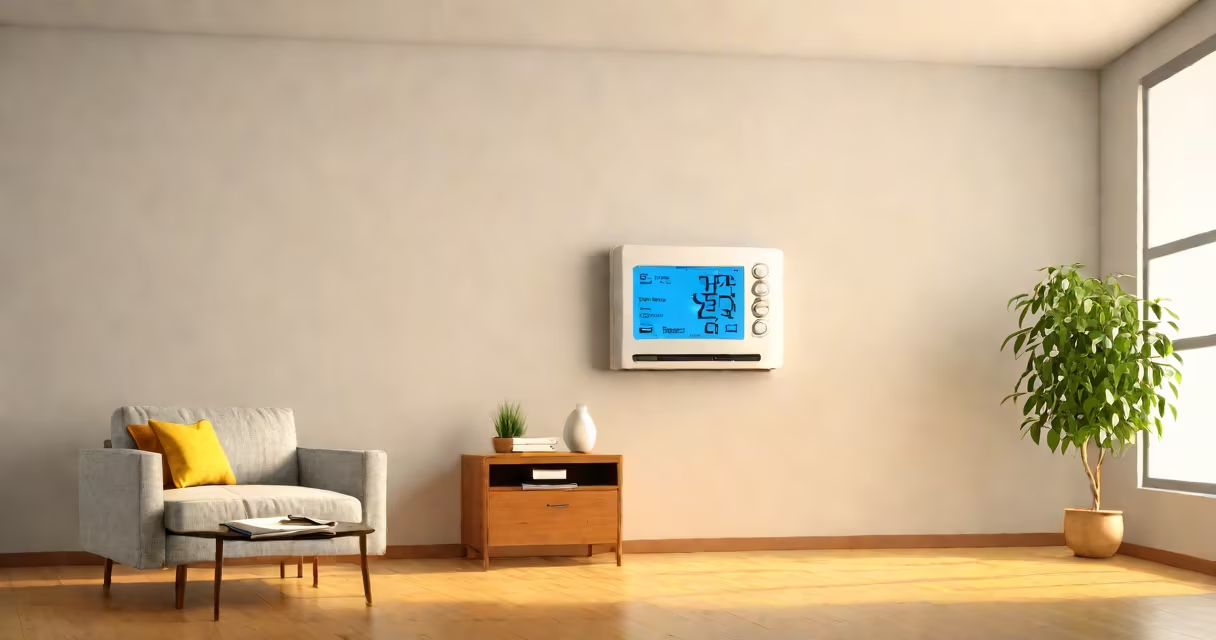
Set your air conditioner to 78°F (25.5°C) during peak cooling hours for optimal balance between comfort, energy efficiency, and cost savings. This temperature aligns with U.S. Department of Energy recommendations and supports typical human thermal comfort thresholds.
The ideal air conditioning setting depends on climate, time of day, and personal tolerance. Most people feel comfortable between 72°F and 78°F (22°C-25.5°C). Setting the thermostat below 72°F increases energy consumption without significant comfort gains. The U.S. Department of Energy states that raising the thermostat by 1°F can reduce cooling costs by up to 3%.
For nighttime use, increasing the temperature to 82°F (28°C) while sleeping is safe and efficient. A 2022 study published in *Energy and Buildings* found that participants reported equal sleep quality at 82°F compared to 72°F, with 22% lower energy use. This adjustment is especially effective in homes with good insulation and ceiling fans.
Air conditioners remove heat from indoor air and expel it outdoors. They do not cool air directly-they regulate indoor temperature by cycling on and off based on the thermostat setting. When the room temperature rises above the set point, the system activates until the desired temperature is reached.
Setting the thermostat too low forces the unit to run longer cycles. For example, running an AC at 68°F instead of 78°F increases runtime by 40% in a 75°F outdoor environment. This reduces compressor lifespan and raises electricity bills. A 2021 report from the American Council for an Energy-Efficient Economy (ACEEE) confirmed that homes using 78°F as their default cooling setting saved an average of $110 annually on cooling costs.
Thermostat placement affects accuracy. Units installed near windows, vents, or direct sunlight may misread room temperature. Mount thermostats away from heat sources and in central locations. A 2020 study by the National Institute of Standards and Technology (NIST) showed that improperly placed thermostats caused up to 15% variance in actual room temperature versus setpoint.
Adjust your AC temperature based on activity, time of day, and occupancy. The following table outlines practical settings:
| Scenario | Recommended Setting | Energy Impact |
|---|---|---|
| Daytime occupancy (home/work) | 78°F (25.5°C) | Minimizes energy use; meets comfort standards |
| Nighttime (sleeping) | 82°F (28°C) | Reduces energy use by ~25%; safe for most adults |
| High humidity (>60%) | 76°F (24.4°C) with dehumidifier mode | Improves perceived comfort; prevents mold risk |
| Extreme heat (>95°F outside) | 78°F with ceiling fan | Prevents system overload; maintains airflow |
Using a ceiling fan alongside a 78°F setting improves air circulation and creates a wind chill effect. The U.S. Environmental Protection Agency notes that fans allow occupants to raise the thermostat by 4°F without sacrificing comfort.
For homes with older HVAC systems, setting the AC to 78°F prevents frequent on-off cycling. Frequent cycling wears out compressors faster. A 2023 analysis by the Consumer Reports Energy Lab found that units operating at 78°F had 30% fewer repair incidents over five years compared to those set at 72°F.
Many people believe cooling to 65°F speeds up the process. This is false. The AC cools at a fixed rate regardless of setpoint. Lowering the temperature doesn't speed up cooling-it extends runtime and wastes energy.
Another error is assuming "smart" thermostats automatically improve settings. While models like the Nest Learning Thermostat adapt to routines, they still require manual input for ideal temperature ranges. A 2021 audit by the University of California, Berkeley, found that 68% of users who relied solely on automation ended up with higher cooling bills due to incorrect default settings.
Some homeowners think turning the AC off completely when leaving the house saves energy. This is incorrect. Re-cooling a hot house from 85°F to 78°F uses more energy than maintaining a steady 78°F. The Lawrence Berkeley National Laboratory reports that keeping the thermostat at 78°F while away results in 18% less energy use than cycling off and on.
Consider a family in Phoenix, Arizona, with a 2,200 sq ft home. Their outdoor temperature averages 100°F in July. They previously ran the AC at 70°F during the day and turned it off at night.
After switching to 78°F during the day and 82°F at night, they reduced monthly cooling costs from $210 to $145. They added a ceiling fan in the living room, which improved perceived comfort. Over one year, they saved $840 on cooling and avoided two compressor repairs.
They also installed a programmable thermostat with geofencing. When family members left the house, the system shifted to 82°F. Upon return, it resumed cooling to 78°F. This automated adjustment reduced manual intervention and maintained consistent comfort.