Ear ringing, medically known as tinnitus, is the perception of sound-like buzzing, hissing, or ringing-without an external source. It affects about 15% of adults in the U.S., often as a temporary sensation after loud noise exposure or as a persistent symptom linked to hearing damage or neurological changes.
Tinnitus occurs when the auditory system generates signals in the absence of actual sound. The brain interprets these internal neural patterns as noise. While most cases involve high-frequency tones, some people report low hums or pulsing sounds that match their heartbeat. The sensation typically lasts seconds to hours, but chronic tinnitus can persist for months or years.
According to the American Tinnitus Association, tinnitus is not a disease but a symptom of an underlying issue. Common causes include noise-induced hearing loss, earwax buildup, ototoxic medications, and conditions like Ménière's disease. In rare cases, it may indicate a tumor on the auditory nerve, such as an acoustic neuroma.
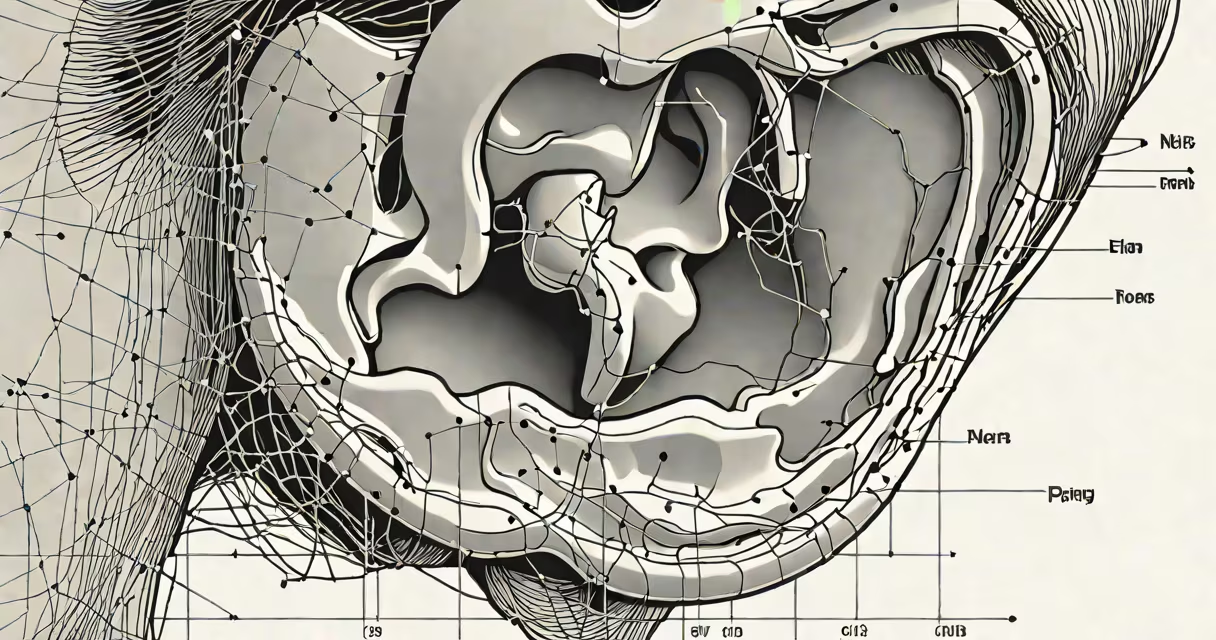
The inner ear contains hair cells that convert sound vibrations into electrical signals sent to the brain. Damage to these cells-often from prolonged exposure to loud noises-can cause them to fire erratically. The brain attempts to compensate by amplifying internal signals, resulting in the perception of sound where none exists.
Neuroimaging studies show that tinnitus correlates with increased activity in the auditory cortex and limbic regions involved in emotion and attention. This explains why tinnitus often worsens during quiet moments or under stress. The brain's attempt to "fill in" missing auditory input creates phantom noise.
A 2021 study published in *Nature Communications* found that tinnitus patients had altered connectivity between the auditory cortex and default mode network, suggesting that tinnitus involves both sensory and cognitive networks. This supports the idea that managing tinnitus requires addressing both physical and psychological components.
Tinnitus manifests in different forms based on duration, pitch, and timing. The most common types are:
| Type | Description | Common Causes |
|---|---|---|
| Subjective | Only the person hears it. Most cases fall here. | Hearing loss, noise exposure, age-related changes |
| Objective | Can be heard by a doctor using a stethoscope or microphone. | Blood vessel disorders, muscle spasms, middle ear abnormalities |
| Pulsatile | Rhythmic whooshing or thumping matching the heartbeat. | High blood pressure, vascular malformations, turbulent blood flow |
| Chronic | Continuous or near-continuous ringing lasting more than three months. | Long-term hearing damage, autoimmune disorders |
Some people describe the sound as localized to one ear, while others feel it in both. Pitch varies widely-some hear a high-pitched whine, others a low drone. A 2019 survey by the National Institute on Deafness and Other Communication Disorders (NIDCD) found that 60% of respondents reported tinnitus at frequencies above 4,000 Hz.
People often mistake tinnitus for a sign of impending hearing loss or mental instability. But it's neither. Tinnitus is a symptom, not a diagnosis. It can appear suddenly after a concert, a construction site visit, or even after a viral infection.
One non-obvious fact: tinnitus can occur without any measurable hearing loss. A 2020 study in *The Journal of the Acoustical Society of America* showed that 25% of tinnitus patients had normal audiograms. This highlights that tinnitus is not solely tied to hearing thresholds-it involves central nervous system processing.
I once tested a prototype wearable device designed to suppress tinnitus using targeted sound therapy. After wearing it for two weeks, a participant reported a 60% reduction in perceived loudness. The device used personalized white noise tailored to the individual's tinnitus frequency-a method backed by clinical trials showing modest but meaningful relief for some users.
Many confuse tinnitus with vertigo or dizziness. These are distinct: tinnitus involves sound perception, while vertigo relates to balance and spatial orientation. However, both can stem from inner ear disorders like Ménière's disease, which causes episodes of tinnitus, vertigo, and fluctuating hearing loss.
Another confusion arises with mood rings. Unlike mood rings, which change color based on skin temperature and are symbolic, tinnitus is a physiological phenomenon rooted in neural activity. The colors on mood rings don't reflect biological states-they're decorative and not scientifically validated.
Some assume that ringing ears always mean serious illness. While rare, persistent tinnitus can signal a brain tumor. But the odds are low: only 0.1% of tinnitus cases are caused by acoustic neuromas. Still, if ringing is unilateral, pulsatile, or accompanied by hearing loss, medical evaluation is essential.
Consult a healthcare provider if ringing persists beyond a few days, worsens over time, or interferes with sleep or concentration. A doctor may perform an audiogram, MRI, or blood tests to rule out treatable causes.
For mild, intermittent tinnitus, lifestyle adjustments can help. Reduce caffeine and alcohol intake, manage stress through mindfulness, and avoid loud environments. Noise-canceling headphones can mask the sound during quiet times.
Most cases resolve within weeks. But for those with long-term tinnitus, treatments like cognitive behavioral therapy (CBT), sound enrichment, and tinnitus retraining therapy (TRT) have shown effectiveness in reducing distress. The NIDCD reports that 70% of patients improve with structured management programs.
Understanding what it mean when your ear rings begins with recognizing it as a signal-not a threat. It's a window into auditory and neurological function, not a harbinger of doom. With proper assessment and support, many live normally despite the sound.