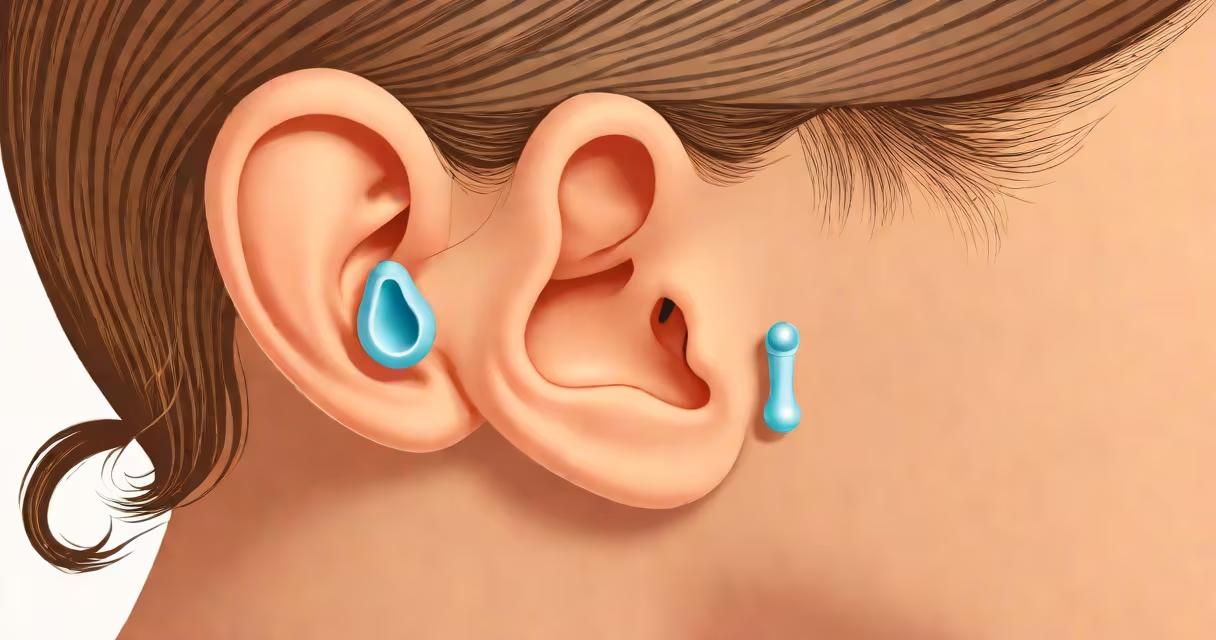
Ear tubes are small plastic or metal cylinders surgically placed through the eardrum to drain fluid and equalize pressure in the middle ear. They're most often used in children with persistent or recurring middle ear infections that don't respond to antibiotics.
These tiny devices prevent fluid buildup behind the eardrum, which can cause hearing loss, ear pain, and balance issues. They're typically inserted during a minor outpatient procedure called myringotomy, performed under general anesthesia. The tubes stay in place for 6 to 18 months before falling out on their own as the eardrum heals.
According to the American Academy of Otolaryngology-Head and Neck Surgery (AAO-HNS), ear tubes are among the most common surgical procedures in children, with over 500,000 placements annually in the U.S. They're especially effective for children with chronic otitis media with effusion-fluid in the middle ear lasting longer than three months.
Sound travels through the outer ear into the middle ear, where it vibrates the eardrum and moves bones that transmit sound to the inner ear. The middle ear is normally filled with air and connected to the back of the nose via the eustachian tube. This tube opens periodically to equalize pressure and drain fluids.
When the eustachian tube doesn't function properly-often due to colds, allergies, or anatomical differences-fluid accumulates behind the eardrum. This fluid blocks sound transmission, reduces hearing, and creates a breeding ground for bacteria. Without drainage, infections recur.
Ear tubes bypass the eustachian tube by creating a direct path from the middle ear to the outside. They allow trapped fluid to drain and air to enter, restoring normal pressure and preventing infection. Once the middle ear clears, the eardrum heals around the tube, which eventually falls out.
Children aged 1 to 3 are most likely to receive ear tubes. Their eustachian tubes are shorter, flatter, and more horizontal than adults', making them prone to blockage. The average child experiences 3 to 4 ear infections per year during early childhood.
Doctors recommend tubes when a child has:
A study published in *JAMA Pediatrics* found that children with bilateral effusion lasting over three months showed significant improvement in speech and language development after tube insertion. Hearing improved by an average of 15 decibels within two weeks post-surgery.
Adults rarely get ear tubes unless they have severe eustachian tube dysfunction from conditions like head trauma, radiation therapy, or autoimmune disorders. In rare cases, tubes are used after ear surgery to prevent scarring.
Two main types exist: short-term and long-term tubes. Short-term tubes (typically 6-12 months) are made of silicone or plastic and fall out naturally. Long-term tubes (tympanostomy tubes with flanges) stay in place longer and may require removal if they don't dislodge.
| Type | Lifespan | Common Use | Material |
|---|---|---|---|
| Short-term | 6-12 months | Most children with recurrent infections | Plastic, silicone |
| Long-term | 12-24 months | Children with persistent fluid or prior tube failure | Plastic with flanged ends |
The procedure takes 10 to 15 minutes. A surgeon makes a small incision in the eardrum, removes fluid with suction, and inserts the tube. Most children go home the same day. Recovery is quick-most return to school within 24 hours.
I've seen this firsthand: a 3-year-old boy with chronic ear infections missed nearly half his preschool year due to hearing loss. After tubes were placed, his teacher reported he began speaking in full sentences within two weeks. His parents noticed he responded to his name again.
Many assume ear tubes lead to permanent holes in the eardrum. This is false. The eardrum heals completely in 95% of cases. The hole closes naturally as the tube exits. Only 1-2% of patients develop a persistent perforation requiring repair.
Another myth is that tubes increase the risk of frequent ear infections. In reality, they reduce infection rates by allowing drainage. A 2020 review in *The Laryngoscope* found that children with tubes had 60% fewer infections over two years compared to untreated peers.
Water exposure is a concern, but the risk is low. Most doctors advise avoiding submerging the head underwater-swimming in pools or lakes-but showering is safe. A small percentage of patients report mild ear discharge, usually from water entering the ear canal. This is managed with antibiotic drops if needed.
Some parents worry about anesthesia. General anesthesia is safe for healthy children. The American Society of Anesthesiologists reports a complication rate of less than 0.1% for routine pediatric procedures.
After surgery, children may feel dizzy or nauseous for a few hours. Pain is minimal-most don't need prescription medication. Over-the-counter acetaminophen or ibuprofen manages discomfort.
Follow-up appointments occur at 1 month, 3 months, and then every 6 months until the tubes fall out. Doctors monitor for signs of infection, tube displacement, or persistent fluid. If fluid returns after tube expulsion, further evaluation may be needed.
Once tubes fall out, hearing typically remains improved. If fluid returns, repeat placement may be necessary. About 15% of children need a second set of tubes.
Ear tubes are not a cure-all, but they're effective for managing chronic middle ear issues. When placed appropriately, they restore hearing, improve speech development, and reduce the need for repeated antibiotics.