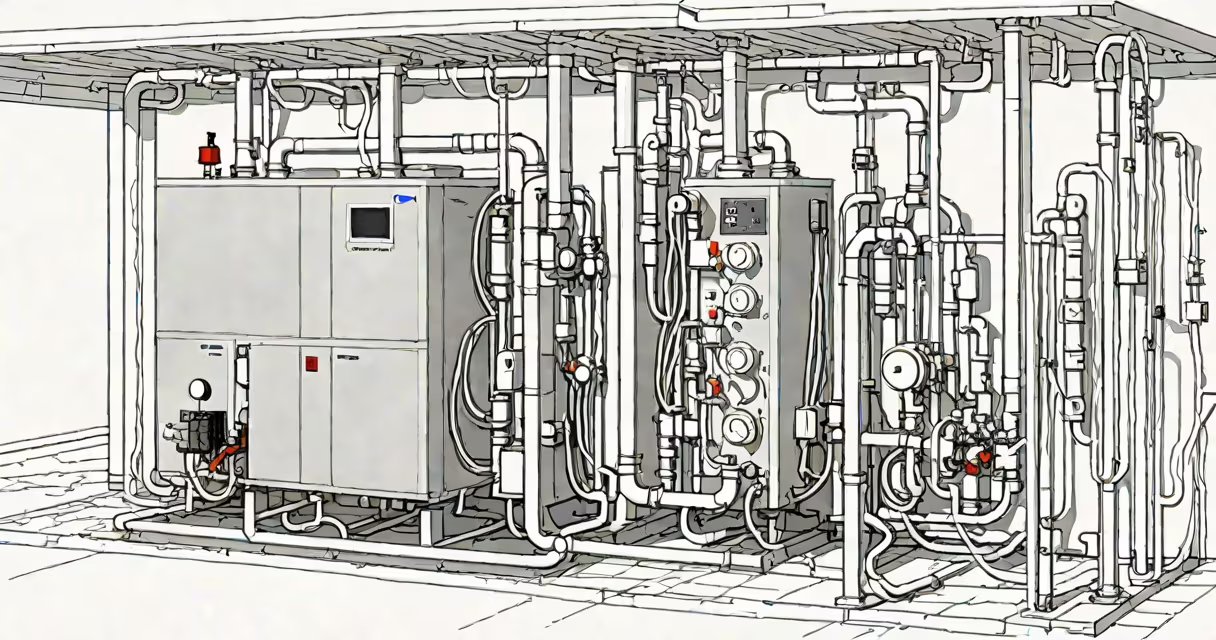
A ground source heat pump (GSHP) is a heating and cooling system that transfers thermal energy between a building and the stable temperature of the earth below the surface. It uses underground pipes filled with fluid to absorb heat from the ground in winter and reject heat into the ground in summer, achieving high efficiency by using consistent subsurface temperatures.
These systems operate on the principle that soil and groundwater maintain a relatively constant temperature year-round-typically between 45°F and 75°F (7°C to 24°C)-depending on location. This stability allows GSHPs to deliver heating and cooling with less electrical input than conventional systems. A typical residential GSHP can achieve a coefficient of performance (COP) of 3.5 to 5.0, meaning it produces 3.5 to 5 units of heat for every 1 unit of electricity consumed.
For context, standard electric resistance heaters have a COP of 1.0. The U.S. Department of Energy notes that GSHPs can reduce energy consumption for heating by 30% to 60% compared to air-source heat pumps and up to 70% compared to furnaces. This makes them one of the most efficient space conditioning technologies available.
The core function of a ground source heat pump is to move heat rather than generate it. In winter, the system draws warmth from the ground through a closed-loop network of buried pipes. A heat transfer fluid circulates through these pipes, absorbing thermal energy. The fluid then passes through a heat exchanger in the indoor unit, where a refrigerant absorbs the heat and compresses it to a higher temperature. This heated refrigerant releases energy into the building's ductwork or radiant floor system.
In summer, the process reverses. The system extracts heat from inside the home and transfers it into the ground via the same loop. The underground medium acts as a heat sink, dissipating excess thermal energy. This dual functionality eliminates the need for separate heating and cooling equipment, reducing mechanical complexity and maintenance costs.
Most installations use either horizontal or vertical loop configurations. Horizontal loops require more land area but are cheaper to install. Vertical loops use boreholes drilled 100 to 400 feet deep and are preferred in urban areas or where space is limited. The choice depends on site conditions, soil type, and local regulations.
A complete ground source heat pump system includes four main parts: the ground loop, the heat pump unit, the distribution system, and the control system. The ground loop is typically made of high-density polyethylene (HDPE) tubing due to its durability and resistance to corrosion. The fluid inside-usually a mixture of water and antifreeze-circulates continuously, transferring heat.
Heat pump units come in two primary types: water-to-water and water-to-air. Water-to-water systems connect to radiant floor heating or baseboard radiators. Water-to-air systems use ductwork to distribute conditioned air. The indoor unit may also include a desuperheater, which captures waste heat during cooling mode to preheat domestic hot water-an added efficiency benefit.
| Type | Loop Configuration | Installation Cost | Best For |
|---|---|---|---|
| Horizontal | Shallow trenches (4-6 ft deep) | $10,000-$15,000 | Suburban homes with large yards |
| Vertical | Boreholes (100-400 ft deep) | $15,000-$25,000 | Urban lots, limited space, rocky terrain |
| Standing Column Well | Deep well with recirculating water | $20,000-$30,000 | Areas with access to aquifers |
According to the International Ground Source Heat Pump Association (IGSHPA), vertical systems account for about 70% of new installations in North America due to their reliability and reduced land footprint. However, horizontal systems remain common in rural settings where excavation is feasible.
Many people assume ground source heat pumps require drilling deep into bedrock or tapping into geothermal reservoirs. This is incorrect. GSHPs do not rely on volcanic activity or high-temperature underground sources. They exploit the shallow thermal gradient-just a few feet below the surface-where temperatures remain steady throughout the year.
Another misconception is that they only work in cold climates. In reality, GSHPs perform efficiently in both northern and southern U.S. regions. A study by the National Renewable Energy Laboratory (NREL) found that GSHPs maintained average seasonal performance factors (SPF) above 3.5 in 14 U.S. climate zones, including Phoenix, Arizona, and Miami, Florida.
Some homeowners also believe the initial cost is prohibitive. While upfront expenses are higher than standard HVAC systems-averaging $20,000 to $30,000 for a residential installation-the long-term savings are substantial. The U.S. Environmental Protection Agency reports that a typical GSHP can save $1,000 to $2,000 annually in energy bills, depending on local utility rates and climate.
In 2022, a homeowner in St. Paul, Minnesota, replaced a 20-year-old oil furnace and central AC with a vertical-loop ground source heat pump. The system included a 200-foot-deep borehole with two ¾-inch HDPE pipes, a 3-ton water-to-air heat pump unit, and existing ductwork.
Over the following winter, the system delivered 18,000 kWh of heating energy using 4,500 kWh of electricity. This resulted in a COP of 4.0. Annual heating and cooling costs dropped from $2,800 to $1,100. The homeowner received a federal tax credit covering 30% of the $24,000 installation cost, reducing net outlay to $16,800.
After 10 years, the system had paid for itself through energy savings. Maintenance was minimal-only annual filter changes and biannual professional inspections. The homeowner reported consistent comfort levels and no cold spots during winter months.
Ground source heat pumps are often confused with solar thermal collectors or geothermal power plants. Solar thermal systems use sunlight to heat water directly and are used for domestic hot water, not space conditioning. Geothermal power plants tap into deep, high-temperature reservoirs to generate electricity-something GSHPs do not do.
They are also not the same as air-source heat pumps. Air-source systems extract heat from outdoor air, which can drop below freezing. Their efficiency declines sharply in subzero weather. Ground source systems avoid this issue because the ground remains warmer than ambient air in winter.
Ground source heat pump definition is not just technical-it reflects a practical solution for reducing fossil fuel dependence. With rising energy prices and climate concerns, these systems represent a proven path toward lower emissions and stable operating costs.