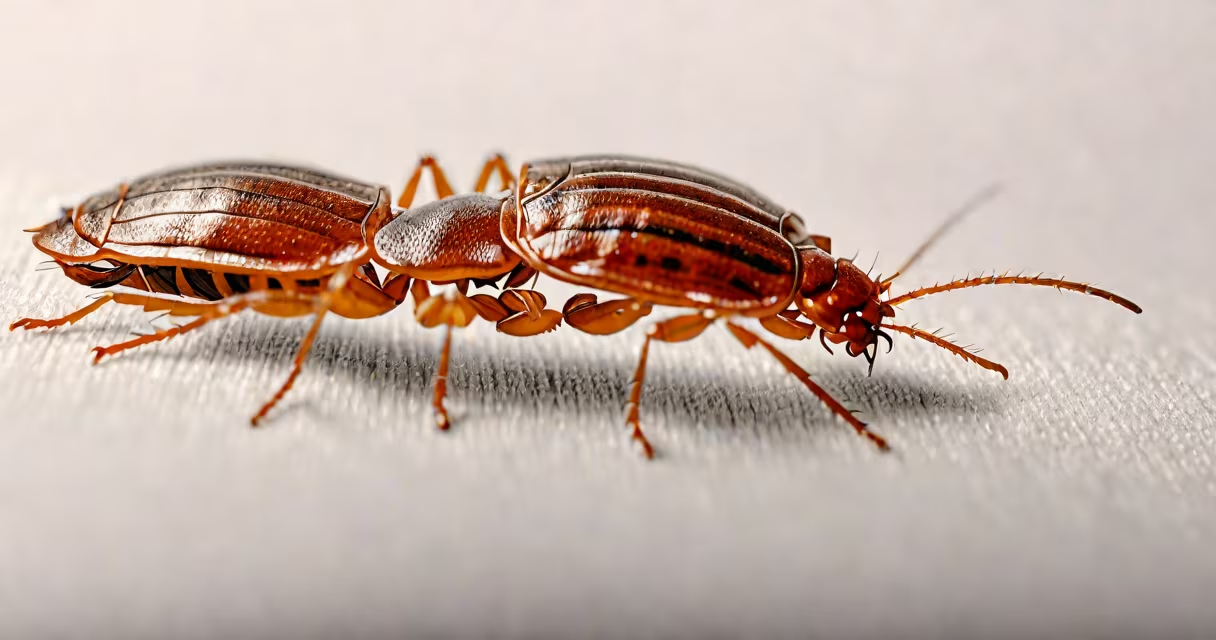
Bed bugs are small, flat insects that feed on human blood and typically enter homes via infested luggage, used furniture, or adjacent units in multi-unit housing. They do not indicate poor hygiene and thrive in environments where people sleep regularly.
These pests are nocturnal and hide during the day in cracks near beds, behind baseboards, or inside wall voids. They survive months without feeding and can travel between rooms through walls, floors, or ceilings. Their presence often goes unnoticed until bites appear or live insects are seen.
Bed bugs are not caused by dirt or clutter. They are hitchhikers that exploit opportunities in travel, shared living spaces, and secondhand purchases. A single female can lay 200 eggs in her lifetime, making early detection critical.
Bed bugs don't fly or jump. They crawl-up to 3 feet per minute-and rely on hosts to move between locations. Most infestations begin when an insect or egg attaches to clothing, bags, or furniture brought into a home.
Travel is a primary vector. A person returning from a hotel stay may unknowingly carry bed bugs in their suitcase. According to the National Pest Management Association, 95% of bed bug cases in the U.S. are linked to travel or secondhand furniture. One study found that 40% of sampled hotels in major cities had detectable bed bug activity.
Multi-unit buildings pose higher risks. Bed bugs can migrate through shared walls, electrical outlets, or floor gaps. An infestation in one apartment can spread to neighbors within weeks. In New York City, a 2022 survey showed that 68% of reported bed bug cases occurred in buildings with five or more units.
Bed bugs enter homes through:
Even brief contact with an infested area can lead to transfer. A 2019 study published in Journal of Medical Entomology confirmed that bed bugs can survive a 30-minute ride in a car trunk and remain viable for up to 10 days without feeding.
High-risk settings include hostels, college dorms, and rental apartments. These environments see frequent turnover and limited inspection routines. In one case, a university dorm in Michigan reported 12 infested rooms after a student returned from a summer internship abroad with a suitcase containing live bed bugs.
Bed bugs are not a sign of uncleanliness. They do not prefer dirty homes. They seek warmth, carbon dioxide, and blood-signals humans emit while sleeping. A clean home with sealed windows and regular vacuuming still faces risk if someone brings in an infested item.
They are also not the same as other pests. Unlike fleas, which jump and breed in pet bedding, bed bugs crawl and depend on human proximity. They differ from dust mites, which feed on skin flakes and thrive in high humidity. Red bugs-often mistaken for bed bugs-are usually carpet beetles or spider mites, requiring different treatments.
A common misconception is that bed bugs only live in mattresses. While they favor seams and tufts, they can hide in electronics, picture frames, or under floorboards. One homeowner in Denver discovered a cluster of bed bugs behind a wall-mounted TV, where heat from the device created ideal conditions.
In 2021, a traveler stayed at a mid-tier hotel in Chicago. After waking with multiple bites, they noticed dark spots on the mattress and found a live bed bug near the headboard. The hotel claimed no prior reports, but upon investigation, staff admitted to ignoring guest complaints due to low staffing.
The guest returned home and found bed bugs in their suitcase. Within 48 hours, they detected bites on their partner and discovered clusters in the bedroom baseboards. A pest control professional confirmed an active infestation and traced it to the hotel stay.
This case illustrates how a single trip can introduce bed bugs. The traveler had no history of infestations and maintained a clean home. The issue was not personal hygiene-it was exposure.
Inspect luggage and clothes after travel. Wash and dry all items at high heat (120°F or above) for 20 minutes to kill bed bugs and eggs. Use protective covers on mattresses and box springs to create barriers.
When buying used furniture, inspect seams, crevices, and fabric folds. Avoid placing items directly on the floor. If you suspect an infestation, contact a licensed pest control provider. Do not attempt DIY treatments without confirmation-incorrect methods can worsen the problem.
Understanding why you get bed bugs removes fear and focuses action. They are not a reflection of your habits. They are a result of movement, proximity, and overlooked entry points. Awareness and swift response prevent escalation.