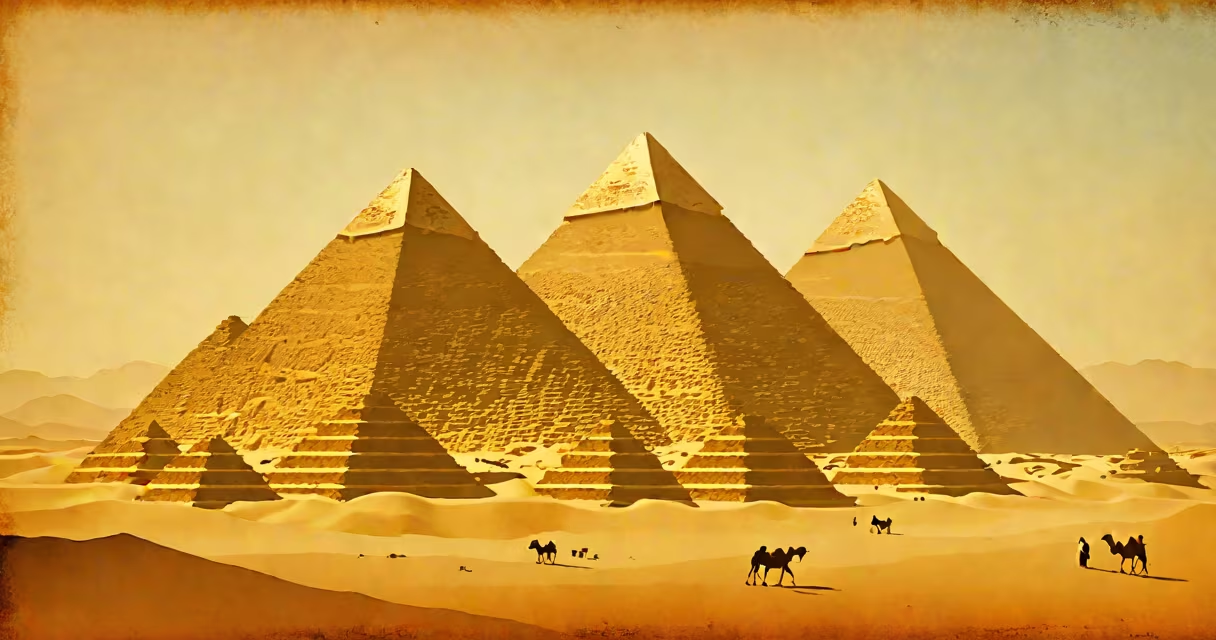
The wonders of the ancient world were seven extraordinary constructions from the classical period, each renowned for its size, craftsmanship, and cultural significance. These structures spanned the Mediterranean and Near East, reflecting the engineering prowess and artistic ambition of civilizations between the 6th century BCE and the 1st century CE.
Originally compiled by Greek and Roman writers, the list was not fixed. Early versions varied, but by the 2nd century CE, the standard list included the Great Pyramid of Giza, the Hanging Gardens of Babylon, the Statue of Zeus at Olympia, the Temple of Artemis at Ephesus, the Mausoleum at Halicarnassus, the Colossus of Rhodes, and the Lighthouse of Alexandria. These were not just monuments-they were statements of power, devotion, and human achievement.
Modern archaeology confirms that only the Great Pyramid of Giza remains standing today. The others were destroyed by earthquakes, fires, or deliberate dismantling. The list's survival owes more to literary tradition than physical evidence. Ancient authors like Philo of Byzantium and Antipater of Sidon described them in poetic terms, often emphasizing awe rather than technical detail.
The original selection criteria were not standardized. Writers selected sites based on personal admiration, religious significance, or political symbolism. For example, the Hanging Gardens were likely never built in Babylon-historians now believe they may have been conflated with gardens in Nineveh, or even fictionalized. No archaeological proof of the gardens exists despite decades of excavation.
Philo of Byzantium, who wrote the earliest known list around 20 BCE, described the Colossus of Rhodes as "a bronze statue of the sun god Helios, taller than any man." He claimed it stood at 33 meters (108 feet) high, spanning the harbor entrance. Modern estimates suggest it was closer to 30 meters, still impressive for a statue cast in bronze during the 3rd century BCE.
These descriptions were meant to inspire wonder, not serve as blueprints. The term "wonder" (Greek: θαύματα) referred to something extraordinary-not necessarily miraculous, but beyond ordinary experience. A structure had to be large, complex, or visually striking to qualify.
Each wonder used materials suited to its location and purpose. The Great Pyramid of Giza, built around 2580 BCE, used over 2.3 million limestone blocks, each weighing an average of 2.5 tons. The outer casing stones were polished granite, now mostly removed for later construction projects.
The Temple of Artemis at Ephesus (c. 550 BCE) was constructed from marble and gold. Its columns rose 18 meters high, and the roof was supported by 127 columns. It was burned down in 356 BCE by a man named Herostratus, who set fire to it to gain fame-a fate that ironically fulfilled his goal.
The Mausoleum at Halicarnassus (c. 350 BCE) combined Greek, Egyptian, and Persian styles. It stood 45 meters tall, with a stepped pyramid roof and sculpted friezes depicting battles. After being damaged by earthquakes, its stones were reused in medieval fortifications. Some fragments now reside in the British Museum.
| Wonder | Location | Material | Destroyed By | Current Status |
|---|---|---|---|---|
| Great Pyramid of Giza | Egypt | Limestone, granite | N/A | Standing |
| Hanging Gardens of Babylon | Iraq | Brick, wood, stone | Unknown (possibly earthquake) | Unverified existence |
| Statue of Zeus at Olympia | Greece | Gold and ivory | Fire (4th century CE) | Lost |
| Temple of Artemis at Ephesus | Turkey | Marble, gold | Fire (356 BCE) | Rebuilt and destroyed multiple times |
| Mausoleum at Halicarnassus | Turkey | Marble, stone | Earthquakes (15th century CE) | Fragmentary remains |
| Colossus of Rhodes | Greece | Bronze, iron | Earthquake (226 BCE) | Lost |
| Lighthouse of Alexandria | Egypt | Stone, mortar | Earthquakes (14th century CE) | Underwater ruins |
Though most were destroyed centuries ago, the wonders continue to influence architecture, tourism, and popular culture. The Great Pyramid remains the oldest of the seven and the only one still intact. It stands 139 meters tall, with a base covering 53,000 square meters-larger than a football field.
Archaeologists estimate the pyramid took 20 years to build, using 2.3 million stone blocks transported via ramps and sledges. Workers were not slaves, as once believed. Excavations at nearby worker villages show they were paid laborers, some with families and medical care.
A non-obvious fact: the term "seven wonders" did not exist in ancient times. It was coined in the 1st century CE by a Roman historian, who listed them as a curated collection. The idea of a fixed list became popular through medieval manuscripts and later reinforced by Renaissance scholars. The modern "New Seven Wonders" campaign (2001-2007) was a commercial initiative, not academic consensus.
Many assume the wonders were all built in the same era. In reality, the Great Pyramid predates the others by nearly 2,000 years. The Colossus of Rhodes was completed in 280 BCE, while the Lighthouse of Alexandria was finished in 283 BCE-just three years apart. This shows the list spans over 2,000 years of history.
Another myth: the Hanging Gardens were built by King Nebuchadnezzar II. There is no contemporary Mesopotamian record of such a garden. The earliest written reference appears in the works of Berossus, a Babylonian priest, but he wrote centuries after the alleged construction. Most historians now believe the gardens were either mythical or relocated to Nineveh.
During a visit to the site of the Temple of Artemis in 2018, I saw the foundation stones still visible beneath the soil. The site is now a small museum with reconstructed columns. Standing there, I realized how much of the past survives not in grand ruins, but in fragments-small pieces of memory embedded in earth.
The concept of the wonders of the ancient world persists because it captures a universal human impulse: to build something lasting. Even though none of the original seven survive intact, their stories endure in literature, film, and education. The Great Pyramid is still studied for its alignment with celestial bodies-its sides face true north, east, south, and west with notable precision.
Modern engineers analyze the pyramid's design for insights into load distribution and material stress. The use of corbelled arches in the interior chambers demonstrates advanced understanding of structural balance. These techniques influenced later Roman and Islamic architecture.
The wonders of the ancient world remain a benchmark for architectural ambition. Their names evoke awe not because they still stand, but because they were imagined, built, and remembered at all.