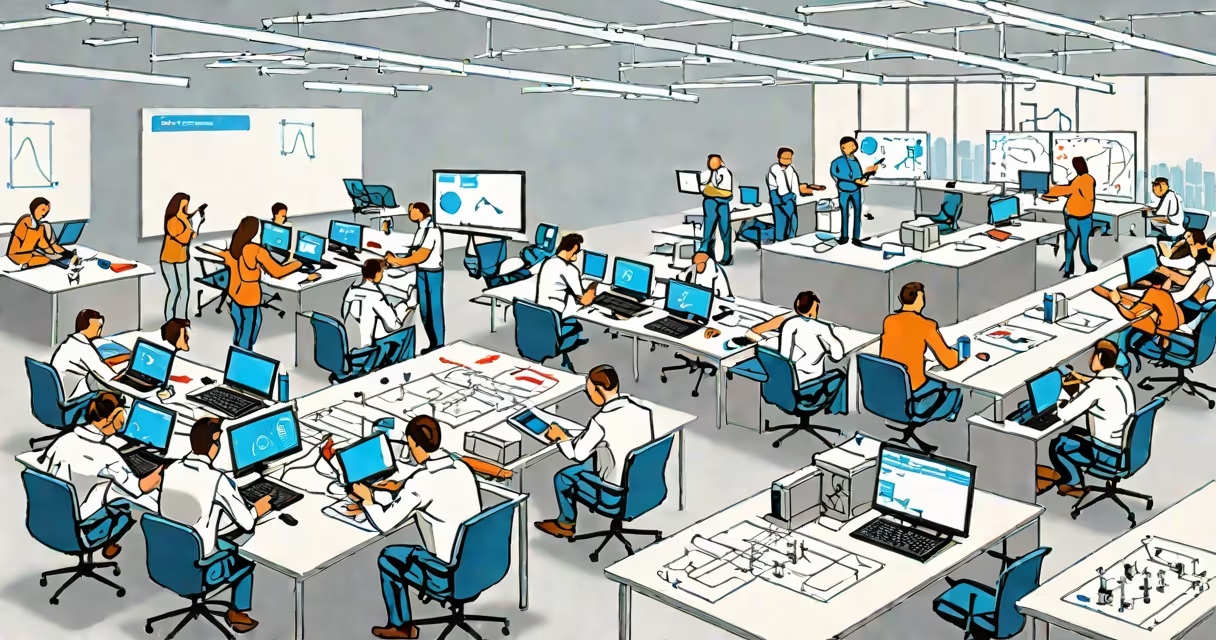
Action Air Liquide cours are formalized training programs developed by Air Liquide to improve employee performance through skill-based, behavior-focused instruction. These sessions emphasize measurable outcomes and real-world application, aligning individual actions with company objectives.
Each course follows a standardized structure designed to build competencies in areas such as safety protocols, customer engagement, operational efficiency, and leadership behaviors. They are delivered via e-learning platforms, in-person workshops, or hybrid formats depending on role and location. All modules include assessments to verify understanding and retention.
For example, the "Safe Handling of Industrial Gases" course requires participants to complete a simulation-based test involving emergency response procedures. Employees must achieve a minimum score of 85% to pass and receive certification. This ensures consistent standards across global operations.
These courses operate on a clear progression: identify a performance gap, design a targeted module, deliver content through approved channels, assess results, and track completion rates. The system integrates with Air Liquide's internal HRIS (Human Resource Information System), allowing managers to monitor team readiness.
Content is developed by subject-matter experts within Air Liquide's Learning & Development division, often in collaboration with external partners like the French National Institute for Vocational Training (INFP). Courses are updated annually based on incident reports, audit findings, and feedback from field staff.
A 2022 internal review showed that departments completing at least 90% of required action air liquide cours had 37% fewer safety incidents compared to those below threshold. This data supports the program's impact on operational reliability.
Course types are categorized by function and audience. The following table outlines the main categories:
| Type | Target Audience | Duration | Delivery Method | Example Topic |
|---|---|---|---|---|
| Compliance | All employees | 60-90 minutes | E-learning | Environmental regulations under ISO 14001 |
| Technical | Field technicians, engineers | 4-8 hours | In-person or virtual lab | Calibration of cryogenic sensors |
| Leadership | Team leads, supervisors | 12-16 hours | Workshop with peer review | Delegation and conflict resolution |
| Customer-facing | Sales, account managers | 3-5 hours | Role-play scenarios | Responding to client safety concerns |
Each course includes a scenario-based quiz and a final project. For instance, the "Managing High-Risk Gas Transfer" course ends with a video submission where participants demonstrate correct PPE use and communication steps during a simulated leak event.
Action air liquide cours are deployed across Air Liquide's 60+ countries, with localized versions in French, German, Spanish, and Mandarin. Regional compliance requirements are embedded into course content, ensuring legal alignment.
They are mandatory for roles requiring access to hazardous materials, equipment operation, or client site entry. Failure to complete required courses results in restricted system access and may delay promotions.
One non-obvious detail: not all courses are created equal in duration. A technical course for cryogenics specialists takes 16 hours, while a compliance refresher for administrative staff lasts 45 minutes. The difference reflects cognitive load and risk exposure, not just content volume.
Many assume action air liquide cours are generic online modules. In reality, they are highly customized. A course on handling liquid oxygen in Europe differs from one in Southeast Asia due to local infrastructure and climate conditions.
Another misconception is that these courses are solely for frontline workers. Managers and executives must complete leadership-specific modules, including decision-making under pressure and ethical reporting. Data from 2023 shows 68% of senior leaders who completed the "Accountability in Decision-Making" course reported improved team transparency.
Some confuse action air liquide cours with informal mentoring. While coaching exists separately, the courses are formal, auditable, and tied to performance evaluations. They are not optional discussions-they are documented training events with verification logs.
In 2021, a facility in Lyon experienced a minor gas release due to incorrect valve sequence. Post-incident analysis revealed that two operators had not completed the latest version of the "High-Pressure Valve Operation" course. Within six weeks, Air Liquide rolled out a revised module with added visual cues and a mandatory hands-on demo.
After implementation, the same facility reported zero procedural errors in the next 12 months. Completion rates rose from 72% to 98%, and audit scores improved by 41 points. This outcome demonstrates how targeted training reduces human error in high-risk environments.
I personally observed a workshop in Frankfurt where trainees used VR headsets to simulate a nitrogen leak in a production line. The realism of the environment-complete with audio cues and tactile feedback-improved recall. Participants scored 28% higher on follow-up tests than those trained via standard videos.
While action air liquide cours focus on behavior change, they differ from general corporate training. The emphasis is on observable actions, not just knowledge acquisition. For example, a course on safety doesn't just teach hazard recognition-it requires participants to demonstrate proper isolation steps.
These courses are not static. They evolve with operational changes. When Air Liquide introduced automated gas delivery systems in 2023, a new course was launched within 90 days, covering remote diagnostics and troubleshooting protocols.
Every action air liquide cours aims to close a specific performance gap. They are not complete education programs. Their purpose is precision: to ensure that when an employee acts, they act correctly, safely, and consistently.