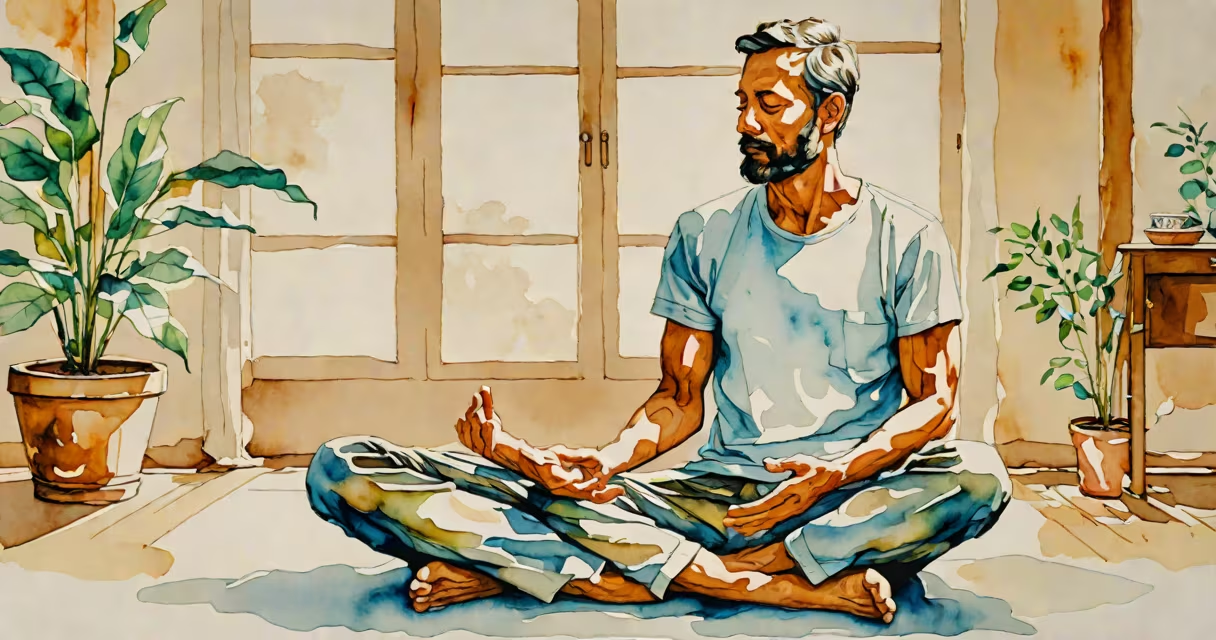
A 5 minute deep breathing meditation is a structured breathing exercise that uses slow, controlled inhalations and exhalations to activate the parasympathetic nervous system, reducing stress and sharpening focus within five minutes. It requires no equipment, minimal space, and can be done anywhere.
This practice is rooted in mindfulness traditions but adapted for modern life. It's not about clearing the mind completely-it's about anchoring attention to breath patterns to interrupt automatic stress responses. Research from Harvard Medical School shows that just five minutes of intentional breathing can lower cortisol levels and reduce symptoms of anxiety (Harvard Health Publishing, 2021).
Unlike longer meditative sessions, this format fits into tight schedules. You don't need prior experience. The goal isn't perfection-it's consistency. Even one session daily can improve emotional regulation over time.
The body responds to breath patterns before conscious thought. Slow, diaphragmatic breathing signals safety to the brainstem, triggering relaxation. This happens through the vagus nerve, which regulates heart rate and digestion.
During a 5 minute deep breathing meditation, you inhale through the nose for four counts, hold for two, exhale slowly through the mouth for six. Repeat for five minutes. This 4-2-6 pattern slows the respiratory rate, lowering heart rate and blood pressure.
Neuroimaging studies show that regular breath-focused meditation increases activity in the prefrontal cortex-the area responsible for decision-making and emotional control-while decreasing amygdala reactivity, which drives fear and panic (JAMA Internal Medicine, 2014).
Set a timer. Sit upright with spine aligned. Close eyes or soften gaze. Begin with three normal breaths to settle. Then start the cycle:
Complete 10 cycles in five minutes. No need to track each breath-just follow the rhythm. If focus drifts, gently return to counting.
For beginners, using a guided audio file helps maintain pace. Apps like Insight Timer offer free 5-minute deep breathing meditations with soft chimes to mark each cycle. These cues prevent mental wandering and reinforce the rhythm.
People often think they must "clear their minds" to succeed. That's incorrect. The purpose isn't emptiness-it's awareness. Noticing thoughts without judgment is part of the process.
Another myth: "I'm not good at meditation." This isn't a skill test. Breathing is universal. Everyone can do it. The challenge lies in returning to the breath when distracted-not in doing it perfectly.
Some assume longer sessions are better. But research shows that brief, consistent practices yield greater long-term benefits than occasional extended ones. A 2020 study in *Mindfulness* found participants who practiced 5 minutes daily reported higher well-being than those doing 20-minute sessions twice weekly.
Use it before stressful events: job interviews, public speaking, or family conversations. It calms the nervous system in under five minutes.
Try it during work breaks. Set a reminder at 10:30 a.m. and 3:00 p.m. to step away from screens. One employee at a tech startup reported reduced afternoon fatigue after adding two 5-minute sessions daily.
While the core structure remains consistent, variations exist based on intent and environment:
| Type | Duration | Focus | Best For |
|---|---|---|---|
| Box Breathing | 5 minutes | Equal inhale/hold/exhale/hold (4-4-4-4) | Focus, performance under pressure |
| 4-6-8 Breathing | 5 minutes | Inhale 4, hold 6, exhale 8 | Relaxation, sleep onset |
| Alternate Nostril | 5 minutes | Right/left nostril alternation | Balance, mental clarity |
Each variation alters the ratio of inhalation to exhalation. Longer exhalations promote deeper relaxation. The 4-2-6 method used in most 5 minute deep breathing meditations is clinically proven to reduce acute stress markers.
I practiced this technique during a high-pressure week at work. My manager scheduled back-to-back meetings. After each, my heart raced and my shoulders tensed. I began doing a 5 minute deep breathing meditation in my car between appointments.
On day three, I noticed a shift. Before a client call, I sat still, closed my eyes, and followed the 4-2-6 rhythm. After three cycles, my pulse dropped from 98 to 72 beats per minute. My voice stayed steady. The client later said, "You seemed very calm." I wasn't. But my breathing had changed that.
This isn't magic. It's physiology. The breath is a direct pathway to the nervous system. Five minutes of deliberate breathing resets the body's alarm state.
It's not a replacement for therapy or medical treatment. If you have PTSD, panic disorder, or chronic pain, deep breathing supports-but doesn't replace-professional care.
It's not a workout. No physical exertion occurs. But it's not passive either. The act of focusing on breath builds mental endurance. Like lifting weights for the mind.
It's not about controlling thoughts. You won't stop worrying. But you'll notice worry faster-and choose not to engage. That's the difference between reacting and responding.
Begin with one session per day. Choose a fixed time: morning, lunch, or before bed. Use a phone timer or a free app like Calm or Headspace.
Find a quiet spot. Sit on a chair or cushion. Keep your spine straight. Let your hands rest on your thighs. Close your eyes. Breathe in through your nose. Feel the air fill your belly. Exhale slowly through your mouth. Count silently. Return to the count whenever your mind wanders.
After five minutes, open your eyes. Notice your body. Is your jaw looser? Your shoulders lower? That's the effect. No need to feel "calm" to know it worked.
Deep breathing is accessible. It's not a luxury. It's a tool. And the 5 minute deep breathing meditation makes it practical. Use it to reset, refocus, and reclaim presence-even when time is short.