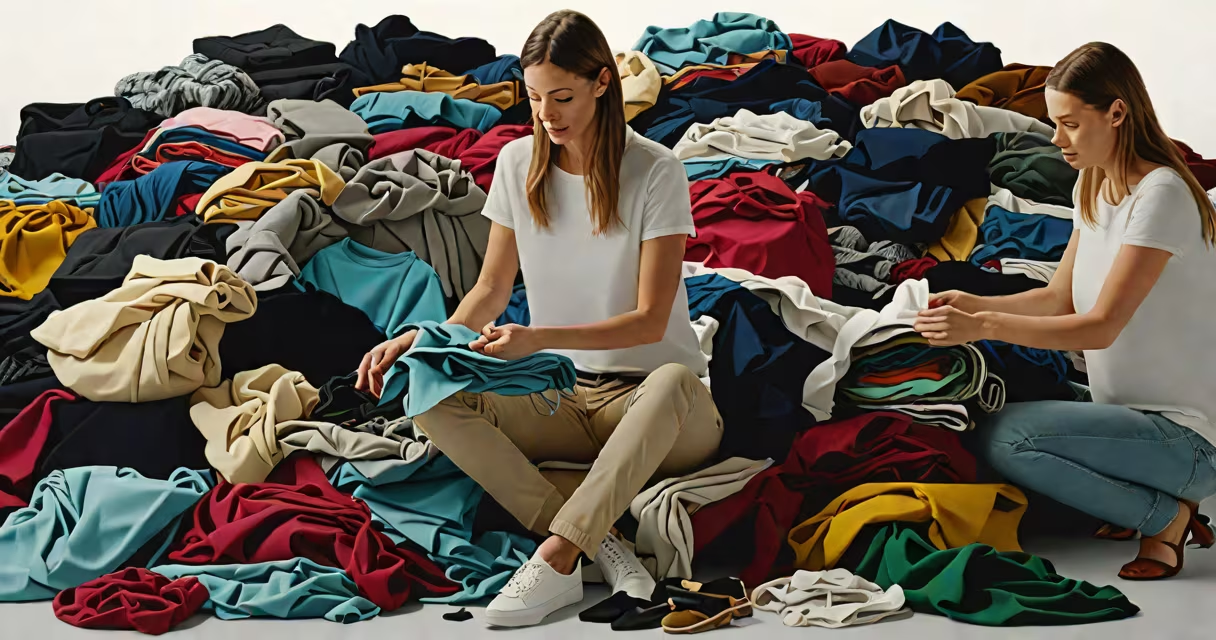
Selling second hand clothes involves listing garments on online marketplaces, donating to consignment shops, or offering them locally through peer-to-peer platforms. This process turns unused wardrobe items into cash or trade value while reducing textile waste.
Second hand clothing resale is a growing segment of the fashion economy. According to the U.S. Environmental Protection Agency, nearly 13 million tons of textiles ended up in landfills in 2021-equivalent to filling 1.6 million garbage trucks. Selling clothes you no longer wear helps divert material from disposal and supports sustainable consumption.
Most successful resales start with cleaning, photographing, and accurately describing each item. High-quality images taken under natural light increase buyer trust. A well-lit photo showing both front and back views reduces return rates. For example, a navy wool blazer in size medium, with minor pilling only on the lapel, sold for $45 on Poshmark after being photographed against a neutral wall with a flat lay technique.
Several channels exist for selling used apparel. The most effective depend on your time, desired price, and clothing condition. Online platforms handle logistics and reach wide audiences. Local options offer immediate cash and personal interaction.
Online marketplaces like Poshmark, ThredUp, and Depop allow users to list items with photos, descriptions, and pricing. These sites charge a commission-typically 10% to 20%-on final sales. Poshmark's seller dashboard shows real-time feedback from buyers, helping sellers adjust listings based on performance. A 2023 report by McKinsey & Company noted that 60% of Gen Z shoppers prefer buying secondhand fashion, increasing demand on such platforms.
Consignment shops accept clothing for resale, often taking a percentage of the sale price. Most pay between 30% and 60% of the final sale amount. For example, a women's designer dress listed at $120 through a local consignment shop may net the owner $50 after the shop's fee. Not all shops accept everything-some exclude heavily worn or stained items. Always confirm policies before dropping off inventory.
Peer-to-peer networks such as Facebook Marketplace and Craigslist allow direct buyer-seller contact. These platforms have no fees but require careful screening. A woman in Austin sold a vintage leather jacket for $180 via Facebook Marketplace after meeting the buyer in a public parking lot during daylight hours. She declined to ship the item due to risk of damage or theft.
| Platform Type | Commission/Fee | Time to Sell | Best For |
|---|---|---|---|
| Poshmark | 10% on sales above $15 | 3-7 days | High-quality, branded items |
| ThredUp | Up to 50% off retail price | 1-2 weeks | Large volumes, casual wear |
| Consignment Shop | 30%-60% of sale | 2-6 weeks | Designer or rare pieces |
| Facebook Marketplace | None | 1-14 days | Local, quick cash |
Many people assume all second hand clothing sells quickly or at full value. This is false. A survey by the National Retail Federation found that 44% of second hand items listed on online platforms remain unsold after 30 days. Overpricing, poor photography, and vague descriptions are primary causes.
Another misconception is that all consignment shops pay equally. Some charge higher fees for handling or storage. A boutique in Portland charges $15 monthly to store unsold items beyond 60 days. This cost can erode profits if items don't move quickly.
A lesser-known fact: certain fabrics degrade faster when stored improperly. Wool and silk can develop yellow stains or attract moths if kept in plastic bins. Storing clothes in breathable cotton garment bags prevents this. I once lost a $200 vintage silk scarf because it was folded in a sealed plastic bag for six months.
Never list items with misleading descriptions. Claiming a sweater is "like new" when it has a hole or pilling misleads buyers and triggers platform penalties. Platforms like eBay and Poshmark flag accounts with repeated false claims, sometimes suspending them permanently.
Avoid shipping fragile or high-value items without tracking and insurance. A man in Seattle lost a $300 designer coat after mailing it via standard USPS. The package was marked "delivered" but never reached the recipient. Using insured services like FedEx or UPS with signature confirmation prevents loss.
Also avoid posting photos with distracting backgrounds. A cluttered room or busy street behind a model reduces focus on the clothing. Use a plain wall or a white sheet as a backdrop. Natural lighting produces better results than flash or artificial bulbs.
Suppose you want to sell a pair of size 10 dark wash jeans in good condition. Start by washing and drying them to remove odors and stains. Lay them flat on a white bedsheet and take two photos-one full view, one close-up of the pocket stitching.
Next, create a listing on Poshmark. Use the title: "Women's Levi's 501 Jeans Size 10 - Dark Wash - Worn Once." Describe the fit as "slim leg, mid-rise," and note the waist measures 28 inches. Set the price at $35, which is below market average to encourage quick sale.
After listing, wait 48 hours. If no offers come in, reduce the price to $30. Track interest through the app's analytics. If still unsold after seven days, consider offering free shipping to boost visibility. After the sale, ship the item using Poshmark's prepaid label and track delivery until the buyer confirms receipt.
When you receive payment, review your earnings. After deducting the 10% platform fee, you net $31.50. This process typically takes 7-10 days from listing to payout.