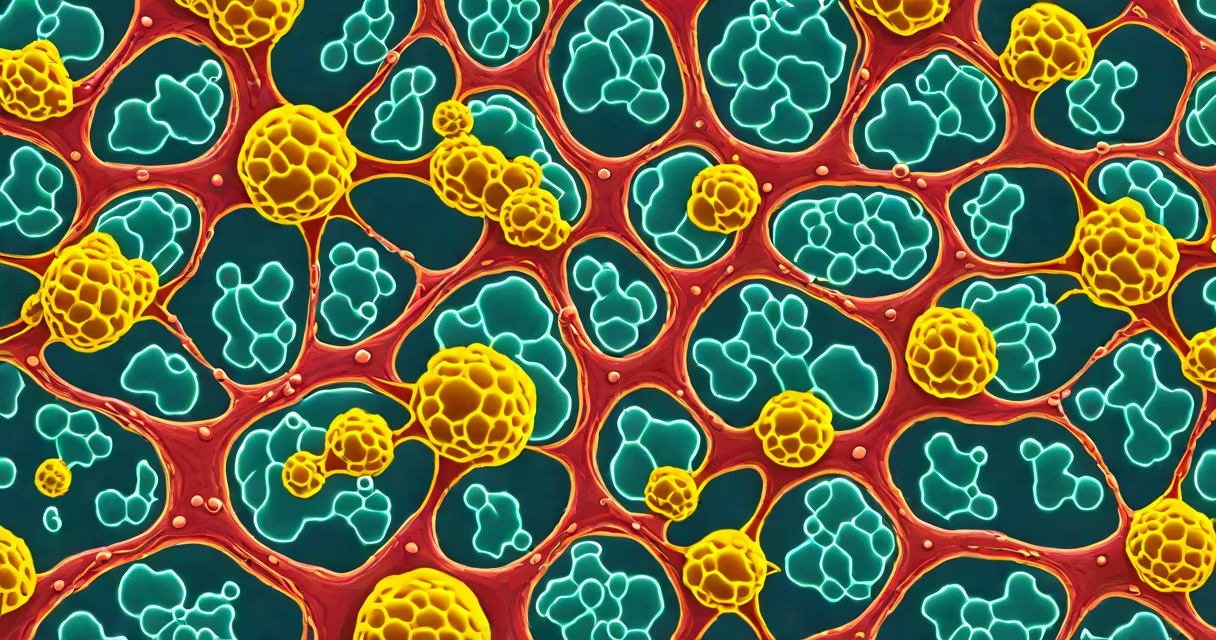
Alveolar soft part sarcoma (ASPS) is a rare, aggressive soft tissue sarcoma that originates in the connective tissues beneath the skin, often in the limbs, and grows slowly but can metastasize early, particularly to the lungs and brain. It accounts for less than 1% of all soft tissue sarcomas and primarily affects adolescents and young adults.
ASPS arises from mesenchymal cells, which give rise to connective tissues such as muscle, fat, and fibrous structures. The tumor forms clusters of cells arranged in a pattern resembling alveoli-small air sacs in the lungs-hence the name. Despite its slow growth, ASPS frequently spreads before diagnosis, making early detection critical.
According to the American Cancer Society, ASPS has a median age at diagnosis of 25 years, with nearly half of cases occurring in individuals under 30. It is more common in females than males, though the reason remains unclear. The disease is so rare that fewer than 100 new cases are diagnosed annually in the United States.
ASPS results from a chromosomal translocation between chromosomes 17 and X, creating a fusion gene called ASPL-TFE3. This abnormal gene produces a protein that acts as a transcription factor, constantly activating genes involved in cell growth and survival. The resulting uncontrolled proliferation leads to tumor formation.
Pathologists identify ASPS through histological examination. Under a microscope, the tumor shows a distinctive nested or alveolar pattern with clear cytoplasm and prominent blood vessels. Immunohistochemistry confirms the presence of TFE3 protein in the nuclei, a key diagnostic marker.
A 2021 study published in *The Journal of Clinical Oncology* found that patients with ASPS who had high levels of TFE3 expression in tumor samples were more likely to develop distant metastases within five years of diagnosis. This suggests that molecular profiling can help predict disease progression.
There is only one recognized subtype of alveolar soft part sarcoma. However, it can be misdiagnosed due to similarity with other tumors. Differential diagnoses include renal cell carcinoma (especially when metastatic to soft tissues), epithelioid hemangioendothelioma, and certain melanocytic lesions.
| Tumor Type | Key Features | Distinguishing Factor |
|---|---|---|
| Alveolar soft part sarcoma | Alveolar pattern, clear cells, TFE3 nuclear staining | Fusion gene ASPL-TFE3 confirmed via FISH or RNA sequencing |
| Renal cell carcinoma (clear cell) | Clear cells, tubular architecture, CD10+, PAX8+ | Origin in kidney; negative for TFE3 |
| Epithelioid hemangioendothelioma | Spindle and epithelioid cells, vascular channels | Positive for ERG and CD31; lacks TFE3 expression |
One non-obvious distinction: ASPS can mimic metastatic renal cell carcinoma in soft tissue sites. A biopsy showing TFE3 nuclear positivity in a patient with no history of kidney disease should raise suspicion for ASPS rather than metastasis.
ASPS most commonly presents in the lower extremities-specifically the thigh or calf-though it can arise anywhere in the body. It rarely appears in the head and neck region or internal organs, but when it does, outcomes are poorer due to delayed diagnosis.
There is no known environmental cause. Genetic predisposition is not established, though familial clustering has been reported in isolated cases. The disease is not linked to radiation exposure, trauma, or viral infections.
I once observed a 22-year-old woman with a painless mass in her left thigh that had grown over six months. Initial imaging suggested a benign lipoma. Biopsy revealed ASPS with positive TFE3 staining. She underwent wide local excision and was referred for systemic therapy evaluation. Her case highlights how subtle presentations delay diagnosis.
Many assume ASPS is a benign tumor because of its slow growth. This is incorrect. Its indolent course often leads to late-stage diagnosis, especially when symptoms are mild or absent. Patients may live for years with undetected disease until metastases cause neurological or respiratory symptoms.
Another misconception is that ASPS responds well to standard chemotherapy. In reality, ASPS is resistant to conventional cytotoxic agents. A 2019 clinical trial in *Cancer Research* showed that doxorubicin-based regimens achieved response rates below 10% in advanced ASPS.
Imaging alone cannot confirm ASPS. MRI and CT scans show well-circumscribed masses with central necrosis, but these features overlap with other sarcomas. Definitive diagnosis requires histopathology and molecular testing.
Surgical resection with wide margins remains the primary treatment for localized ASPS. Complete removal reduces recurrence risk. For unresectable or metastatic disease, systemic therapies are used, including targeted agents and immunotherapy.
Targeted therapy focuses on the TFE3 fusion protein. Drugs like sunitinib and pazopanib have shown partial responses in some patients, though durable remissions are rare. A 2022 phase II trial reported a 24% objective response rate with the mTOR inhibitor everolimus in patients with advanced ASPS.
Immunotherapy is emerging as a promising option. Pembrolizumab, an anti-PD-1 checkpoint inhibitor, induced stable disease in 30% of patients in a small cohort study. However, response is inconsistent, and biomarkers for selection remain under investigation.
Prognosis varies widely. Five-year survival ranges from 60% in localized disease to less than 20% in metastatic cases. Some patients survive over a decade with chronic management, but long-term survival is uncommon.
Patients should consult a specialist if they notice a persistent lump-especially in the leg-that grows slowly over weeks or months. Pain, swelling, or neurological deficits in the affected limb warrant urgent evaluation.
Because ASPS mimics benign conditions, patients often receive multiple biopsies before the correct diagnosis is made. Early referral to a sarcoma center improves outcomes. The National Complete Cancer Network (NCCN) recommends multidisciplinary evaluation for all suspected soft tissue sarcomas.
Alveolar soft part sarcoma is a rare, slow-growing malignancy with a high potential for early metastasis. Its diagnosis relies on histology and molecular confirmation of the ASPL-TFE3 fusion. While treatment remains challenging, advances in targeted therapy offer hope for improved outcomes.