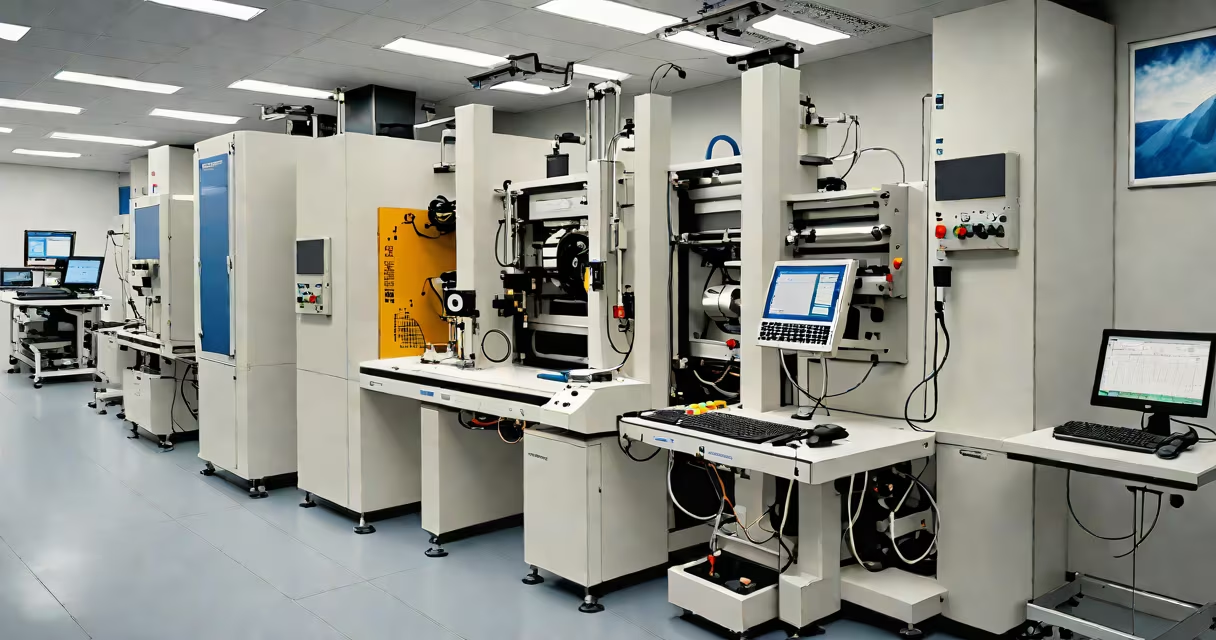
ASML stock market refers to the trading of ASML Holding N.V. shares on the Euronext Amsterdam exchange, where the company is listed under the ticker symbol ASML. As a Dutch multinational corporation, ASML dominates the semiconductor equipment sector through its exclusive production of extreme ultraviolet (EUV) lithography machines, which are essential for manufacturing advanced microchips used in AI, smartphones, and data centers.
ASML's position in the global semiconductor supply chain makes its stock market performance highly sensitive to shifts in technology demand, geopolitical trade policies, and capital spending by major chipmakers like Intel, TSMC, and Samsung. The company generates over 90% of its revenue from semiconductor equipment sales, primarily to leading foundries and integrated device manufacturers.
ASML's stock market value surged from €100 billion in 2018 to over €400 billion by 2024, driven by increasing reliance on advanced node chips (e.g., 3nm and 2nm processes). This growth correlates directly with the expansion of AI infrastructure and the rise in demand for high-performance computing hardware.
ASML stock trades on Euronext Amsterdam, with secondary listings on the NASDAQ via American Depositary Receipts (ADRs). ADRs allow U.S. investors to buy ASML shares without dealing in euros or foreign exchanges. The ADRs trade under the symbol ASMLY and are backed by actual ASML shares held in trust by banks like JPMorgan Chase.
Trading volume averages 1.2 million shares daily on Euronext Amsterdam, with volatility spiking during earnings announcements and regulatory decisions. For example, in Q1 2023, a 12% drop occurred after the Dutch government tightened export controls on EUV systems to China, raising concerns about long-term revenue exposure.
Shareholders receive dividends quarterly. In 2023, ASML paid a dividend of €2.60 per share, representing a yield of 1.3%-below average for the S&P 500 but consistent with its reinvestment strategy. The company retains 70% of net income to fund R&D, which totaled €1.8 billion in 2023, focused on new EUV and high-NA (numerical aperture) systems.
ASML stock market behavior is shaped by four core factors: technological leadership, customer concentration, export regulation risk, and capital allocation policy. These elements define investor sentiment and influence price movements.
| Factor | Impact on Stock | Example |
|---|---|---|
| Technological Edge | Positive | ASML's EUV machines enabled TSMC to produce Apple's A17 chip at 3nm node (2023). |
| Customer Concentration | Negative Risk | Top 3 customers (TSMC, Samsung, Intel) accounted for 75% of 2023 revenue. |
| Export Controls | Volatility Trigger | Dutch export restrictions on EUV systems to China caused a 9% stock dip in January 2023. |
| R&D Investment | Long-Term Growth | €1.8B spent on high-NA EUV development; expected to launch in 2026. |
A non-obvious distinction: ASML's stock market performance is less tied to macroeconomic cycles than most industrial equities. While GDP fluctuations affect consumer electronics demand, ASML's business depends on semiconductor roadmap timelines set by chipmakers-not seasonal spending. This creates a decoupling effect: ASML outperformed the MSCI Europe Index by 18% annually from 2019 to 2023 despite economic downturns.
Many investors mistake ASML stock market activity for a typical cyclical industrial stock. Unlike automakers or construction firms, ASML does not see boom-and-bust cycles tied to interest rates or housing starts. Its revenue is locked in through multi-year contracts with clients who commit to purchasing EUV systems years in advance.
Another misconception is that ASML competes directly with companies like Applied Materials or Lam Research. While all three sell semiconductor equipment, their product lines differ. Applied Materials focuses on deposition and etching tools; Lam handles cleaning and polishing. ASML is unique in producing only lithography systems-the most complex and expensive segment of the process.
For example, a single EUV machine costs $180 million and takes 18 months to build. In contrast, a typical etch tool from Lam Research sells for $25 million and ships within six weeks. This difference in complexity and lead time explains why ASML's stock market valuation is higher per unit of revenue than peers.
In March 2023, ASML announced that TSMC had ordered two additional EUV machines, bringing its total commitment to five units. The news triggered a 14% jump in ASML's stock price within two days. The increase was not due to earnings-quarterly results were flat-but because the order confirmed sustained demand for advanced nodes.
Analysts at Morgan Stanley noted that each EUV system delivers €150 million in gross margin over its lifetime. With 18 machines shipped in 2023, ASML generated €2.7 billion in incremental profit. This level of profitability is rare among industrial firms and contributes to the stock's premium valuation.
Investors tracking ASML stock market trends should monitor TSMC's capital expenditure plans, U.S.-China tech tensions, and the progress of ASML's high-NA EUV program. These signals provide early warnings of shifts in demand, even before official guidance changes.
ASML stock market remains a benchmark for high-tech industrial equities. Its performance reflects not just corporate earnings but the pace of global technological advancement. For investors seeking exposure to AI infrastructure, semiconductors, and new manufacturing, ASML offers a concentrated, high-conviction play.
Understanding ASML stock market dynamics requires focusing on technical milestones, not just financial metrics. The company's ability to deliver breakthroughs in lithography-such as the upcoming high-NA EUV system-continues to drive long-term confidence. Investors should treat ASML not as a traditional industrial stock but as a proxy for the evolution of computing power itself.