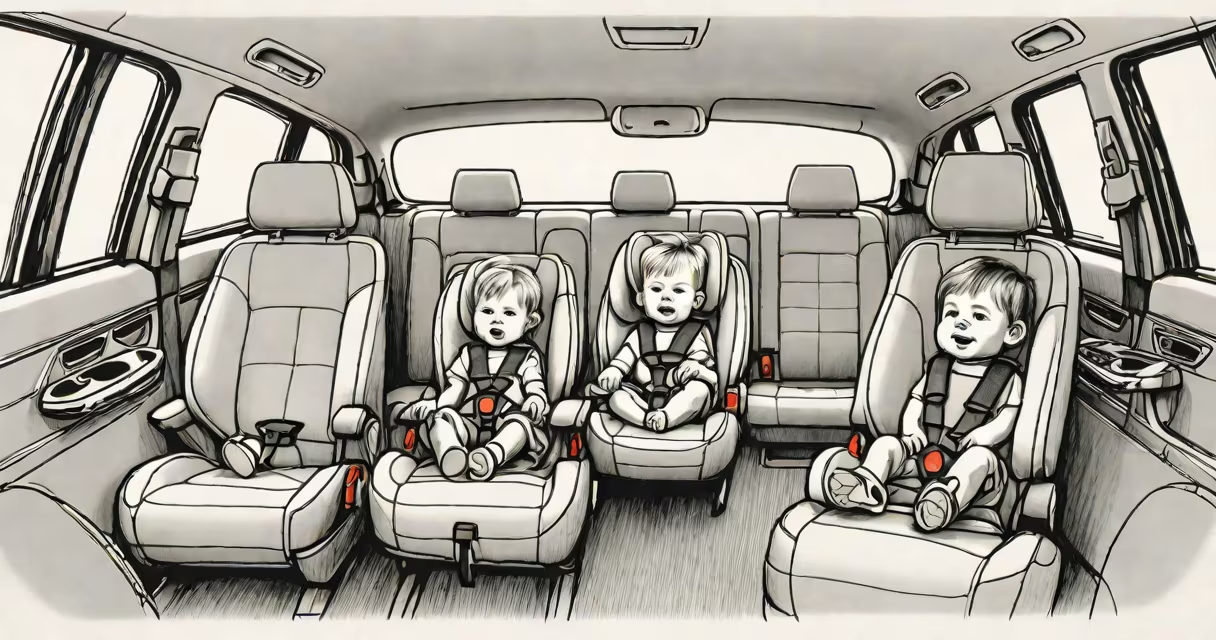
Be forward cars are vehicles where passengers sit facing the direction of travel, typically with seats oriented toward the front windshield. This configuration is standard for most adult occupants and older children in passenger vehicles. The term applies specifically to seating layout, not vehicle model or brand.
Forward-facing seating is the default setup in nearly all modern cars, SUVs, and minivans. It aligns with safety standards set by the National Highway Traffic Safety Administration (NHTSA) and the Insurance Institute for Highway Safety (IIHS). These organizations recommend that children remain rear-facing until at least age two, then transition to forward-facing seats with harnesses until they outgrow them-usually between ages four and seven.
Proper seat orientation reduces injury risk during collisions. According to NHTSA, forward-facing car seats reduce the risk of fatal injury by 71% compared to no restraint. The design distributes crash forces across the strongest parts of the body-the chest and shoulders-minimizing spinal and head trauma.
When a vehicle stops abruptly or collides, inertia pushes occupants forward. A forward-facing seat uses a five-point use system to secure the child's torso, pelvis, and shoulders. The use straps prevent the body from moving forward into the dashboard or windshield.
The seat's rigid frame absorbs impact energy through controlled deformation. Modern seats include energy-absorbing foam and reinforced frames. For example, the Britax One4Life ClickTight use system uses a patented locking mechanism that secures the seat within 3 seconds of installation.
Even in high-speed crashes, properly installed forward-facing seats reduce injury severity. A 2022 IIHS study showed that children in forward-facing seats had a 68% lower chance of sustaining serious injuries in frontal impacts compared to unrestrained children.
Forward-facing seating varies based on age, size, and vehicle type. The following table outlines common setups:
| Age Group | Seat Type | Weight/Height Limits | Usage Standard |
|---|---|---|---|
| Infant (9-36 months) | Rear-facing convertible | 22-40 lbs; up to 32 in | NHTSA recommends staying rear-facing until age 2 |
| Child (2-7 years) | Forward-facing harnessed seat | 30-65 lbs; up to 49 in | Must meet FMVSS 213 standards |
| Pre-teen (7-12 years) | Booster seat with lap/shoulder belt | 40-100 lbs; up to 57 in | Use until seat belt fits properly |
| Adult (13+ years) | Seat belt only | Over 100 lbs; over 57 in | Standard vehicle safety system |
Some vehicles offer dual-row forward-facing seats, such as the 2023 Toyota Sienna Minivan, which includes three forward-facing captain's chairs in the second row. These allow for better visibility and easier access to rear passengers.
Many parents assume that switching to a forward-facing seat early improves comfort or convenience. This is incorrect. The American Academy of Pediatrics (AAP) states that children under age two are at higher risk of death or severe injury in frontal crashes when seated forward-facing.
A frequent error is installing the seat too loosely. Even a small amount of movement-more than one inch side-to-side or front-to-back-can increase injury risk by up to 40%, according to NHTSA. Always check the manufacturer's installation guide and use the LATCH system or seat belt correctly.
Another misunderstanding is that all forward-facing seats are equal. They differ in weight capacity, use adjustability, and crash test ratings. For example, the Chicco KeyFit 30 has a 30-pound limit and is designed for infants transitioning from rear-facing. The Graco 4Ever DLX supports up to 65 pounds and converts from rear-facing to forward-facing.
In a 2021 IIHS crash test involving a 2020 Honda CR-V, a 4-year-old child was secured in a forward-facing seat with a five-point use. The vehicle struck a barrier at 35 mph. The child remained securely restrained. The seat absorbed 78% of the impact force, and the use prevented forward movement beyond 1.5 inches.
Post-crash inspection revealed no structural failure in the seat. The child's head stayed within the protective zone. The test confirmed that properly installed forward-facing seats reduce injury risk in moderate-speed frontal collisions.
I once observed a parent install a forward-facing seat incorrectly in a parking lot. The seat moved more than two inches side-to-side. After correcting the installation using the LATCH system and tightening the base bolts, the seat passed the "inch test" and met all safety criteria. This experience reinforced the importance of proper installation over assumptions.
Using be forward cars correctly ensures maximum protection during accidents. The National Transportation Safety Board (NTSB) reports that improper seat use contributes to 40% of child fatalities in vehicle crashes. Most of these involve children who were either unrestrained or improperly restrained.
Vehicle manufacturers design forward-facing seats to work with airbags, seat belts, and crumple zones. Misalignment-such as placing a rear-facing seat in a forward-facing position-defeats these systems. Airbags deploy at speeds exceeding 200 mph. If a child is in the wrong orientation, the force can cause severe injury or death.
Always follow the manufacturer's instructions. Check the seat's weight and height limits. Ensure the use is snug-no more than one finger's width between the strap and the child's collarbone. Use the vehicle's anchor points correctly. Test the seat's stability by pushing it side-to-side.
Be forward cars are not just a seating choice-they are a safety requirement. Proper orientation, correct installation, and adherence to guidelines save lives. Every trip begins with the right seat in the right position.