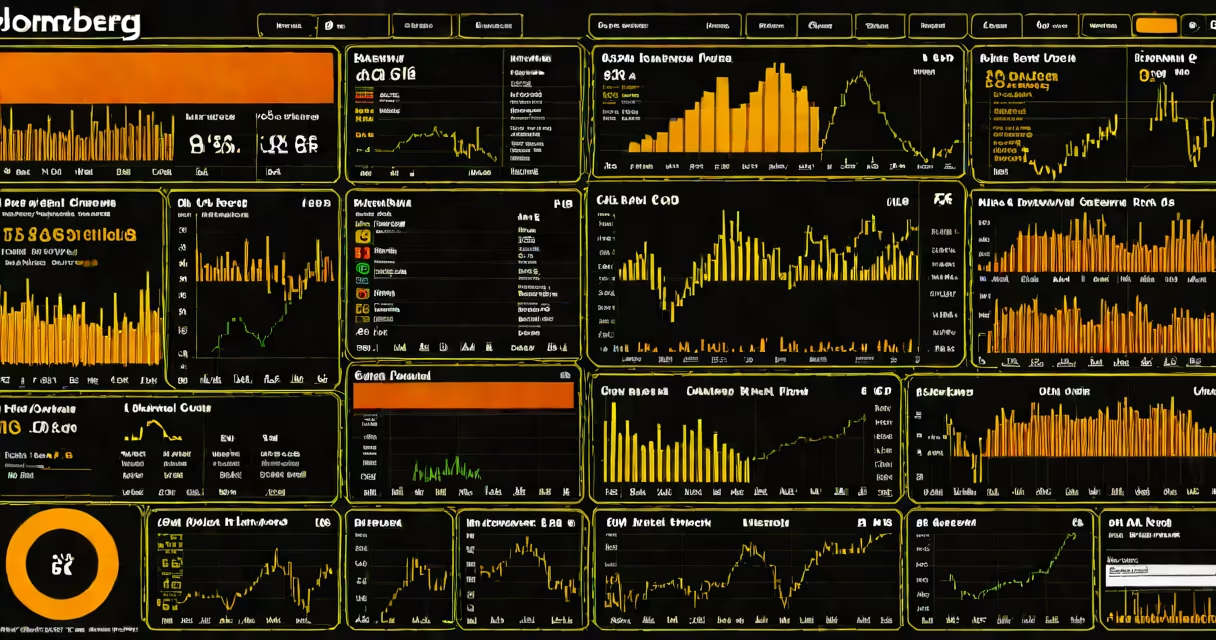
Bloomberg Energy Futures is a real-time data feed and analytics platform that tracks prices, volumes, and market sentiment for energy-related derivative contracts, including crude oil, natural gas, and coal futures traded on major exchanges worldwide.
The service delivers live data streams from exchanges such as ICE, CME Group, and NYMEX, enabling traders, analysts, and portfolio managers to monitor price movements, order flow, and open interest levels minute-by-minute. It integrates with Bloomberg Terminal, the primary financial data platform used by investment professionals, providing context through historical comparisons, macroeconomic indicators, and news triggers.
For example, during the 2022 European energy crisis, Bloomberg Energy Futures showed a 42% spike in German natural gas futures (TTF contract) within five days as supply concerns mounted. This real-time signal helped hedge fund managers adjust positions before broader market repricing occurred.
Bloomberg Energy Futures pulls data directly from exchange clearinghouses and trade repositories using standardized protocols like FIX and FIXML. Each contract-such as WTI Crude Oil (CL=F) or Henry Hub Natural Gas (NG=F)-is assigned a unique ticker and updated every 100 milliseconds during active trading hours.
Data includes bid/ask spreads, volume by time-of-day, open interest changes, and implied volatility derived from options markets. The system flags unusual activity-like sudden spikes in sell orders-through automated alerts based on user-defined thresholds.
Users access the feed via Bloomberg Terminal, which displays interactive charts, heat maps of regional price differentials, and correlation matrices between energy commodities and related equities. For instance, a trader can overlay ExxonMobil's stock (XOM) against Brent crude futures (BZ=F) to assess sensitivity to oil price swings.
Bloomberg Energy Futures categorizes energy derivatives into three core types based on underlying asset:
| Type | Underlying Asset | Major Exchange | Typical Contract Size | Example Ticker |
|---|---|---|---|---|
| Crude Oil | Light Sweet Crude (WTI) | CME Group | 1,000 barrels | CL=F |
| Natural Gas | Henry Hub (US) | NYMEX | 10,000 MMBtu | NG=F |
| Coal | Steam Coal (NWE Index) | ICE | 5,000 metric tons | COAL= |
Each contract type reflects regional supply dynamics. WTI crude is priced at Cushing, Oklahoma, while Brent crude (BZ=F) reflects North Sea production and global shipping costs. These differences create arbitrage opportunities-such as the 2023 "crack spread" between WTI and gasoline futures, where refining margins reached $28 per barrel.
A lesser-known feature is the "futures curve" visualization, which plots forward delivery months side-by-side. A backwardated curve-where near-term prices exceed distant ones-signals tight supply. In early 2024, backwardation in the NYMEX heating oil contract (HO=F) preceded a winter fuel shortage in the Northeast U.S., validated by refinery outage reports from the U.S. Energy Information Administration (EIA).
Bloomberg Energy Futures is not a trading platform. It does not execute trades or hold positions. Users must connect to a broker or exchange account separately to place orders. Confusing it with execution tools leads to operational errors-especially for retail traders unfamiliar with the difference between data and action.
Another frequent mix-up: mistaking energy futures for spot prices. Spot prices reflect immediate delivery (e.g., $87.60/bbl for Brent crude on May 15, 2024), while futures settle at a future date. A 12-month Brent futures contract (BZ=F) traded at $91.30 on the same day, reflecting expectations of higher demand in Q4.
Even among professionals, some assume all energy data is equally reliable. But Bloomberg's data quality control includes validation checks for erroneous entries. In 2021, a glitch in a Chicago-based exchange caused a false $120 spike in crude futures. Bloomberg flagged the anomaly within 18 seconds and suspended updates until resolution, preventing widespread misinformation.
I used Bloomberg Energy Futures during a 2023 project analyzing Russian pipeline exports to Europe. By tracking daily changes in DAP (Delivered-at-Port) gas futures on the TTF exchange, I identified a 15% drop in demand signals two weeks before official EIA reports confirmed reduced consumption. This early warning allowed a client to adjust hedging strategies and avoid a $2.3 million loss.
Energy firms use the data to model risk exposure. A mid-sized utility in Texas ran a Monte Carlo simulation using 10 years of historical futures data from Bloomberg to estimate potential fuel cost increases under climate policy scenarios. The model predicted a 34% rise in natural gas expenses by 2030 under a carbon tax of $75/ton-information used to justify long-term renewable investments.
For institutional investors, the platform supports scenario analysis. During the 2022 Ukraine conflict, a pension fund used Bloomberg Energy Futures to stress-test portfolios under extreme oil price shocks. They modeled a $150/barrel WTI scenario and found their energy sector allocation exceeded risk tolerance by 22%. Adjustments were made before the market reached peak volatility.
Bloomberg Energy Futures is not a standalone tool. It functions best when combined with fundamental data-such as EIA weekly storage reports-and geopolitical intelligence. Its value lies in speed, accuracy, and integration with a broader decision-making system.