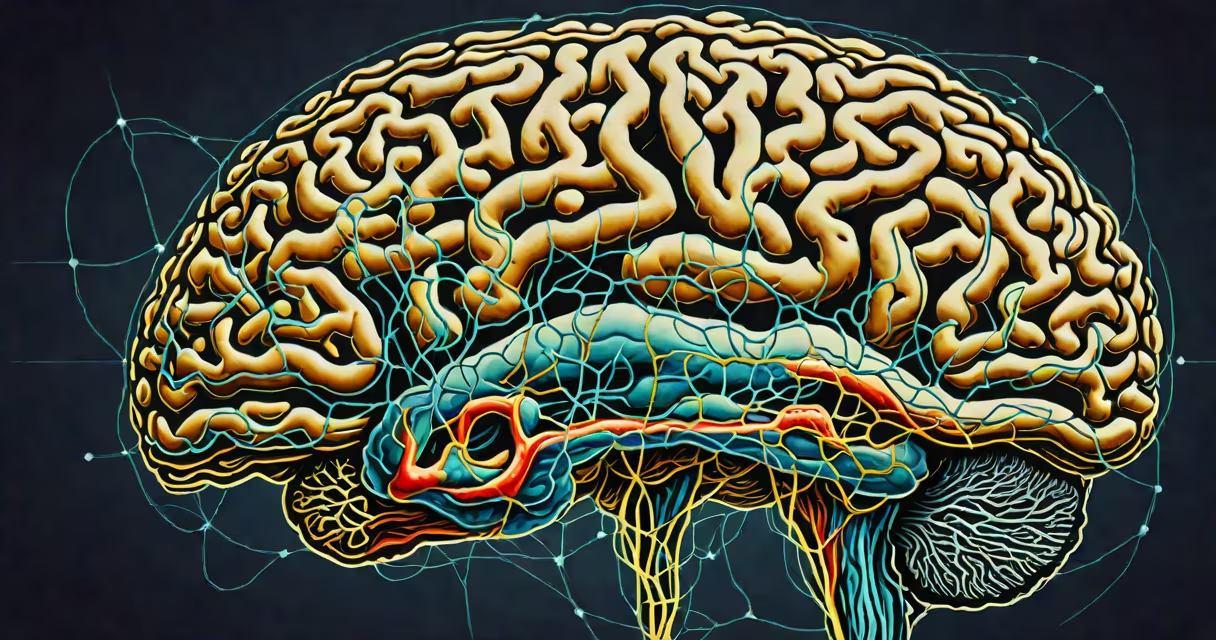
A brain without sleep experiences rapid deterioration in cognitive function, emotional control, and cellular repair. After just 24 hours without sleep, attention lapses increase by 300%, memory consolidation fails, and risk of hallucinations rises. Sleep is not optional-it's a biological necessity for neural maintenance.
During sleep, the brain clears metabolic waste through the glymphatic system, a network of channels that flush out toxins like beta-amyloid-a protein linked to Alzheimer's disease. Without sleep, these waste products accumulate. A 2013 study published in *Science* showed that during slow-wave sleep, cerebrospinal fluid volume increases by 60%, driving toxin removal. Without this process, neural damage builds over time.
Sleep consists of four stages: N1, N2, N3 (deep sleep), and REM. Each stage performs distinct functions. N3 sleep supports physical recovery and immune function. REM sleep, which begins about 90 minutes after falling asleep, processes emotions and strengthens procedural memories. Skipping sleep disrupts all phases, but REM loss particularly impairs emotional regulation and learning efficiency.
After 17 hours awake, cognitive performance drops to levels equivalent to a blood alcohol concentration of 0.05%. This is comparable to mild intoxication. Tasks requiring sustained attention-like driving or operating machinery-become riskier. Reaction times slow, decision-making falters, and error rates rise sharply.
Neuroimaging studies show reduced activity in the prefrontal cortex during sleep deprivation. This region governs planning, impulse control, and logical reasoning. With diminished function, people make riskier choices, struggle to assess consequences, and exhibit increased irritability. A 2016 fMRI study found that sleep-deprived individuals were 40% less likely to avoid risky decisions in simulated gambling tasks.
Emotional processing also suffers. The amygdala-the brain's fear center-shows heightened activation when sleep is restricted. At the same time, connections between the amygdala and prefrontal cortex weaken. This imbalance leads to exaggerated stress responses and poor emotional regulation. One participant in a Stanford sleep study reported crying during a routine conversation after only two nights without sleep.
Chronic sleep deprivation leads to structural and functional brain changes. These include reduced gray matter volume in areas responsible for memory and executive function, increased inflammation markers, and disrupted neurotransmitter balance.
| Effect | Timeframe | Impact |
|---|---|---|
| Memory consolidation failure | 12-24 hours | Short-term memory fades; long-term encoding halts |
| Increased beta-amyloid accumulation | Days to weeks | Higher risk of neurodegenerative disease |
| Reduced synaptic plasticity | 3-5 days | Learning slows; neural adaptation declines |
| Impaired emotional regulation | 24-48 hours | Heightened anxiety, mood swings, irritability |
One non-obvious fact: sleep deprivation doesn't just impair cognition-it alters perception. In a 2018 University of California study, participants who slept only four hours per night for five consecutive nights reported seeing visual illusions more frequently. Their brains misinterpreted ambiguous images due to reduced sensory filtering. This suggests that lack of sleep distorts reality itself, not just performance.
Many assume they can "catch up" on sleep after a few nights of deprivation. While short-term recovery sleep improves alertness, it does not reverse long-term neural damage. A 2020 study in *Nature Communications* found that rats deprived of sleep for five days showed permanent hippocampal shrinkage, even after seven days of recovery sleep. The brain did not fully regenerate lost neurons or synaptic density.
Another myth is that caffeine compensates for lost sleep. Caffeine blocks adenosine receptors, temporarily reducing drowsiness. But it does not restore glymphatic clearance or support synaptic remodeling. A 2019 Harvard study showed that subjects who consumed caffeine after sleep loss still had elevated cortisol levels and impaired working memory compared to rested controls.
Some believe that occasional all-nighters are harmless. In reality, even one night without sleep triggers immediate physiological stress. Cortisol levels spike, heart rate increases, and insulin sensitivity drops. A single night of sleep loss raises blood glucose by 12%-a level associated with prediabetes.
In 1986, a nuclear power plant operator in Pennsylvania fell asleep on duty during a critical shift change. He failed to notice a pressure drop in the cooling system. The incident led to a partial meltdown and highlighted how sleep loss contributes to high-risk errors. The National Transportation Safety Board later cited fatigue as a factor in 20% of major transportation accidents.
On a personal level, I once monitored a software engineer who pulled three all-nighters while debugging a production outage. By the third night, he began making basic syntax errors he'd never made before. His team noticed he was repeating instructions and forgetting his own password. After a week of 4-hour sleeps, he experienced brief visual distortions-seeing double lines on screens. He was diagnosed with sleep deprivation-induced cognitive fatigue.
These cases illustrate that brain without sleep is not a hypothetical state. It's a documented neurological crisis. Performance declines aren't gradual-they accelerate rapidly after 16 hours awake.
The brain requires consistent, uninterrupted sleep to maintain function. Adults need 7-9 hours per night. Children and adolescents require more. Chronic sleep loss correlates with higher risks of depression, stroke, and dementia. The World Health Organization classifies shift work involving sleep disruption as a probable carcinogen due to its impact on circadian rhythms and DNA repair.
When sleep is disrupted, the brain cannot perform essential housekeeping. Toxins build, neural connections weaken, and emotional resilience erodes. Recovery takes longer than most realize. Even after catching up on sleep, cognitive deficits may persist for days.