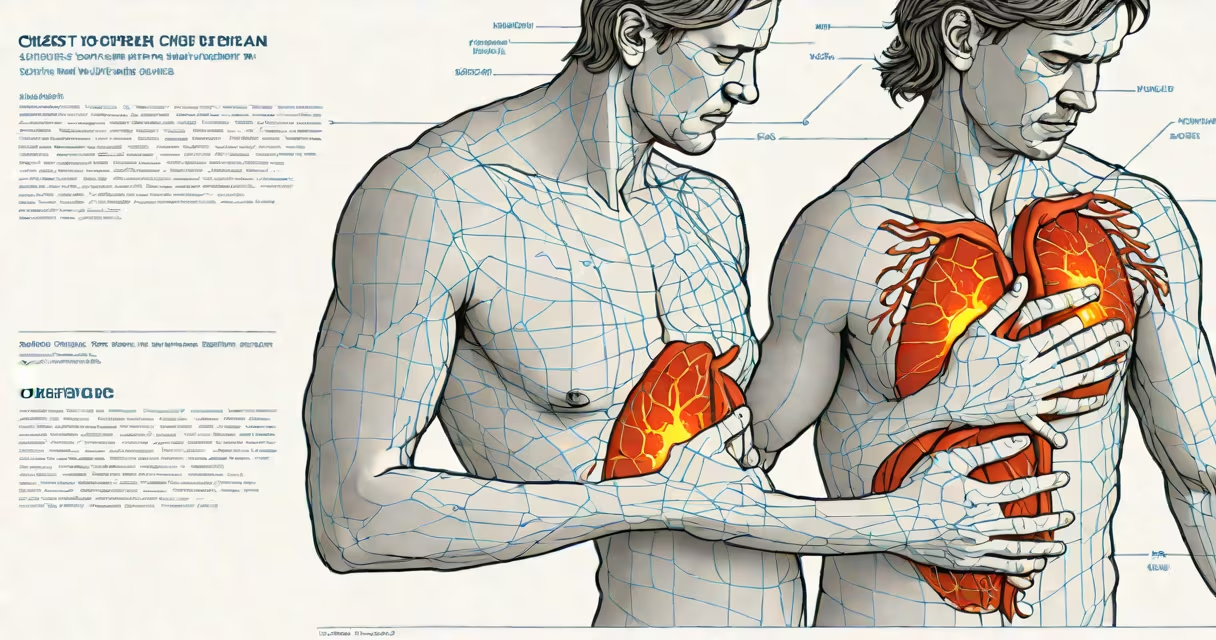
Chest pain from left side refers to discomfort or pressure originating on the left side of the chest, which may stem from heart, lung, muscle, nerve, or gastrointestinal causes. It is not a diagnosis but a symptom requiring prompt evaluation to rule out life-threatening conditions.
Left-sided chest pain can feel sharp, dull, burning, or tight. Its origin determines urgency and treatment. While heart attacks often present with left chest pain, many cases arise from non-cardiac sources such as acid reflux, muscle strain, or anxiety. Accurate assessment requires clinical context, including duration, triggers, and associated symptoms.
The left chest houses important organs: the heart, lungs, esophagus, and parts of the diaphragm. Pain signals travel through nerves to the spinal cord and brain. Because multiple structures share nerve pathways, pain from one area can be misinterpreted as coming from another-a phenomenon called referred pain.
For example, heart pain (angina) often radiates to the left arm, jaw, or neck. Gastroesophageal reflux disease (GERD) can cause a burning sensation behind the breastbone that spreads to the left side. These overlapping patterns make accurate diagnosis essential.
A 2021 study in Journal of the American College of Cardiology found that 30% of patients presenting with left chest pain had non-cardiac causes, underscoring the need for thorough evaluation before assuming a heart issue.
Left chest pain arises from several systems. The most serious involve the cardiovascular system, while others stem from digestive, musculoskeletal, or psychological factors.
| Type | Common Causes | Key Features |
|---|---|---|
| Cardiac | Heart attack, angina, pericarditis | Pressure, squeezing, lasting >5 minutes; worsens with exertion; may include sweating, nausea |
| Gastrointestinal | GERD, hiatal hernia, esophageal spasm | Burning, often after eating; may improve with antacids; can mimic heart pain |
| Musculoskeletal | Costochondritis, rib injury, muscle strain | Sharp, localized; worsens with movement or deep breaths; tenderness on palpation |
| Nervous System | Pinched nerve, shingles (postherpetic neuralgia) | Burning, tingling; follows a dermatomal pattern; may precede rash |
| Anxiety/Panic | Panic attacks, hyperventilation | Sudden onset; associated with dizziness, numbness, fear of dying |
One non-obvious distinction: GERD-related chest pain often occurs within 30 minutes of eating and improves when upright. A 2020 review in Alimentary Pharmacology & Therapeutics noted that 40% of patients with left-sided chest pain attributed to GERD reported symptom relief after proton-pump inhibitor therapy.
Healthcare providers assess chest pain based on history, physical exam, and diagnostic tests. The location-especially left-sided-is a red flag for cardiac events, but not definitive.
For example, a 58-year-old man with a history of smoking and high cholesterol reports sudden left chest pressure lasting 15 minutes, radiating to his left arm, accompanied by cold sweat. This presentation aligns with acute coronary syndrome. An electrocardiogram (ECG) shows ST-segment elevation, confirming a heart attack. Immediate intervention is required.
In contrast, a 32-year-old woman describes intermittent burning pain on the left side of her chest that begins after meals and eases when she stands. She has no risk factors for heart disease. Endoscopy reveals mild esophagitis. Treatment with omeprazole resolves symptoms within two weeks.
These cases illustrate why context matters. The same symptom-left chest pain-can lead to vastly different outcomes based on patient history, timing, and associated signs.
Left chest pain is frequently mistaken for heart attacks when it stems from non-cardiac causes. Conversely, cardiac issues can be overlooked when symptoms are subtle or atypical.
Women, older adults, and people with diabetes are more likely to have atypical presentations. For example, a 67-year-old woman with diabetes experienced fatigue and left shoulder pain-not classic chest pressure-before being diagnosed with a myocardial infarction. Delayed recognition increased her risk of complications.
Another common error: attributing left-sided pain to anxiety without ruling out organic causes. A 2019 study in Annals of Internal Medicine found that 12% of patients initially diagnosed with panic disorder later received a confirmed cardiac diagnosis after further testing.
True red flags include pain lasting longer than 10 minutes, occurring at rest, radiating to the jaw or arm, or accompanied by shortness of breath, nausea, or cold sweats. These warrant immediate emergency evaluation.
I once saw a 44-year-old man come into urgent care complaining of left chest pain that began during a workout. He described a heavy, squeezing sensation under his left nipple. His blood pressure was elevated, and he had a rapid pulse. Initial ECG showed nonspecific changes.
After ruling out acute coronary syndrome via troponin testing and stress imaging, we discovered he had severe acid reflux triggered by exercise. He'd been taking antacids irregularly. After starting daily omeprazole and modifying his diet, his symptoms resolved completely. This case highlights how gastrointestinal causes can mimic cardiac pain and why testing is essential.
If you experience chest pain from left side, especially with any of the following, seek emergency care:
Do not delay care. Chest pain from left side is not a symptom to ignore. Early identification of cause prevents complications and guides effective treatment.