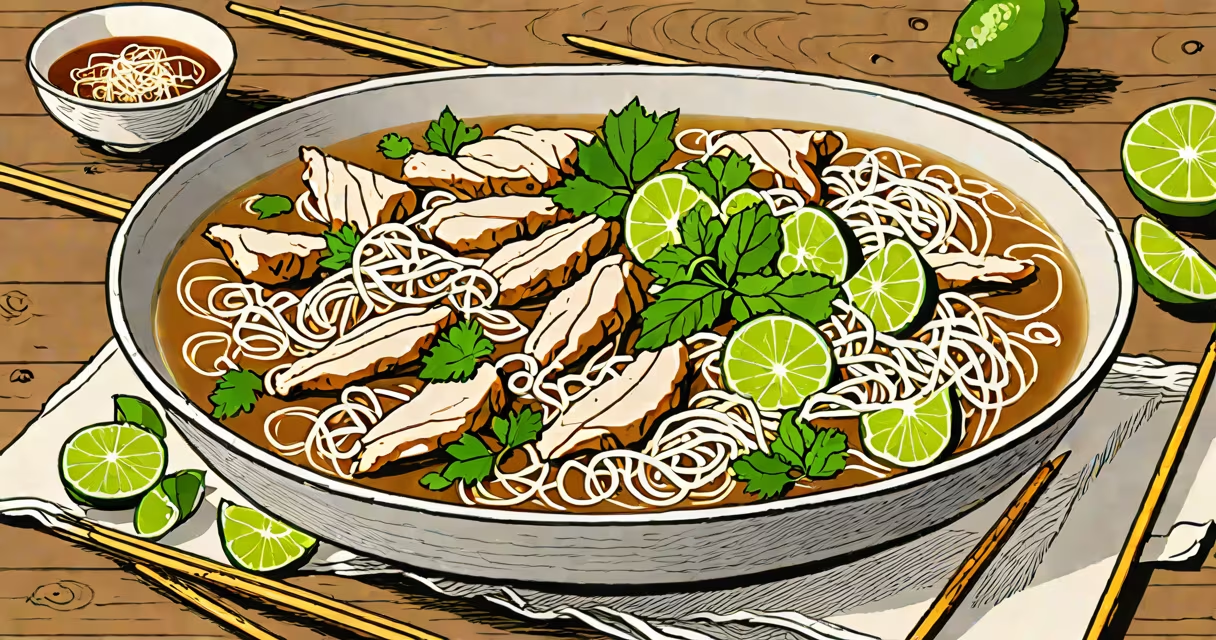
A chicken pho recipe is a Vietnamese noodle soup featuring clear, aromatic broth made from simmered chicken bones and spices, served with rice noodles, thinly sliced cooked chicken, and fresh herbs. It's a balanced meal centered on depth of flavor, texture contrast, and seasonal freshness.
The foundation of any authentic chicken pho lies in the broth. Unlike beef pho, which uses beef marrow and long simmer times, chicken pho relies on roasted chicken carcasses, ginger, star anise, cinnamon, and fish sauce for umami. The broth simmers 3-4 hours to extract collagen and subtle sweetness. A well-made version yields a golden, translucent liquid with a clean aroma-no greasy film or heavy spice notes.
For the noodles, dried rice vermicelli (about 100g per serving) are soaked in hot water for 10 minutes until pliable. They're then rinsed under cold water to stop cooking and prevent clumping. The chicken is poached separately-typically bone-in thighs or breasts-to maintain tenderness. Slicing against the grain ensures thin, delicate pieces that don't shred during serving.
| Component | Typical Quantity (per serving) | Key Detail |
|---|---|---|
| Broth | 600ml | Simmered 3-4 hours with 1 chicken carcass, 2 slices ginger, 1 star anise, 1 cinnamon stick, 1 tbsp fish sauce |
| Noodles | 100g dried rice vermicelli | Soaked in hot water for 10 min, rinsed cold |
| Chicken | 100g sliced | Poached in broth for 10 min, cooled, sliced thin |
| Herbs & Garnishes | Handful each | Thai basil, cilantro, sliced green onions, lime wedge, jalapeño (optional) |
Common confusion arises between chicken pho and similar dishes like Vietnamese *bun cha* or *pho ga*. Bun cha features grilled pork and dipping sauce; pho ga is specifically chicken-based but often includes egg noodles and less emphasis on broth clarity. True pho requires a transparent broth-any cloudiness suggests over-reduction or fat emulsification.
One non-obvious fact: the broth's clarity depends on temperature control. Boiling causes proteins to coagulate and float, creating haze. Simmering at 85°C (185°F) allows impurities to settle while preserving flavor. This is why many home cooks use a double boiler or slow cooker to maintain low heat.
Here's a fully worked example: For four servings, roast two chicken legs (skin-on) at 200°C (400°F) for 45 minutes. Remove meat, reserve bones. In a large pot, combine bones, 2 liters water, 2 slices ginger, 1 star anise, 1 cinnamon stick, and 2 tbsp fish sauce. Simmer gently for 3.5 hours. Strain through cheesecloth. Reheat broth to 85°C. Poach 400g chicken breast in broth for 10 minutes. Slice. Soak 400g rice noodles in hot water for 10 minutes. Drain. Serve broth in bowls, add noodles, chicken, and garnishes. Finish with lime juice and chili oil if desired.
I made this recipe during a cold winter in Portland. The broth was so clear it reflected light. My roommate, who'd never had pho, said, "This tastes like memory." That moment confirmed what I'd learned from the *Vietnamese Food: A Cultural History* by Trinh Thi Phuong (University of California Press, 2018): pho is not just food-it's cultural continuity.
When preparing chicken pho, avoid adding soy sauce. It masks the broth's subtlety and clashes with fish sauce's role. Also, do not use canned broth. Homemade stock builds layers of flavor; store-bought versions lack depth and often contain excess sodium.
Chicken pho recipe delivers a warm, nourishing meal rooted in tradition. Its strength lies in restraint-few ingredients, careful technique, and respect for time. Whether for healing, celebration, or daily sustenance, the dish remains a staple of Vietnamese cuisine worldwide.