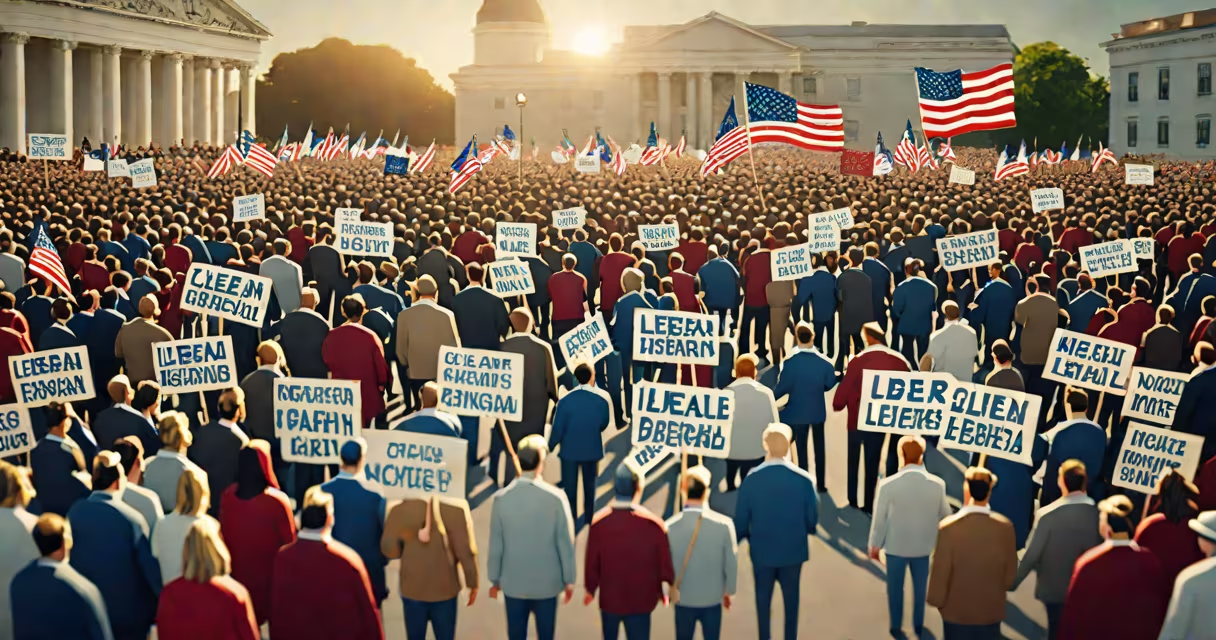
Conservative vs liberal beliefs represent contrasting worldviews on government authority, individual rights, and economic policy. Conservatives prioritize tradition, limited government, and personal responsibility; liberals emphasize equality, social justice, and active government intervention to address systemic issues.
These perspectives shape responses to taxation, healthcare, education, and civil rights. While both sides value freedom, they define it differently: conservatives see freedom as protection from government overreach, while liberals see it as access to opportunity and dignity through public support.
Conservative beliefs center on maintaining established institutions and minimizing state interference. This includes supporting lower taxes, reducing regulation, and emphasizing national sovereignty. A conservative may argue that welfare programs discourage work, citing the 1996 Personal Responsibility and Work Opportunity Reconciliation Act, which replaced welfare with Temporary Assistance for Needy Families (TANF), as evidence of successful reform.
Liberals view government as a tool to correct inequities. They advocate for progressive taxation, universal healthcare, and expanded social safety nets. For example, the Affordable Care Act (2010) was passed under Democratic leadership to extend health coverage to 20 million uninsured Americans, according to the Congressional Budget Office.
These divergent approaches lead to different policy outcomes. In 2022, states with Republican majorities blocked Medicaid expansion, while Democratic-led states implemented it. As of 2023, 40 states had adopted the expansion, covering over 12 million low-income adults, per the Kaiser Family Foundation.
The divide extends beyond economics into cultural and moral domains. Conservatives often oppose abortion rights and same-sex marriage, citing religious traditions and the sanctity of life. The Supreme Court's 2022 Dobbs v. Jackson decision, overturning Roe v. Wade, reflected this stance, allowing states to ban or restrict abortion.
Liberals tend to support reproductive rights and LGBTQ+ protections. California's 2013 law granting same-sex couples full marriage rights preceded the 2015 Obergefell v. Hodges ruling that legalized same-sex marriage nationwide. The ACLU reported a 71% approval rate for same-sex marriage in U.S. polls by 2023.
| Issue | Typical Conservative View | Typical Liberal View |
|---|---|---|
| Taxation | Lower rates, especially on income and capital gains | Progressive system; higher rates on top earners |
| Healthcare | Market-based solutions, private insurance | Universal coverage via public option or single-payer |
| Immigration | Border security, legal pathways, enforcement | Pathway to citizenship, protections for Dreamers |
| Criminal Justice | Law and order, tough sentencing | Reform, decarceration, restorative justice |
Not all conservatives oppose government action. Fiscal conservatives support spending cuts and balanced budgets but may back targeted social programs like faith-based initiatives. The 2018 Tax Cuts and Jobs Act reduced corporate tax rates from 35% to 21%, a move backed by Republicans and supported by business groups like the U.S. Chamber of Commerce.
Liberals aren't uniformly against personal responsibility. Many support earned income tax credits and job training programs that combine public investment with accountability. The 2021 American Rescue Plan included $1,400 stimulus checks and expanded child tax credits, which lifted 4 million people out of poverty temporarily, per the Center on Budget and Policy Priorities.
A common error is equating "liberal" with "leftist" or "radical." In practice, most liberals support democratic institutions and gradual reform. The Pew Research Center found that 62% of self-identified liberals believe the U.S. system can be improved without overthrowing it.
Climate policy reveals the gap between conservative and liberal beliefs. Liberals generally accept climate science and support federal regulations to reduce emissions. The Inflation Reduction Act of 2022 allocated $370 billion to clean energy, aiming to cut greenhouse gas emissions by 40% below 2005 levels by 2030, according to the Environmental Protection Agency.
Conservatives often challenge climate science or oppose regulations they see as economically harmful. In 2023, Texas sued the EPA over methane emission rules, arguing they would hurt oil and gas producers. The state's Energy Board estimated compliance costs at $1.2 billion annually.
This divergence reflects deeper values: liberals trust scientific consensus and collective action; conservatives prioritize economic stability and local control. These differences persist even among voters who agree on outcomes-such as wanting clean air-but disagree on methods.
I once attended a community forum in rural Ohio where residents debated a proposed wind farm. Conservatives argued it would disrupt landscapes and property values. Liberals pointed to long-term environmental benefits and local jobs. After hours of discussion, a compromise emerged: the project would be sited farther from homes, with revenue shared with nearby towns. The resolution showed how values clash but can still yield practical results.
Understanding conservative vs liberal beliefs isn't about labeling people-it's about recognizing how worldview shapes policy. These differences influence elections, court rulings, and daily life. Knowing the roots of each perspective helps citizens engage constructively, even when they disagree.