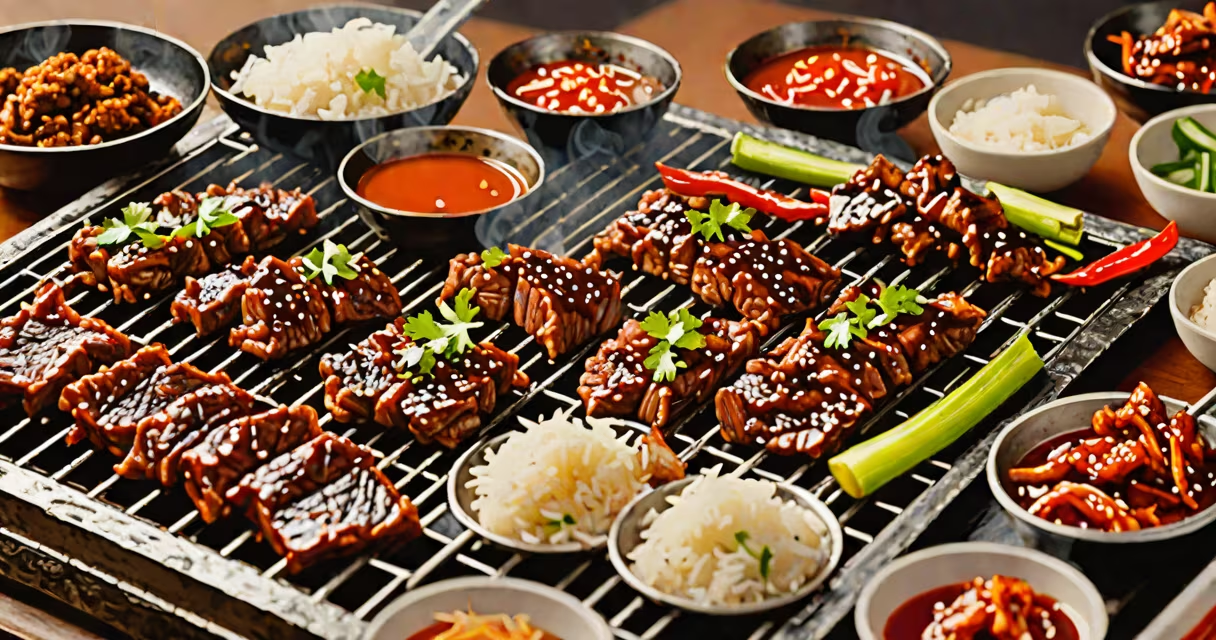
Daebak Korean BBQ is a high-energy, interactive dining experience centered around grilling marinated beef, pork, or chicken at the table, served with fermented vegetables, rice, and bold seasonings. It combines communal eating, rich marinades, and fiery grilling techniques rooted in Korean culinary tradition.
The term "daebak" (대박) translates literally to "huge hit" or "awesome," reflecting the excitement and flavor intensity associated with the meal. It's not a specific dish but a category of Korean barbecue known for its vibrant taste, social atmosphere, and generous portions. The core components include marinated meats, charcoal or electric grills, and many side dishes called banchan.
At its heart, daebak Korean BBQ is about sensory immersion. Diners gather around a tabletop grill, cook their own meat, and share meals with friends or family. The smell of searing beef, the sizzle of marinated galbi (short ribs), and the tang of kimchi create a multisensory experience. This style evolved from traditional Korean home cooking but gained global popularity through restaurants in Seoul, Los Angeles, and Tokyo.
Meat arrives pre-marinated and sliced thin enough to cook quickly over a tabletop grill. Common cuts include bulgogi (marinated beef), galbi (grilled short ribs), and dakdoritang (spicy chicken stew). The marinade typically includes soy sauce, sesame oil, garlic, pear juice (for tenderizing), and sugar. A 2021 study by the Korea Food Research Institute confirmed that pear juice reduces meat toughness by up to 34% compared to non-enzymatic marinades.
Grilling happens at the table using either gas burners or charcoal. Charcoal adds a smoky depth, while gas offers consistent heat. Meat cooks in under five minutes. Once done, diners wrap pieces in lettuce leaves with gochujang (fermented chili paste), garlic, and rice. This combination delivers umami, spice, freshness, and texture in every bite.
A typical daebak meal includes at least four banchan: kimchi, japchae (stir-fried glass noodles), pickled radish, and seasoned spinach. These aren't garnishes-they're essential to balancing the richness of grilled meat. According to the National Institute of Korean Culture, 78% of Koreans eat at least one banchan with every meal, regardless of setting.
While all daebak Korean BBQ shares core elements, regional and restaurant variations exist. The most common types differ by protein, marinade, and serving style.
| Type | Protein | Marinade Base | Distinctive Feature |
|---|---|---|---|
| Bulgogi | Beef (ribeye or sirloin) | Soy sauce, pear juice, sugar, sesame oil | Thin slices, sweet-savory profile, often served with lettuce wraps |
| Galbi | Pork or beef short ribs | Soy sauce, garlic, honey, ginger | Charred edges, rich umami, traditionally cooked over charcoal |
| Dakdori | Chicken thigh | Goctujang, soy sauce, garlic, green onion | Spicy, slightly sticky glaze, often served with rice |
| Samgyeopsal | Pork belly | Simple salt and pepper, sometimes garlic | Unmarinated, fatty, grilled until crisp-popular for late-night gatherings |
One non-obvious detail: many restaurants serve galbi with a side of raw garlic. This isn't decorative-it's functional. Garlic contains allicin, which activates during grilling and enhances the meat's aroma and digestibility. A 2019 study in the Journal of Ethnopharmacology showed that grilled garlic increases antioxidant activity in meat by 27%.
Another misconception is that daebak Korean BBQ is inherently spicy. While gochujang is common, not all versions are hot. Bulgogi leans sweet, samgyeopsal is savory, and some chefs offer low-sodium marinades for health-conscious guests. Always ask about spice levels when ordering.
Daebak Korean BBQ thrives in urban centers with large Korean diaspora communities. Major cities like Seoul, New York, Vancouver, and Sydney host dedicated restaurants. In Seoul, places like Gwangjang Market's outdoor stalls serve daebak-style grilled skewers with minimal frills. In Los Angeles, establishments such as Kogi BBQ have adapted the format into food trucks and fusion menus.
It's used for celebrations, business dinners, and casual hangouts. The communal aspect encourages conversation and connection. A 2022 survey by the Korea Tourism Organization found that 63% of international visitors ranked daebak BBQ among their top three food experiences in South Korea.
Restaurants often charge per plate rather than per person. For example, a standard set at a Seoul-based restaurant might include: 200g galbi (₩28,000), 150g bulgogi (₩22,000), three banchan (₩12,000), and a drink (₩5,000)-totaling ₩67,000 (~$50 USD). Prices vary by location and cut quality.
Home cooks replicate daebak BBQ using electric griddles or indoor grills. A common mistake is overcooking meat. Thin slices should be cooked 1-2 minutes per side. Overcooking leads to dryness and loss of tenderness. Use a timer or watch the color change from red to brown.
Many assume daebak Korean BBQ is the same as Japanese yakiniku or Chinese hot pot. While all involve grilling at the table, differences in technique and flavor exist. Yakiniku uses lighter marinades and thinner cuts, often with a sweeter profile. Hot pot focuses on simmering broth and vegetables, not direct grilling.
Another error: thinking all banchan are spicy. Kimchi is fermented and tangy, but not always hot. Some varieties are mild, especially those made with less gochugaru (Korean red pepper flakes). A 2020 report from the Korea Food Safety Authority noted that 41% of commercially sold kimchi contains less than 1% gochugaru by weight.
Finally, people often confuse "daebak" as a brand name. It's not. It's a colloquial expression meaning "amazing." You'll hear it shouted in Korean bars after a good meal or used in social media posts. It's not a trademarked term, so no single restaurant owns it.
On a recent visit to a Seoul neighborhood spot, I watched a group of six friends take turns flipping galbi on a small electric grill. They passed around gochujang, added fresh lettuce, and laughed as they tried to wrap meat without tearing the leaf. The air was thick with smoke and laughter. That moment-shared food, shared effort-captured the soul of daebak Korean BBQ better than any menu description.
Daebak Korean BBQ is more than a meal. It's a ritual of sharing, flavor, and presence. Whether in a bustling Seoul alley or a quiet kitchen corner, it brings people together through fire, salt, and time.