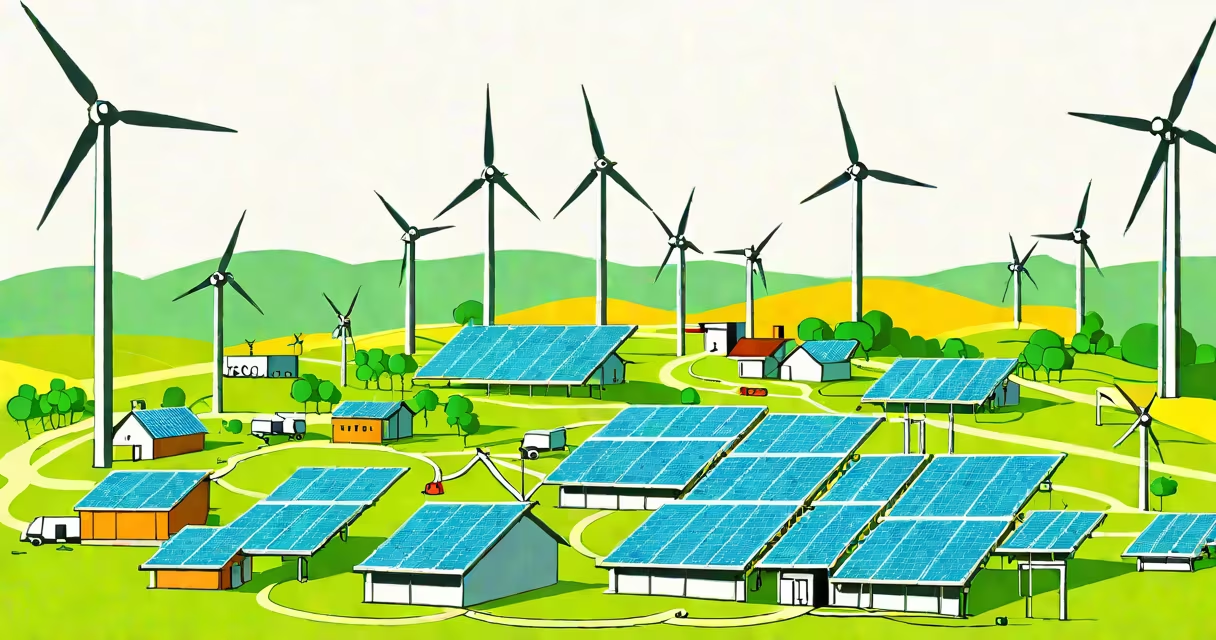
Generating electricity ks3 refers to the science curriculum topics in UK Key Stage 3 that explain how electrical energy is produced from various sources such as coal, wind, solar, and nuclear reactions. Students learn the principles behind energy conversion, the role of generators, and the differences between renewable and non-renewable sources.
Electricity is not created from nothing-it results from converting other forms of energy. In a power station, mechanical energy from spinning turbines turns a generator. This motion induces an electric current through electromagnetic induction, a principle discovered by Michael Faraday. The process begins with fuel or a natural force moving a turbine, which spins a magnet inside a coil of wire. The changing magnetic field generates a flow of electrons-electric current.
For example, in a coal-fired power station, burning coal heats water into steam. The high-pressure steam forces a turbine to spin. That rotation powers a generator, producing electricity. A single large coal plant can generate up to 1,000 megawatts-enough to power around 750,000 homes. By contrast, a single offshore wind turbine can produce 15 megawatts, enough for roughly 11,000 homes.
At its core, generating electricity relies on electromagnetic induction. When a conductor, like copper wire, moves through a magnetic field, electrons in the wire are pushed, creating a current. This is the fundamental mechanism behind all large-scale electricity production.
Every generator contains a rotor (the rotating part) and a stator (the stationary part). The rotor holds magnets or electromagnets. As it spins inside the stator's coils, the magnetic field changes constantly. This change induces a voltage, and if the circuit is closed, current flows. The faster the rotor spins, the higher the voltage and frequency of the alternating current (AC).
A real-world example is the Sizewell B nuclear power station in Suffolk. It uses controlled nuclear fission to heat water into steam. The steam drives turbines connected to generators. The plant produces about 1,200 megawatts of electricity-roughly 3% of the UK's total electricity demand. The entire process takes place within a containment building designed to prevent radiation leaks.
Power stations differ based on the primary energy source they use. The main categories include thermal, hydroelectric, wind, solar, and nuclear. Each converts a different form of energy into electrical energy.
| Source Type | Energy Input | Conversion Process | Example Location |
|---|---|---|---|
| Fossil Fuel | Burning coal or gas | Heat → steam → turbine → generator | Drax Power Station, North Yorkshire |
| Nuclear | Splitting uranium atoms | Heat → steam → turbine → generator | Sizewell B, Suffolk |
| Wind | Wind turning blades | Rotation → generator via gearbox | Offshore wind farm near Hornsea, East Yorkshire |
| Solar | Sunlight hitting photovoltaic cells | Light → direct current (DC) → inverter → AC | Large solar range in Cornwall |
| Hydroelectric | Flowing water from dams | Water pressure → turbine → generator | Lochaber Hydro Scheme, Scottish Highlands |
Each system has trade-offs. Fossil fuel plants provide stable output but emit carbon dioxide. Wind and solar are clean but intermittent-dependent on weather. Nuclear offers consistent baseload power with low emissions but raises concerns about waste and safety.
The UK's electricity supply comes from a mix of sources. In 2023, renewables accounted for 46% of total electricity generation-up from 18% in 2010. Wind power contributed 23%, solar 6%, and biomass 5%. Fossil fuels made up 37%, mostly gas. Nuclear supplied 16%.
One non-obvious fact: solar panels work best in direct sunlight, but they still generate electricity on cloudy days. A typical rooftop solar panel in London produces about 1,000 kilowatt-hours per year-enough to power a household refrigerator for 10 months. However, efficiency drops sharply when shadows fall across even a small part of the panel.
I once observed a classroom experiment at a secondary school in Manchester where students used hand-crank generators to light LEDs. The faster they turned the crank, the brighter the light. This demonstrated that mechanical energy input directly affects electrical output-a concept reinforced by the national curriculum's requirement for hands-on experiments in KS3 science.
Many students confuse "generating electricity" with "using electricity." Generating means making it; using means consuming it. A battery stores chemical energy and releases it as electricity when connected to a circuit. But it doesn't generate electricity-it supplies it. True generation happens in power stations or solar farms.
Another misconception is that all renewable sources are completely clean. While wind and solar don't emit CO₂ during operation, manufacturing turbines and solar panels requires energy and materials. A wind turbine's lifecycle emissions average 12 grams of CO₂ per kilowatt-hour-far lower than coal's 820 grams-but not zero.
Some assume that solar panels stop working at night. They do not produce electricity then, but they store excess energy in batteries or feed it into the grid during daylight hours. Modern systems often include inverters that convert DC from panels into AC for home use.
Understanding generating electricity ks3 prepares students for informed choices about energy policy, climate change, and personal consumption. The UK government aims to reach net-zero emissions by 2050. Achieving this depends on expanding wind and solar capacity while phasing out coal.
Students also learn about energy efficiency. For example, switching from incandescent bulbs to LED lighting reduces electricity use by up to 80%. A 10-watt LED bulb provides the same brightness as a 60-watt traditional bulb but uses less than 1/6 the energy.
By grasping how electricity is generated, students develop scientific literacy. They can evaluate news reports on energy projects, understand debates on fracking or offshore drilling, and recognize the environmental impact of different power sources. This knowledge supports responsible citizenship in a world increasingly shaped by energy decisions.