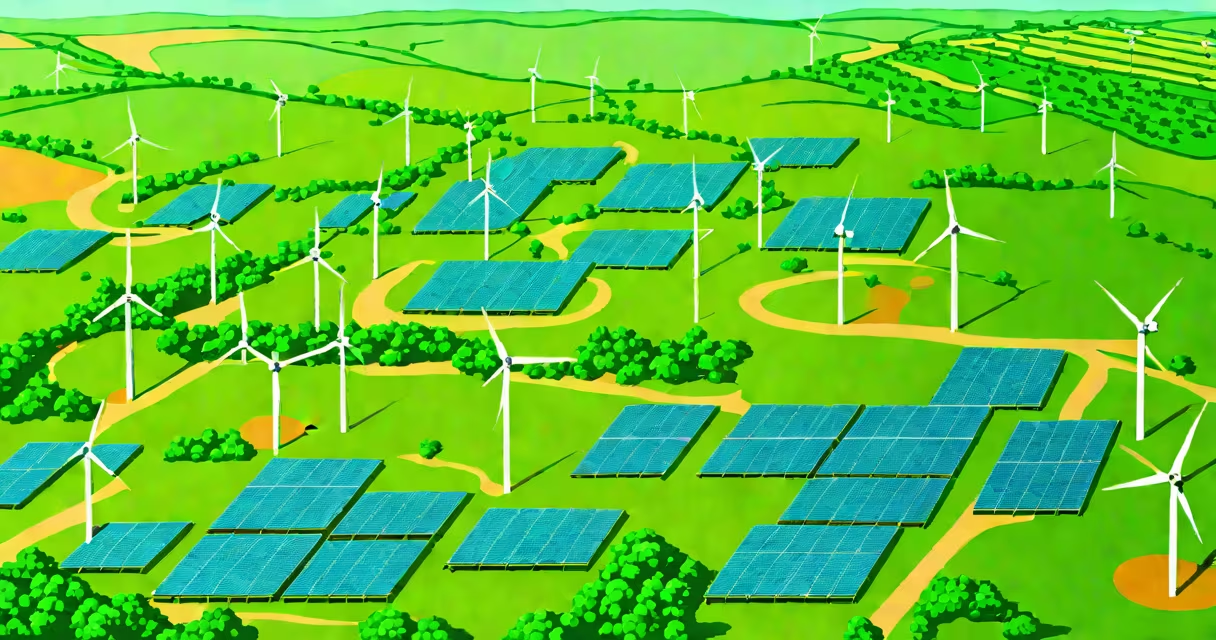
Green energy and climate change refer to the relationship between low-carbon electricity sources-like solar, wind, and hydropower-and the global effort to limit temperature rise by reducing greenhouse gas emissions. This connection is central to international climate strategies and national energy transitions.
Green energy produces power with minimal environmental impact compared to fossil fuels. It includes solar photovoltaic systems, onshore and offshore wind farms, geothermal plants, and large-scale hydroelectric facilities. These technologies generate electricity without releasing carbon dioxide during operation. Climate change, driven primarily by human-caused CO₂ emissions, results in rising global temperatures, extreme weather events, and sea level rise. The Intergovernmental Panel on Climate Change (IPCC) states that limiting warming to 1.5°C above pre-industrial levels requires rapid and deep reductions in emissions by 2050.
Renewable energy deployment is a core strategy for achieving climate targets. According to the International Renewable Energy Agency (IRENA), doubling renewable capacity globally by 2030 could reduce energy-related CO₂ emissions by 70%. For example, Denmark generates over 50% of its electricity from wind power and aims for 100% renewable electricity by 2030. This shift cuts emissions while enhancing energy security.
Electricity generation accounts for about 25% of global greenhouse gas emissions. Replacing coal and gas plants with solar and wind reduces this share. A single utility-scale solar farm in California, such as the Topaz Solar Farm, produces 550 megawatts annually-enough to power 150,000 homes-without emitting CO₂ during operation.
Wind energy also delivers high efficiency. Offshore wind farms in the North Sea, like Hornsea Project One in the UK, produce 1.2 gigawatts-equivalent to powering 1.3 million homes-while avoiding 2.6 million tonnes of CO₂ per year. These projects demonstrate that green energy can scale to meet industrial demand without increasing emissions.
Energy storage is critical for balancing variable supply. Battery systems like Tesla's Megapack store excess solar energy for use at night. In South Australia, a 100-megawatt battery system stabilized the grid during outages and reduced reliance on gas peaker plants. This integration enables higher renewable penetration and lowers emissions.
The main categories of green energy differ in availability, infrastructure needs, and regional suitability:
| Type | Capacity Factor | Best Use Cases | Global Growth (2020-2023) |
|---|---|---|---|
| Solar PV | 15-25% | Residential rooftops, desert regions | 18% annual increase |
| Onshore Wind | 25-45% | Mid-latitude plains, coastal zones | 12% annual increase |
| Offshore Wind | 40-55% | Coastal nations with strong winds | 22% annual increase |
| Hydropower | 35-65% | River basins, mountainous areas | 2% annual increase |
| Geothermal | 70-90% | Tectonically active regions | 5% annual increase |
Hydropower remains the largest source of renewable electricity globally, providing 16% of worldwide power in 2023. However, growth has slowed due to ecological concerns and limited suitable sites. Geothermal energy, though highly efficient, is restricted to regions near tectonic boundaries-such as Iceland, Kenya, and parts of California-where underground heat is accessible.
A common misconception is that green energy is inherently unstable. While solar and wind depend on weather, grid operators manage variability using forecasting tools, demand response, and diversified energy mixes. Germany's Energiewende program integrates solar, wind, and biomass to maintain grid stability despite fluctuating output.
Some assume green energy is too expensive. In reality, levelized cost of electricity (LCOE) for solar and onshore wind fell below $0.04/kWh in 2023-cheaper than new coal or gas plants. BloombergNEF reports that 80% of new global power capacity added in 2022 came from renewables due to lower costs.
Another error is equating "green" with "zero-impact." Manufacturing solar panels and wind turbines involves mining rare earth metals and producing emissions. However, lifecycle analysis shows that solar panels emit 40 grams of CO₂ per kWh over 30 years-far less than coal's 1,000 grams. Recycling programs are expanding to recover materials like silicon and neodymium.
I once visited a solar installation in Nevada where panels were mounted on dual-axis trackers. The system increased daily yield by 28% compared to fixed mounts. This small upgrade boosted output enough to power 120 additional homes annually-proof that design choices amplify green energy benefits.
Nations align green energy expansion with climate goals through binding agreements. The Paris Agreement commits countries to net-zero emissions by mid-century. The U.S. Inflation Reduction Act of 2022 allocates $370 billion to clean energy, including tax credits for solar installations and domestic manufacturing of batteries and wind turbines.
International cooperation is essential. The European Union's Green Deal sets a target of 55% emissions reduction by 2030 and 100% renewable electricity by 2050. Countries like Portugal and Uruguay have already achieved over 60% renewable electricity in their grids, proving rapid transition is feasible.
Green energy is not a standalone solution. It must pair with energy efficiency, electrification of transport, and carbon capture. Still, it forms the foundation of climate mitigation. Without scaling renewables, meeting the 1.5°C goal becomes impossible.