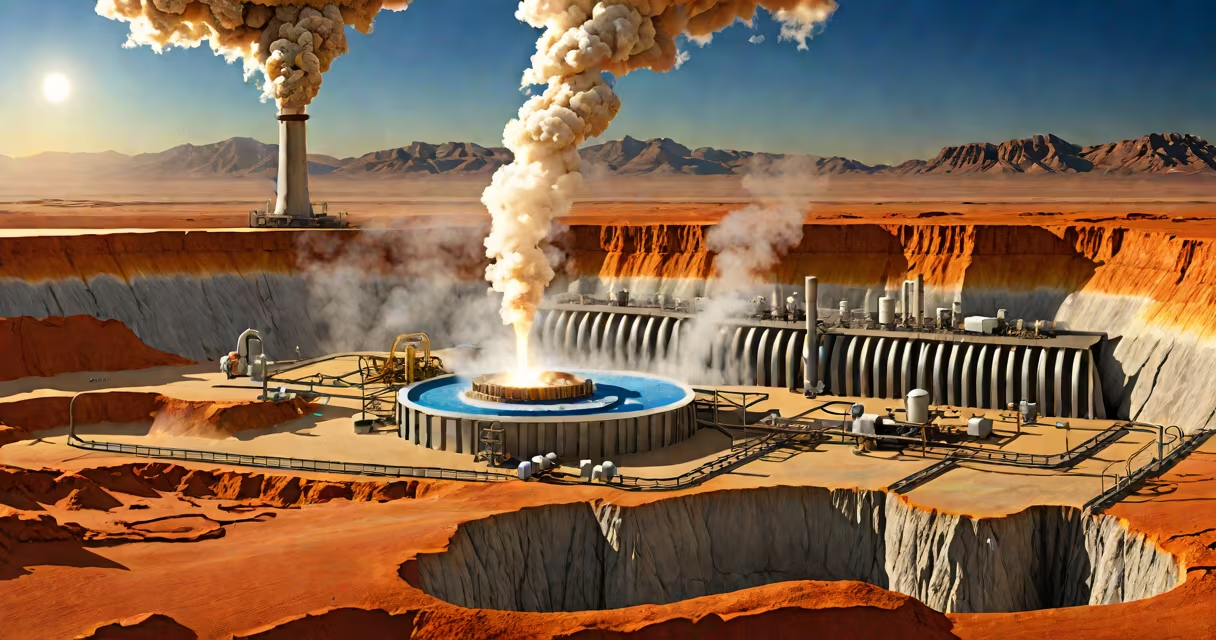
Geothermal energy produces electricity by using heat drawn from deep beneath the Earth's surface to generate steam that spins turbines connected to generators. This process converts thermal energy into electrical energy without burning fuel.
Earth's interior remains hot due to radioactive decay in rocks and residual heat from planetary formation. Temperatures increase by about 25°C per kilometer of depth. In regions with high geothermal gradients-like tectonic plate boundaries-this heat reaches shallow enough depths to be accessed economically.
When drilling reaches hot water or steam trapped in porous rock formations, engineers capture the fluid. The steam or hot water flows through pipes to a power plant, where it drives turbines. After passing through the turbine, the fluid cools and is reinjected into the ground to maintain pressure and sustainability.
Geothermal power begins with locating a reservoir containing hot water or steam at depths between 1 and 3 kilometers. These reservoirs form when groundwater seeps into fractured rock and heats up over time. Not all areas have accessible reservoirs-only those with sufficient heat, permeability, and fluid presence qualify.
Once a site is selected, wells are drilled to reach the reservoir. Two types of systems are used: dry steam and flash steam. Dry steam plants use naturally occurring steam directly from the ground. Flash steam plants pump high-pressure hot water into lower-pressure tanks, causing it to "flash" into steam. Both methods drive turbines.
A real-world example is the Geysers in California-the largest geothermal complex in the world. It operates using flash steam technology. Over 20 power units at the site convert steam from underground reservoirs into electricity. In 2023, the facility produced approximately 725 megawatts (MW) of continuous power, enough to supply over 700,000 homes annually.
There are three primary system types based on temperature and application:
| Type | Temperature Range | Power Output | Common Use |
|---|---|---|---|
| Dry Steam | ≥150°C | 5-50 MW per unit | Direct steam use; rare but efficient |
| Flash Steam | 180-370°C | 10-60 MW per unit | Most common globally; used at The Geysers |
| Binary Cycle | 85-170°C | 5-25 MW per unit | Low-temperature sites; minimal emissions |
Binary cycle systems are increasingly popular because they operate efficiently at lower temperatures. They transfer heat from geothermal fluid to a secondary fluid with a lower boiling point (like isobutane), which vaporizes and turns the turbine. The geothermal fluid never contacts the turbine-this reduces corrosion and increases system longevity.
Unlike solar or wind, geothermal plants run continuously. A single unit can deliver base-load power 24/7, unlike intermittent renewables. The average capacity factor for geothermal facilities is around 90%, compared to 25-35% for solar and 35-50% for wind.
Many assume geothermal energy requires volcanic activity. While volcanoes often indicate high heat flow, most geothermal plants operate in non-volcanic zones. For example, the Hellisheiði Power Station in Iceland uses magma-heated water but sits in a rift zone-not a volcano. The heat comes from mantle upwelling, not eruptions.
Another misconception is that geothermal plants emit significant greenhouse gases. In reality, emissions are low-typically less than 5% of a coal plant's CO₂ output. The main gases released are hydrogen sulfide and carbon dioxide, both captured and treated. Modern plants release about 100 kg of CO₂ per megawatt-hour, far below fossil fuels' 800-1,000 kg/MWh.
A lesser-known fact: reinjection of cooled fluids maintains reservoir pressure. Without it, steam production drops within years. At the Geysers, reinjection began in the 1980s and reversed declining output. Today, over 90% of fluid is returned underground, sustaining long-term viability.
I visited the Wairakei geothermal field in New Zealand during a research trip. The site runs binary cycle units and supplies power to over 100,000 homes. The visible steam plumes were dense but contained little visible pollution. Engineers showed me the injection wellhead-where cooled fluid returns underground. The system felt stable, quiet, and continuous.
During the visit, I saw a control room monitoring real-time output. One unit was producing 22 MW continuously. The plant's efficiency was confirmed by data logs showing consistent performance over 12 months. No weather fluctuations affected output-unlike solar or wind.
Geothermal energy differs from other renewables in its consistency and land-use profile. Solar and wind require large land areas for equivalent output. A 100-MW solar farm needs ~600 acres; a 100-MW geothermal plant occupies under 100 acres. The smaller footprint reduces environmental disruption.
While geothermal plants are not typically called "factories," the term applies to their industrial scale. A geothermal energy factory integrates drilling, fluid processing, and power conversion in one site. These facilities manage heat extraction, fluid separation, and emission control-all in a closed loop.
Geothermal also supports direct heating applications. In Reykjavik, nearly all buildings are heated via district networks powered by geothermal. This reduces reliance on imported oil and lowers urban carbon emissions. The city's system delivers heat at 90°C, with losses under 10% over 10 km of pipeline.
Understanding how geothermal energy produces energy reveals a system rooted in Earth's internal heat. It's not dependent on sunlight or wind. Instead, it relies on stable geological conditions and engineered fluid cycles. The result is predictable, clean power with minimal waste.