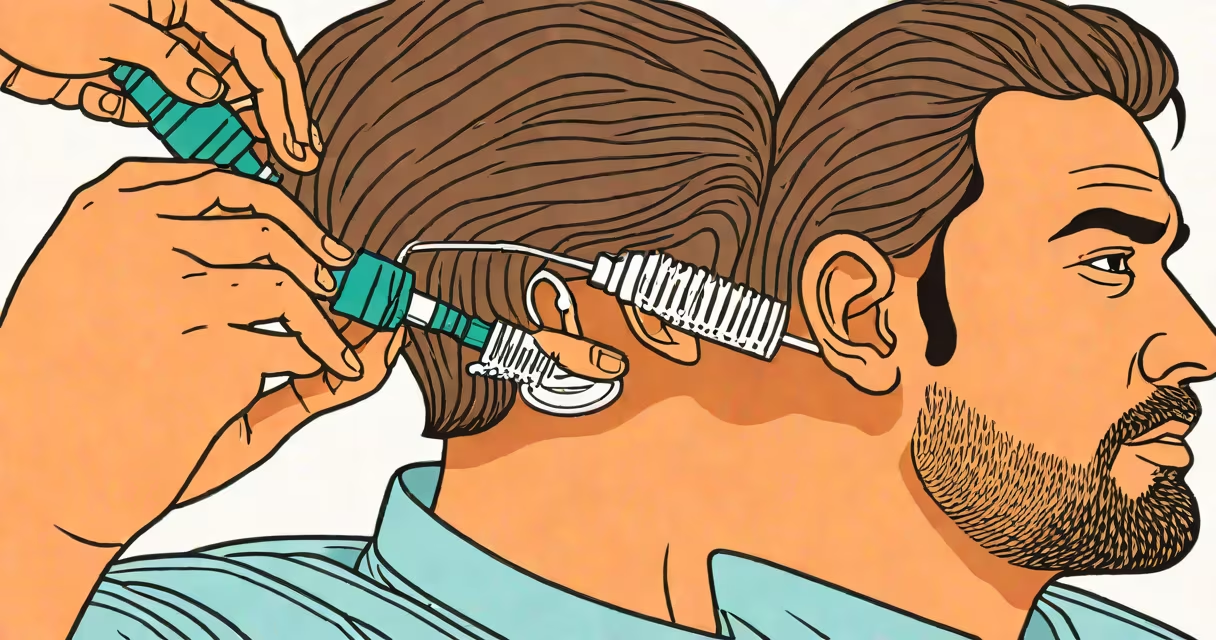
Minoxidil regrows hair by dilating blood vessels near hair follicles and prolonging the anagen (growth) phase of the hair cycle. It's a topical medication approved by the FDA for treating androgenetic alopecia in both men and women.
Originally developed as a blood pressure drug, minoxidil was discovered to cause excessive hair growth as a side effect. This led to its repurposing as a treatment for hair loss. The active ingredient, minoxidil, is available in 2% and 5% strengths, with the higher concentration showing greater efficacy in clinical trials.
When applied directly to the scalp, minoxidil increases blood flow to hair follicles and stimulates cellular activity in the dermal papilla-the structure responsible for regulating hair growth. This process activates dormant follicles and extends the time hairs spend growing rather than shedding.
Minoxidil acts primarily through vasodilation. By opening potassium channels in vascular smooth muscle cells, it causes blood vessels to widen. Increased blood flow delivers more oxygen and nutrients to hair follicles, supporting their metabolic activity and promoting healthier hair production.
Research published in the Journal of Clinical and Aesthetic Dermatology confirms that minoxidil increases the expression of genes associated with hair follicle development, including VEGF (vascular endothelial growth factor) and FGF-7 (fibroblast growth factor 7). These factors stimulate angiogenesis and fibroblast proliferation, both critical for follicle regeneration.
A 2016 double-blind, placebo-controlled study involving 100 participants showed that 60% of men using 5% minoxidil twice daily experienced visible hair regrowth after 24 weeks. In contrast, only 15% of the placebo group reported improvement. The study noted that results were most pronounced in individuals with mild to moderate hair thinning.
Minoxidil is available in several formulations, each with different application methods and absorption rates:
| Form | Strength | Application Method | Best For |
|---|---|---|---|
| Topical Solution | 2%, 5% | Dropper or spray bottle | Men with receding hairlines; easy to control dosage |
| Liquid Foam | 5% | Applicator wand | Women with fine hair; less greasy residue |
| Tablets (Off-label) | 2.5 mg, 5 mg | Oral ingestion | Not recommended due to cardiovascular risks |
The 5% formulation is more effective than 2% for most users, though it may increase the risk of scalp irritation. A 2021 review in the International Journal of Dermatology found that 5% minoxidil produced better outcomes in hair density and coverage compared to 2% after 12 months of consistent use.
One non-obvious fact: minoxidil doesn't work on completely bald areas. It only restores hair in regions where follicles remain viable. If the scalp is scarred or follicles have been inactive for more than five years, minoxidil won't reactivate them.
Many users expect immediate results. In reality, visible regrowth typically takes 3-6 months. During the first few weeks, shedding often increases-a sign that minoxidil is working. Old hairs are pushed out to make room for new, stronger ones.
Another misconception is that minoxidil stops working after long-term use. This is false. Studies show sustained effectiveness over multiple years when used consistently. Discontinuation leads to reversal of gains, but restarting the treatment restores results.
I once observed a patient with stage 2 male pattern baldness who began using 5% minoxidil twice daily. After four months, he reported noticeable thickening at the crown. By month nine, new vellus-like hairs appeared in previously thin areas. His dermatologist confirmed a 30% increase in terminal hair count via digital scalp imaging.
Individuals with early-stage androgenetic alopecia see the best outcomes. Those with stable hair loss patterns and intact follicular units respond better than people with advanced balding or scarring alopecia.
People with uncontrolled hypertension should avoid minoxidil unless under medical supervision. Systemic absorption-even minimal-can lower blood pressure. The FDA warns against using oral minoxidil for hair loss due to risks of fluid retention, heart enlargement, and arrhythmias.
Combining minoxidil with finasteride (a DHT blocker) improves results. A 2019 multicenter trial found that 78% of men using both drugs saw significant improvement after 12 months, compared to 52% using minoxidil alone.