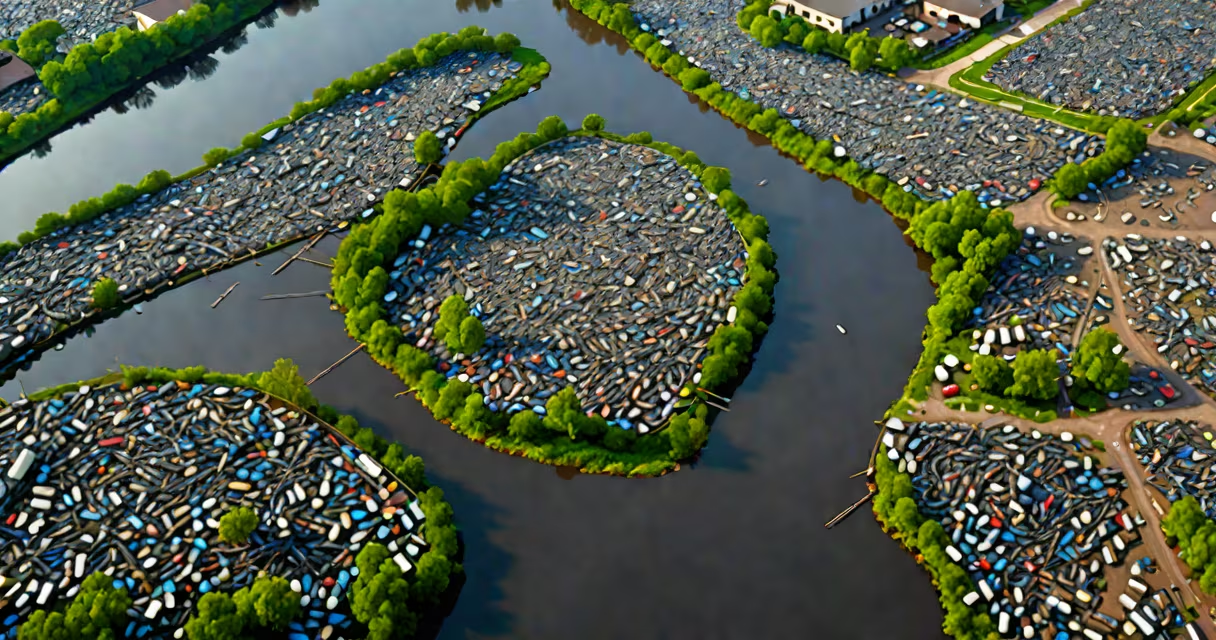
Water pollution harms human health, damages ecosystems, and disrupts economies by introducing toxins, pathogens, and debris into freshwater and marine environments. Contaminants like heavy metals, pesticides, microplastics, and untreated sewage enter water sources through industrial discharge, agricultural runoff, and improper waste disposal. These pollutants accumulate in food chains and degrade water quality globally.
When pollutants enter rivers, lakes, or oceans, they don't disappear. They move through water systems via currents and settle in sediments. Some dissolve into the water column; others float or sink. Microorganisms in water break down biodegradable waste, but synthetic chemicals resist degradation and persist for years.
For example, mercury from coal-fired power plants enters rivers and converts into methylmercury, a neurotoxin. Fish absorb it, and people who eat contaminated fish risk developmental delays and neurological disorders. The U.S. Environmental Protection Agency (EPA) confirms that mercury exposure from fish is a documented health risk in vulnerable populations.
Industrial facilities often release wastewater containing lead, cadmium, and arsenic. These metals do not break down. They accumulate in soil and groundwater, contaminating drinking water supplies. A 2021 study by the World Health Organization (WHO) found that 2 billion people worldwide drink water from sources contaminated with fecal matter, leading to diseases like cholera and typhoid.
Water pollution stems from three primary categories: point-source, non-point-source, and atmospheric deposition.
| Type | Source Examples | Impact |
|---|---|---|
| Point-source | Factories, sewage treatment plants | High concentration of contaminants discharged at specific locations |
| Non-point-source | Agricultural fields, urban storm drains | Runoff carries fertilizers, pesticides, oil, and sediment |
| Atmospheric deposition | Industrial emissions, vehicle exhaust | Acid rain forms when sulfur dioxide and nitrogen oxides mix with moisture |
Non-point-source pollution accounts for over 60% of water contamination in the United States, according to the EPA's National Water Quality Inventory. This makes it harder to trace and regulate compared to point-source discharges.
Microplastics-fragments under 5mm-are now detected in 94% of tap water samples tested in the U.S., per a 2022 study by Orb Media. These particles originate from synthetic clothing, packaging, and degraded plastic waste. They carry toxic additives and absorb pollutants like PCBs from surrounding water.
In Flint, Michigan, switching the city's water source to the Flint River in 2014 led to elevated lead levels in tap water. The corrosion of aging pipes released lead into homes. Over 100 children were exposed, with blood lead levels rising above the CDC's action level of 5 µg/dL. The crisis lasted over two years before federal intervention.
Another example: in India, the Ganges River supports over 400 million people yet receives 1.5 billion liters of untreated sewage daily. Pathogens like E. coli and Vibrio cholerae thrive in the water. A 2020 WHO report linked 1.2 million annual gastrointestinal infections in the Ganges basin to poor water quality.
Marine ecosystems suffer too. The Great Pacific Garbage Patch, a floating mass of debris covering 1.6 million square kilometers, traps and kills over 1 million seabirds and 100,000 marine mammals yearly. Plastic ingestion causes internal injuries, starvation, and reproductive failure.
Many assume that "clean" water means safe to drink. That's false. Water can appear clear but still contain invisible toxins. In 2019, a town in Pennsylvania reported no visible signs of pollution, yet testing revealed high levels of PFAS-"forever chemicals"-in well water. These substances resist breakdown and are linked to cancer and immune system disruption.
Another myth: pollution only affects developing nations. In reality, developed countries face severe cases. The U.S. has over 40,000 miles of rivers classified as impaired due to pollution, according to the EPA. Even pristine areas like Lake Tahoe have seen algal blooms triggered by nutrient runoff from nearby construction sites.
Some believe bottled water is safer than tap. But plastic bottles leach bisphenol A (BPA) and phthalates into water, especially when stored in heat. A 2021 study in *Environmental Science & Technology* found that 93% of bottled water samples contained microplastics, including polyethylene terephthalate (PET).
Individual actions reduce pollution burden. Avoid single-use plastics. Use phosphate-free detergents. Install rain barrels to capture stormwater. Support policies that enforce industrial discharge limits.
When choosing cleaning products, look for certifications like Safer Choice or Cradle to Cradle. These labels indicate lower toxicity and better environmental performance. For example, Seventh Generation's laundry detergent contains plant-based surfactants and avoids synthetic dyes.
Water pollution undermines food security. Contaminated irrigation water reduces crop yields and introduces toxins into the food supply. In Bangladesh, arsenic-contaminated groundwater used for rice farming results in rice with unsafe levels of the metal. Chronic exposure leads to skin lesions, cardiovascular disease, and increased cancer risk.
Climate change worsens pollution effects. Warmer waters increase bacterial growth and reduce dissolved oxygen, creating dead zones. The Gulf of Mexico dead zone spans over 6,000 square miles during summer months due to nitrogen runoff from the Mississippi River watershed.
Global economic costs are staggering. The World Bank estimates that water pollution costs $260 billion annually in lost productivity, healthcare expenses, and system services. In contrast, investing in wastewater treatment generates $4 in benefits for every $1 spent.