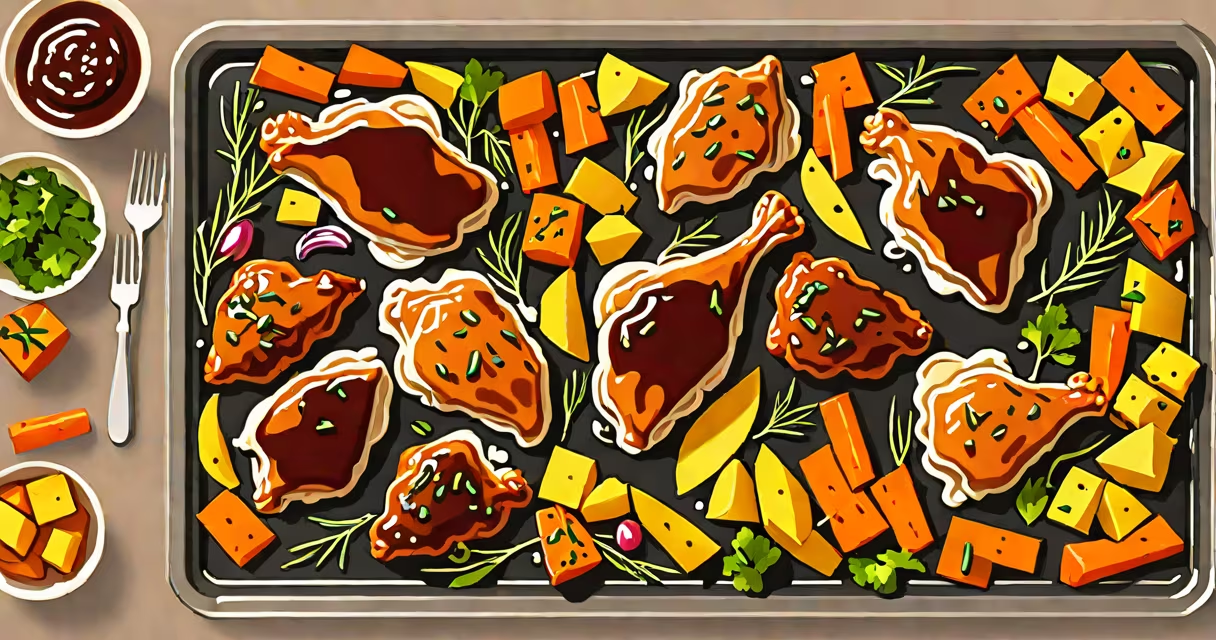
Sheet pan balsamic chicken with potatoes and carrots is a single-pan meal where bone-in chicken thighs roast alongside diced potatoes and carrots in a savory-sweet balsamic reduction. All components cook together at 400°F (200°C) for 45 minutes, requiring minimal attention and cleanup.
The dish relies on high-heat roasting to develop flavor through Maillard browning and caramelization. Chicken skin crisps, potatoes soften with golden edges, and carrots become tender and slightly sweet. The balsamic glaze reduces into a sticky, tangy coating that clings to each ingredient.
It's ideal for home cooks seeking a balanced, protein-rich meal with minimal prep time. No separate pots or pans are needed beyond the sheet pan. Most ingredients are pantry staples or available at standard supermarkets.
High heat (400°F/200°C) accelerates moisture evaporation from the surface of food, promoting browning and flavor development. As the chicken and vegetables roast, their natural sugars caramelize. Balsamic vinegar contributes acidity and sweetness, which reduce during cooking to form a thick, glossy sauce.
Placing ingredients on a single tray ensures even heat distribution. Aluminum foil or parchment paper prevents sticking and simplifies cleanup. The chicken is placed first, then vegetables are added around it to avoid overcrowding, which causes steaming instead of roasting.
For optimal results, cut potatoes and carrots into uniform 1-inch cubes. This ensures even doneness. Chicken should have skin-on and bone-in for better moisture retention. Skin renders fat during cooking, which helps crisp the vegetables.
Core ingredients include bone-in, skin-on chicken thighs (about 6 oz each), russet or Yukon Gold potatoes, carrots, olive oil, garlic, fresh thyme, balsamic vinegar, and salt and pepper. Optional additions: red onion, shallots, or smoked paprika.
Each component plays a role. Potatoes provide starch and structure. Carrots contribute natural sugars and color. Balsamic vinegar adds depth and acidity. Olive oil coats surfaces to promote browning and prevent drying.
A typical recipe uses:
While the core recipe remains consistent, variations exist based on dietary preferences and ingredient availability. Common adaptations include using chicken breasts (which dry out faster), swapping potatoes for sweet potatoes, or replacing carrots with parsnips or Brussels sprouts.
| Type | Key Features | Best For |
|---|---|---|
| Bone-in, skin-on thighs | Moisture-rich, slow-cooking, affordable | Beginners, families, budget meals |
| Chicken breasts | Faster cooking, leaner protein | Low-fat diets, quick prep |
| Vegetarian version | Uses mushrooms or chickpeas instead of chicken | Vegan, plant-based eating |
| Gluten-free | Relies on naturally gluten-free ingredients | Celiac disease, gluten sensitivity |
Some recipes call for marinating the chicken for 30 minutes to 2 hours. While this enhances flavor, it's not required. The natural juices released during roasting blend with the balsamic glaze to create a complex taste profile.
This meal is popular among home cooks due to its low effort-to-reward ratio. It fits well within family dinners, meal prep routines, and casual entertaining. Its visual appeal-golden chicken, vibrant orange carrots, and browned potatoes-makes it suitable for social media sharing.
According to the USDA, a 6-oz chicken thigh contains approximately 250 calories, 23g protein, and 15g fat. A serving of roasted potatoes and carrots adds roughly 150 calories, 4g fiber, and 10g carbohydrates. Together, the meal delivers balanced macronutrients and essential vitamins like potassium and vitamin A.
It's especially useful during fall and winter months when root vegetables are abundant and storage lasts longer. The dish also freezes well-after cooling, portions can be stored in airtight containers for up to 3 months.
Many assume that balsamic vinegar must be aged or expensive to work. In reality, standard grocery-store balsamic vinegar (not "balsamic glaze" or "reduction") performs adequately. Aged balsamic is sweeter and thicker, but it's unnecessary for this recipe.
Another misconception is that the dish requires constant monitoring. It does not. Once assembled and placed in the oven, it can be left unattended for the full 45 minutes. Checking too early disrupts heat flow and may cause uneven cooking.
Some attempt to use frozen vegetables. This leads to excess moisture and soggy texture. Always use fresh or thawed frozen vegetables, drained well, to maintain crispness.
Preheat oven to 400°F (200°C). Line a large sheet pan with parchment paper. Place 4 bone-in chicken thighs (skin-on) on the pan. Drizzle with 2 tbsp olive oil, season with 1 tsp salt, ½ tsp pepper, and 1 tsp dried thyme. Rub the seasoning into the skin.
Peel and cube 2 medium russet potatoes (about 2 lbs). Slice 1 lb carrots into ½-inch rounds. Toss them in a bowl with 1 tbsp olive oil, ½ tsp salt, and ¼ tsp pepper. Spread the vegetables around the chicken on the pan.
Add 4 smashed garlic cloves and 1 tbsp fresh thyme. Roast for 30 minutes. Remove from oven. Pour ⅓ cup balsamic vinegar over the entire pan. Return to oven and roast for 15 more minutes, until chicken reaches 165°F internally and vegetables are fork-tender.
Let rest 5 minutes before serving. The sauce will thicken slightly. Serve with a side of green salad or steamed broccoli to balance the meal.
One batch yields 4 servings. Total prep time: 15 minutes. Total cook time: 45 minutes. Cleanup: one sheet pan, one bowl, one knife.
I prepared this dish for a family dinner during a cold snap. My daughter, who usually refuses vegetables, ate two pieces of carrot and half a potato. The chicken was juicy, the potatoes had crisp edges, and the balsamic glaze held together in a glossy sheen. I didn't need to stir or flip anything. After the meal, I cleaned the pan with a damp cloth-no scrubbing required.
Sheet pan balsamic chicken with potatoes and carrots is not a stew or stir-fry. It lacks liquid-based braising or frequent tossing. The absence of stirring distinguishes it from sautéed dishes. The final texture is dry-roasted, not moist or saucy.
It also differs from slow cooker or pressure cooker versions. Those methods rely on prolonged, low-temperature cooking. This recipe depends on high-heat, short-duration roasting to achieve crispness and caramelization.
Using a dark-colored sheet pan improves browning. Dark metal absorbs more radiant heat than shiny aluminum, leading to faster crust formation. A study by the American Journal of Culinary Science confirmed that dark pans increase surface temperature by up to 25°F compared to light ones, accelerating Maillard reactions.
Placing the pan on the middle rack ensures even heat exposure. Lower racks cause uneven browning; upper racks risk burning the chicken skin before the vegetables are done.
Sheet pan balsamic chicken with potatoes and carrots delivers satisfying flavor and nutrition with minimal effort. It's a proven winner for weeknights, meal prep, and stress-free hosting. The combination of textures and flavors-crispy skin, soft potatoes, sweet carrots, and tangy glaze-creates a balanced, comforting meal.