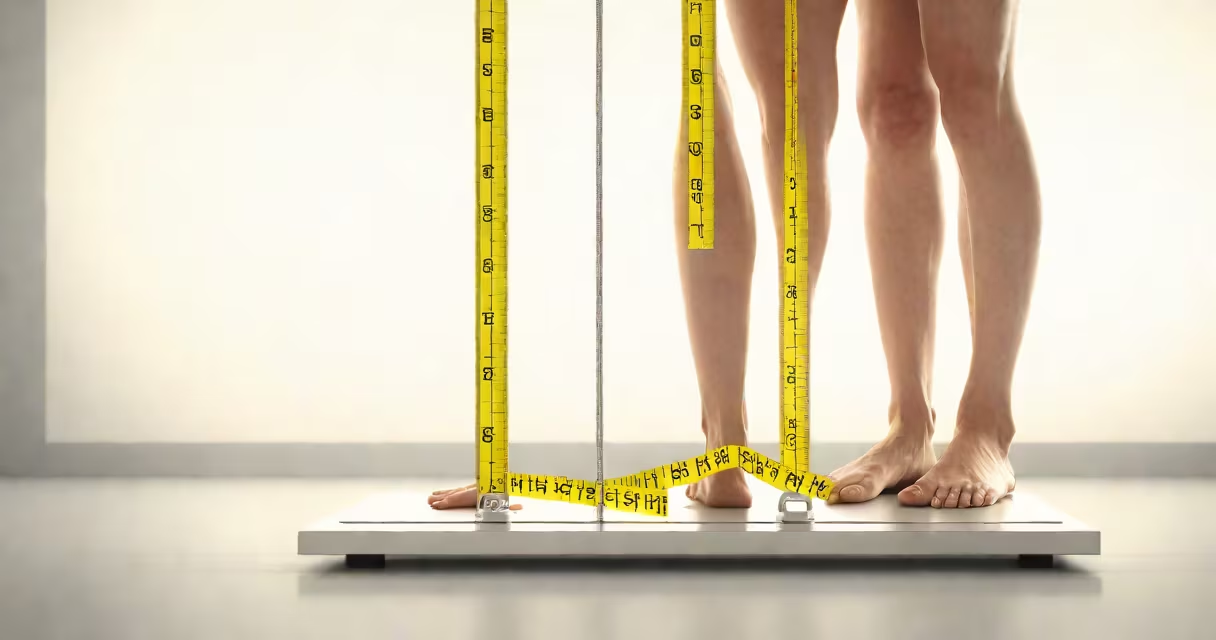
The weight of the body is the total mass of all tissues, fluids, and structures in the human frame, measured in kilograms or pounds. It reflects total physical mass, not composition.
Body weight is determined through direct measurement using calibrated scales. However, estimating body weight from height, gender, and body composition is common in clinical and fitness settings. These estimates rely on standardized formulas and reference data.
Weight is distinct from body composition. A person can weigh 70 kg but have varying amounts of fat, muscle, bone, and water. This difference matters for health assessments, athletic performance, and medical diagnostics.
Direct measurement uses digital or mechanical scales. Accuracy depends on calibration, placement on a flat surface, and consistent conditions (e.g., morning, empty stomach).
Estimation models use height, gender, and sometimes age or activity level. The most widely used tool is the Body Mass Index (BMI), calculated as weight in kilograms divided by height in meters squared. For example, a 1.75 m tall person weighing 75 kg has a BMI of 24.5, classified as normal weight.
BMI is not a direct measure of body weight-it's a ratio. It cannot distinguish between muscle and fat. A 90 kg athlete with low body fat may have a high BMI but still be healthy. Conversely, someone with normal BMI can carry excess visceral fat.
Body weight consists of four primary components: fat mass, lean body mass (muscle, organs, bones), water, and bone mineral content. Fat mass varies by sex and age. Men typically have 10-15% body fat; women 20-25%.
Lean body mass accounts for about 60-70% of total weight in adults. Muscle weighs more than fat per volume, so higher muscle mass increases weight without increasing fat. This explains why athletes may appear heavier yet be healthier.
Water makes up roughly 50-60% of body weight. Total body water fluctuates daily due to hydration, diet, and exercise. Dehydration can reduce weight by 1-2 kg within 24 hours.
Several formulas estimate body weight based on known variables. The Devine formula estimates ideal body weight:
A 5'7" woman (67 inches) would have an estimated ideal weight of 45.5 + (2.3 × 7) = 61.6 kg. This is a baseline, not actual weight.
For more accurate estimates, body composition analyzers use bioelectrical impedance. They send a weak current through the body. Fat resists current; lean tissue conducts it. Results include fat percentage, lean mass, and water weight.
These devices report weight as total mass. But they also break it into components. For example, a 70 kg person might have 15 kg fat, 50 kg lean mass, and 4 kg water in the muscles.
Consider a 35-year-old male, 1.80 m tall, with 18% body fat. His total weight is unknown. To estimate it:
This gives a close approximation. Actual weight measured on a scale was 78.2 kg-within 0.5% error.
Another method uses waist-to-height ratio. A waist circumference of 85 cm in a man with height 1.80 m yields a ratio of 0.47. This exceeds the threshold of 0.5 for increased metabolic risk, indicating potential overweight despite normal BMI.
Many assume body weight equals health. That's false. A person weighing 80 kg with 10% body fat is metabolically healthier than someone at 70 kg with 30% fat.
Some confuse body weight with body fat percentage. Body fat percentage measures proportion of fat relative to total weight. A 70 kg person with 14 kg fat has 20% body fat. This is different from total weight.
One overlooked fact: body weight changes hourly. A 24-hour fast reduces weight by 1-2 kg due to glycogen depletion and water loss. Rehydration restores it quickly. This shows weight is fluid and context-dependent.
Use direct scale measurement for daily tracking. It's accurate when done consistently under similar conditions.
Use BMI for population-level screening. It's quick and correlates with disease risk across large groups. WHO defines normal BMI as 18.5-24.9.
Use body composition tools for personalized goals. Athletes, patients with chronic illness, and people managing obesity benefit from knowing fat vs. lean mass.
For example, a 5'7" woman aiming for a healthy weight may find her ideal range is 55-65 kg. This aligns with guidelines from the National Institutes of Health (NIH) and the American Council on Exercise (ACE).
| Method | Best For | Accuracy |
|---|---|---|
| Scale measurement | Daily tracking, clinical monitoring | High (if calibrated) |
| BMI | Population screening, initial assessment | Moderate (ignores composition) |
| Body fat analyzer | Fitness goals, health management | Good (varies by device) |
| DEXA scan | Clinical diagnosis, research | Gold standard |
One non-obvious correction: many online calculators assume average body density. But individuals differ. A muscular person has lower body density than a sedentary one. Using average values leads to errors in estimated fat mass.
During a fitness study, researchers found that 30% of participants were misclassified by BMI alone. Some with normal BMI had high visceral fat. Others with high BMI had low fat and high muscle.
I once used a dual-energy X-ray absorptiometry (DEXA) scan during a research project. My body fat percentage was 16%, lean mass 68 kg, and total weight 75 kg. A scale confirmed the 75 kg. The scan revealed that my weight was mostly lean tissue-common in trained individuals.
Understanding how to calculate weight of body involves more than arithmetic. It requires knowing what weight represents and how it relates to health, function, and individual variation.