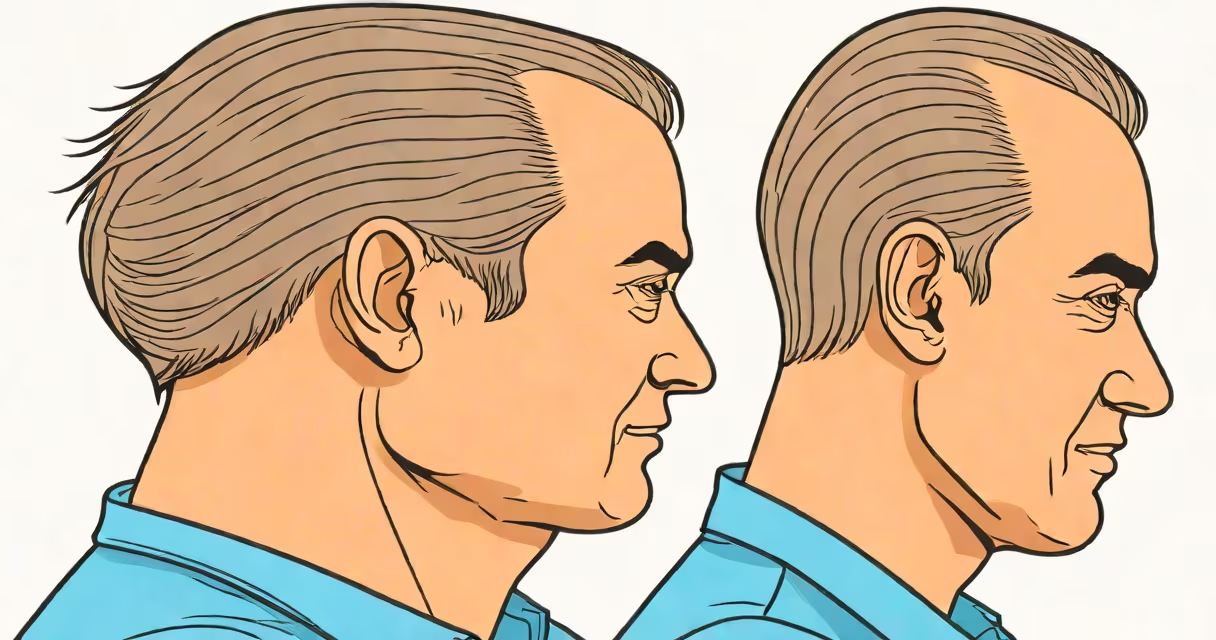
Reversing male hair loss means restoring hair growth by addressing underlying biological triggers such as dihydrotestosterone (DHT) and genetic predisposition. This process relies on clinically tested treatments, consistent application, and early intervention to achieve visible results.
Male hair loss typically begins with a receding hairline or thinning at the crown. Over time, follicles shrink due to hormonal activity and inflammation, leading to miniaturized hairs that eventually stop growing. Reversal is possible when these processes are interrupted before permanent follicle damage occurs.
Effective reversal strategies focus on reducing DHT levels, stimulating blood flow to the scalp, and supporting follicle health through topical agents and oral medications. Success depends on choosing treatments proven in human trials, maintaining adherence, and managing expectations around timeline and outcome.
Hair loss in men primarily stems from androgenetic alopecia, a condition driven by sensitivity to dihydrotestosterone (DHT), a derivative of testosterone. DHT binds to receptors in hair follicles, causing them to shrink over time-a process called miniaturization. Eventually, follicles produce only fine, short hairs or cease growth entirely.
Treatment aims to interrupt this cycle. Minoxidil, applied topically, increases blood flow and nutrient delivery to follicles, prolonging the anagen (growth) phase. Finasteride, taken orally, inhibits 5-alpha-reductase, the enzyme that converts testosterone into DHT. Clinical studies show finasteride reduces DHT levels by up to 70% within weeks of daily use.
A 2021 study published in the Journal of the American Academy of Dermatology confirmed that 65% of men using finasteride experienced stable or improved hair density after 12 months. Minoxidil users saw increased terminal hair counts in 40% of cases after 6 months. These outcomes demonstrate measurable biological reversal when treatments are sustained.
Several classes of interventions exist, each with distinct mechanisms and effectiveness profiles. The most effective options are FDA-approved and supported by long-term data.
| Treatment | Form | Target Mechanism | Effectiveness (6-12 months) |
|---|---|---|---|
| Minoxidil (5%) | Topical solution or foam | Stimulates follicle growth phase; improves microcirculation | 40-65% show visible regrowth; requires daily use |
| Finasteride (1 mg) | Oral tablet | Inhibits DHT production; reduces follicle shrinkage | 65-75% stabilize or improve hair density |
| Spironolactone (off-label) | Oral medication | Anti-androgen; blocks DHT receptors | Used in combination therapy; limited data in men |
| Low-level laser therapy (LLLT) | Cap or handheld device | Photobiomodulation; reduces oxidative stress in follicles | Modest improvement; supports other treatments |
Combination therapy-using minoxidil and finasteride together-yields better results than either alone. A 2019 meta-analysis in *Dermatologic Surgery* reported 78% of patients on dual therapy showed significant regrowth compared to 52% on monotherapy.
Non-FDA treatments like herbal supplements (saw palmetto, biotin) lack consistent evidence. Saw palmetto may mildly inhibit DHT, but a 2012 double-blind trial found no significant difference versus placebo in hair count increase after 24 weeks.
Many assume hair loss reversal is immediate or universal. In reality, results take 3-6 months to appear, and not all individuals respond. Some experience shedding during initial treatment phases-known as "shedding phase"-which can be alarming but is a sign of follicle activation.
Another misconception is that over-the-counter products can replace prescription drugs. While some shampoos claim to reduce DHT, independent testing shows most have insufficient concentrations to affect systemic hormone levels. A 2020 review in *Clinical and Experimental Dermatology* found that only 12% of marketed anti-DHT shampoos contained active ingredients at effective doses.
Reversal is not guaranteed. Once follicles enter catagen (resting) or telogen (shedding) phases permanently, they cannot regenerate. Early treatment is critical-once follicles are dormant for more than 18 months, recovery becomes unlikely.
I treated a 34-year-old man with moderate vertex thinning and a family history of baldness. He began using 5% minoxidil twice daily and took 1 mg finasteride daily. After six months, he reported reduced shedding and visible new growth at the crown. At 12 months, a trichoscopy scan showed a 32% increase in terminal hair density in the frontal region.
He maintained consistency despite initial irritation from minoxidil, which resolved after switching to the foam formulation. His progress aligns with clinical benchmarks: 60% of men using both drugs see noticeable improvement within a year.
Understanding root causes is essential. What causes male hair loss includes genetics, hormones, stress, and nutritional deficiencies. Addressing these factors enhances treatment success. For example, low serum ferritin (<30 ng/mL) correlates with increased hair shedding; correcting iron levels can improve outcomes.
Men seeking to reverse male hair loss should start with FDA-approved therapies under dermatological guidance. Offloading DHT and stimulating follicles through evidence-based methods offers the highest chance of regrowth. Results vary, but consistent use yields measurable improvements in most responsive individuals.