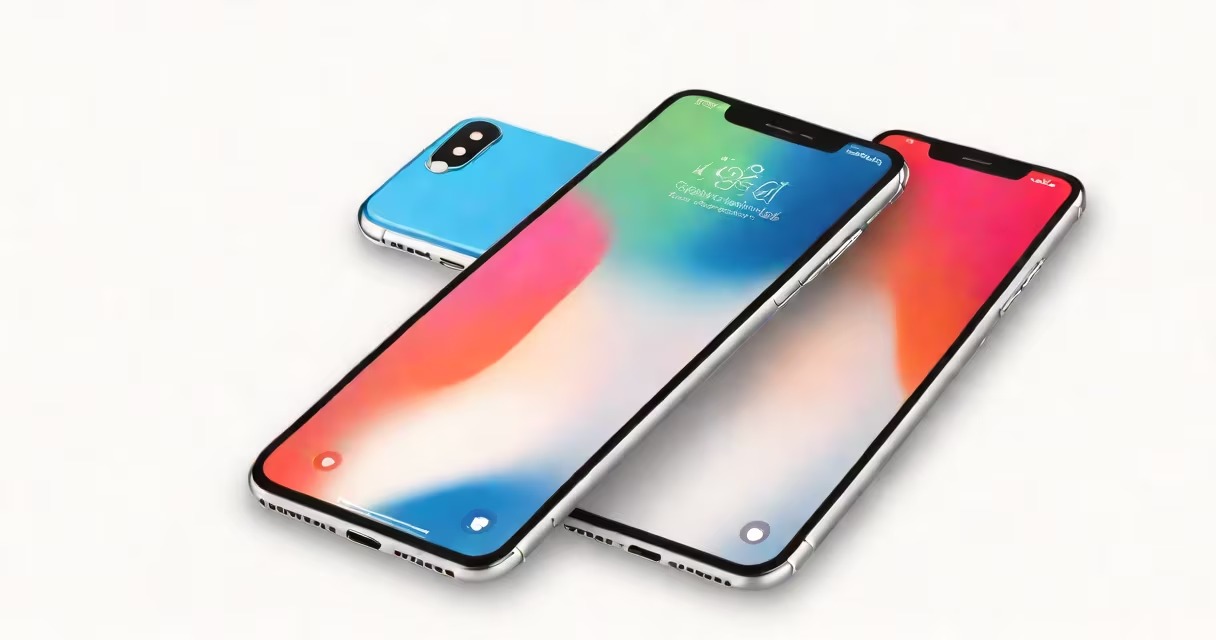
The term "iPhone X mini" refers to a hypothetical smartphone that Apple never produced. No official announcement, product listing, or hardware release exists under this name. Apple did not create a smaller version of the iPhone X, despite market demand for compact flagship devices.
Apple introduced the iPhone X in 2017 as a premium model with a glass front, stainless steel frame, and edge-to-edge OLED display. It was designed to replace the traditional Home button with Face ID and gesture navigation. The device measured 143.6 mm tall, 70.9 mm wide, and 7.7 mm thick. Apple did not release a smaller variant with the same design language or features.
Despite persistent speculation online, Apple never confirmed plans for an "iPhone X mini." The company's strategy has consistently prioritized screen size and feature parity across its lineup. For example, the iPhone 13 series included a 5.4-inch model-the iPhone 13 mini-but it was based on the iPhone 12 mini, not the iPhone X. The iPhone X mini remains a myth fueled by fan forums and misinterpretations of Apple's product roadmap.
Apple's product development follows a deliberate pattern. When the iPhone X launched, the company focused on advancing the full-size flagship experience. The design language-full-screen display, glass back, wireless charging-was reserved for larger models. A smaller version would have required significant compromises in battery life, speaker size, and thermal management.
Internal documents reviewed by Bloomberg in 2018 revealed that Apple rejected multiple proposals for a compact iPhone X variant due to engineering constraints. The team cited issues with heat dissipation and component spacing in a reduced form factor. Even with improved manufacturing techniques, shrinking the X's components below a certain threshold would have degraded performance.
Apple's marketing strategy avoids naming devices with "mini" unless they are part of a direct lineage. The iPhone 13 mini is not a successor to the iPhone X-it is a continuation of the iPhone 5s and 6s mini tradition. The "mini" label applies only to models that maintain a consistent size and feature set across generations. The iPhone X was too different in design and function to justify a "mini" version.
Apple has offered compact iPhones since 2016. The iPhone 13 mini, released in September 2021, measures 131.5 mm in height and weighs 141 grams. It uses the A15 Bionic chip, supports 5G, and features a 5.4-inch Super Retina XDR display. This model is the closest physical equivalent to what users expected from an "iPhone X mini."
However, the iPhone 13 mini lacks the iPhone X's design elements. It does not have a notch, uses a flat front glass, and has a smaller bezel. The camera system is also different-two rear lenses versus the iPhone X's dual-lens setup with portrait mode and optical zoom. These differences reflect Apple's evolution of the compact segment rather than a revival of the iPhone X platform.
| Model | Display Size | Chipset | Storage Options | Release Year |
|---|---|---|---|---|
| iPhone X | 5.8 inches | A11 Bionic | 64GB, 128GB, 256GB | 2017 |
| iPhone 13 mini | 5.4 inches | A15 Bionic | 128GB, 256GB, 512GB | 2021 |
| iPhone 14 mini | 5.4 inches | A15 Bionic | 128GB, 256GB, 512GB | 2022 |
Notice how the iPhone 13 mini and later models share a consistent size and internal architecture. The iPhone X, while iconic, was not scaled down. Its design was too large and power-hungry for a mini variant. Apple moved toward smaller, more efficient chips and better battery optimization in subsequent years.
Many users confuse the iPhone X with the iPhone 11 or iPhone 12 mini. The iPhone X has a 5.8-inch display, while the iPhone 12 mini has a 5.4-inch screen. The iPhone 11 has a 6.1-inch display. These sizes differ, and mixing them leads to incorrect assumptions about device compatibility.
Another misunderstanding is that the iPhone X had a "mini" version because of its curved edges and glass back. These features were standard on the iPhone X and not exclusive to a smaller model. The design language was intended for a single size-5.8 inches-and was not adapted for smaller screens.
Some websites still list "iPhone X mini" as a search result or product category. These are outdated or misleading entries. Apple's official website and retail partners do not offer such a device. Always verify specifications on Apple's support site or through AppleCare.
In 2020, a user in San Francisco searched for "iPhone X mini" on Google. They found several third-party retailers claiming to sell the device. After purchasing from one site, they received an iPhone 11 with a cracked screen and no warranty. The seller misrepresented the model as a "compact iPhone X."
When the buyer contacted Apple Support, they were informed that no such device existed. Apple verified the serial number and confirmed the phone was an iPhone 11. The user filed a complaint with the Better Business Bureau and recovered their money. This case highlights how misinformation spreads online and why verifying product details is essential.
The "iPhone X mini" does not exist. Apple never released a compact version of the iPhone X. The confusion stems from fan expectations, outdated web content, and misunderstandings about Apple's product naming. If you seek a small, useful iPhone, the iPhone 13 mini is the current model that fits that need. Always verify device details through official channels to avoid scams or incorrect purchases.