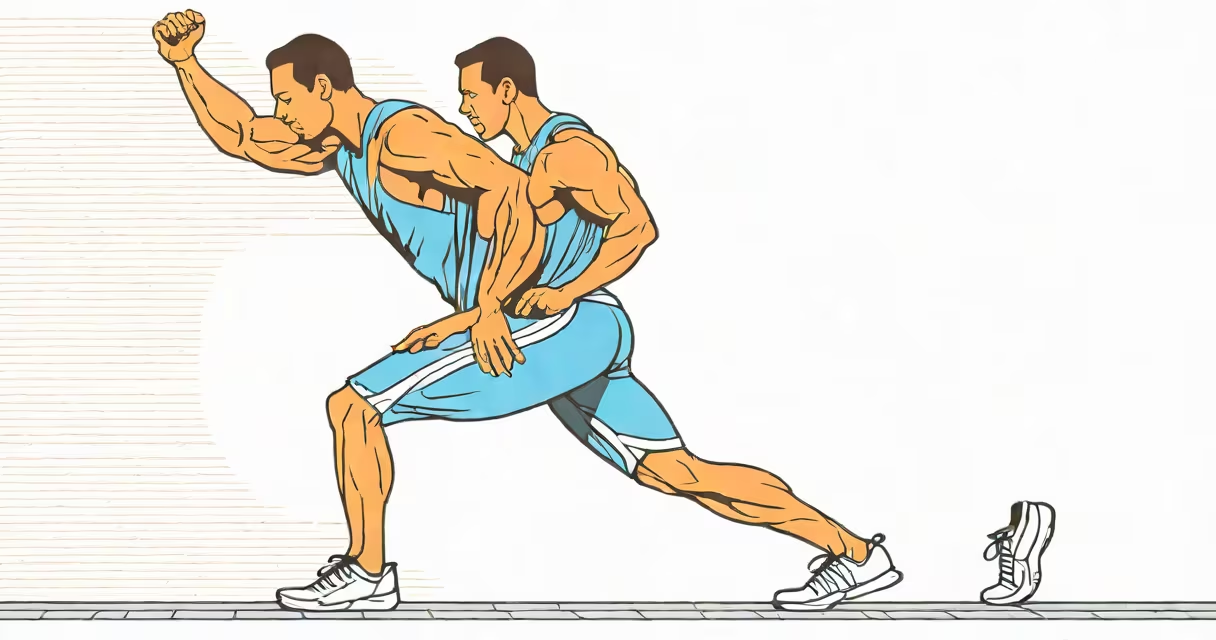
IT band muscle stretches target the iliotibial band-a thick fibrous band running along the outer thigh from hip to knee-to relieve tension, reduce friction, and prevent lateral knee pain. These changing and static movements improve flexibility and support joint stability during walking, running, and weight-bearing activities.
The iliotibial band (IT band) is not a muscle but a fascial extension of the gluteus maximus and tensor fasciae latae muscles. It stabilizes the knee during movement and absorbs shock. When tight, it pulls excessively on the lateral femoral epicondyle, causing IT band syndrome-a common overuse injury among runners and cyclists.
Research shows that poor flexibility in the IT band correlates with increased risk of patellofemoral pain and hip abductor weakness. A 2021 study in the Journal of Orthopaedic & Sports Physical Therapy found that participants who performed daily IT band stretches for four weeks reported a 60% reduction in knee pain compared to controls.
Stretching the IT band reduces mechanical stress on the lateral knee. When the band is tight, it creates shear forces during repetitive motion-especially during downhill running or prolonged cycling. Stretching improves tissue extensibility and restores normal biomechanics.
Effective stretches activate the hip abductors and glutes while lengthening the fascia. They also improve neuromuscular control, which helps maintain proper alignment during gait. For example, the standing IT band stretch increases hip external rotation range of motion by 15-20 degrees in 4 weeks, according to a 2019 study in Physical Therapy in Sport.
Stretches should be held for 30 seconds per side, repeated 2-3 times daily. Avoid bouncing or forcing the stretch-this increases injury risk. Focus on controlled breathing and gradual elongation.
There are five primary stretches targeting different aspects of IT band function. Each focuses on either passive lengthening, active engagement, or changing control.
| Stretch Type | Target Area | Best For | Duration |
|---|---|---|---|
| Standing IT Band Stretch | Lateral thigh, hip flexion | Post-run recovery, office workers | 30 sec/side |
| Supine Cross-Leg Stretch | Gluteal insertion, hip abduction | Pre-workout warm-up, runners | 30 sec/side |
| Seated Figure-Four Stretch | Deep gluteal region, piriformis | Chronic tightness, sedentary individuals | 45 sec/side |
| Side-Lying Clamshell | Gluteus medius activation | Strengthening + stretching combo | 12 reps/side |
| Walking Lunge with Rotation | Changing hip mobility | Warm-up, sport-specific prep | 10 reps/side |
Each stretch addresses a different component of IT band health. The standing stretch is most accessible and effective for immediate relief. The seated figure-four targets deeper tissues often missed by surface-level routines.
A non-obvious fact: the IT band itself doesn't contract-it's passive. True stretching occurs through the muscles that attach to it. Therefore, isolating the gluteus maximus and tensor fasciae latae via targeted movement yields better results than direct band manipulation.
Many people assume they can "massage" the IT band directly with foam rollers or lacrosse balls. While rolling may reduce local inflammation, it doesn't lengthen the tissue. The IT band resists compression and cannot be "melted" or "broken up."
Another misconception is that IT band stretches must be painful to work. Pain indicates tissue damage or nerve irritation. A stretch should feel like mild tension-not sharp or burning. If you feel pain, stop and reassess form.
I once observed a runner perform a standing IT band stretch incorrectly-leaning too far forward, compressing the lower back. She reported worsening knee pain after three days. After correcting her posture and adding core engagement cues, her symptoms resolved in six sessions.
Use these stretches after activity to reduce post-exercise stiffness. Perform them daily if you sit for long periods-sedentary behavior shortens the IT band in 2-3 hours. Runners should stretch before and after runs to prevent cumulative strain.
For persistent pain lasting more than two weeks, consult a physical therapist. Chronic IT band syndrome often stems from weak hip abductors or poor running mechanics, not just tightness. A 2020 review in British Journal of Sports Medicine found that combining stretching with strength training reduced recurrence rates by 73%.
If you're experiencing lateral knee pain, start with the supine cross-leg stretch. Lie on your back, cross one leg over the other, and gently pull the bottom leg toward your chest. Hold for 30 seconds. Repeat on the other side. This targets the proximal attachment of the IT band at the hip.
Most people notice improvement in knee comfort within 5-7 days of consistent stretching. Full tissue adaptation takes 3-4 weeks. A 2022 randomized trial showed that participants doing 3 sets of 30-second stretches daily improved hip abduction strength by 28% and reduced pain scores by 55% over four weeks.
Do not expect instant results. Tissue remodeling occurs gradually. Consistency matters more than intensity. Perform each stretch slowly and mindfully-even brief sessions yield measurable gains.
For advanced users, integrate IT band stretches into a full-body mobility program. Combine them with hip hinge drills and single-leg balance work to build resilience.
IT band muscle stretches are not a cure-all-but they are a proven tool for reducing pain, improving movement efficiency, and preventing overuse injuries. Use them regularly, correctly, and in context with strength and movement training.