A lean company meaning refers to an organization structured and operated using lean principles-systems focused on delivering maximum customer value with minimal resource use. These companies eliminate non-value-adding activities, reduce cycle times, and embed continuous improvement into daily operations.
Lean originated in manufacturing, particularly at Toyota during the 1950s, where it was developed to increase output while minimizing inventory, defects, and labor waste. Today, the lean company meaning extends beyond factories to software development, healthcare, education, and service industries. The core idea remains unchanged: do more with less, sustainably.
According to the Lean Enterprise Institute, lean is "a systematic approach to identifying and eliminating waste through continuous improvement." This structure prioritizes flow, pull-based production, and respect for people. A lean company doesn't just cut costs-it redesigns processes to deliver faster, higher-quality outcomes.
At its foundation, a lean company uses structured methods to analyze workflows and remove inefficiencies. The process begins with mapping the value stream-the sequence of steps required to deliver a product or service to a customer. Any step that does not add value from the customer's perspective is flagged for elimination or reduction.
For example, a software development team using lean practices might track how long it takes from code commit to deployment. If the average time exceeds four hours, they investigate bottlenecks: manual testing, approval delays, or environment configuration issues. They then implement automation tools, standardize handoffs, and set up continuous integration pipelines to shorten the cycle.
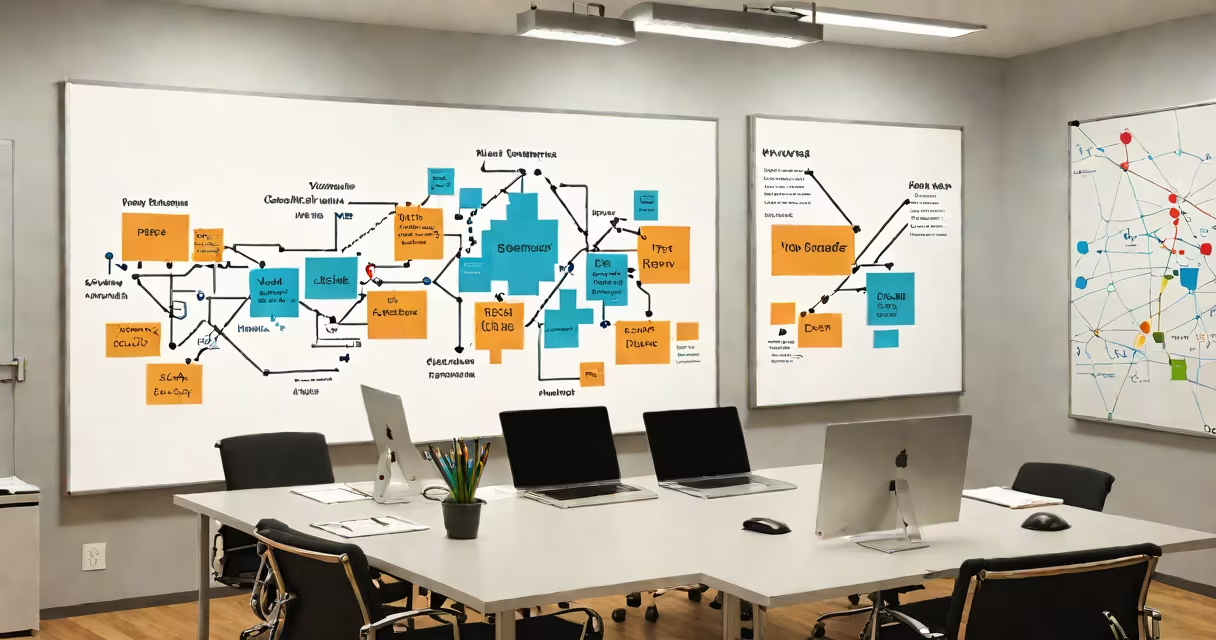
Key practices include visual management (using dashboards or Kanban boards), standardized work procedures, and regular problem-solving meetings called huddles. These rituals ensure teams stay aligned and respond quickly to deviations. The goal is not perfection but progress-small, consistent improvements that compound over time.
While all lean companies share foundational principles, their implementation varies based on industry and scale. The most common models include:
| Type | Focus Area | Example Application |
|---|---|---|
| Manufacturing Lean | Production flow, inventory control | Toyota's Just-In-Time system reduces parts storage by aligning supply with demand. |
| Service Lean | Customer process, response time | A hospital emergency department reduced patient wait times by 37% using lean workflow mapping. |
| Software Lean | Code delivery speed, defect rate | Spotify's engineering model uses small autonomous squads to deploy features weekly. |
Each variant applies the five core principles of lean: define value, map the value stream, create flow, establish pull, and seek perfection. These steps form a feedback loop that drives ongoing refinement. For instance, a retail chain using lean logistics might discover that 20% of warehouse tasks involve moving items twice. By reorganizing storage zones and adopting barcode scanning, they cut processing time by 40% and reduced errors by half.
One non-obvious distinction often missed is that lean is not synonymous with cost-cutting. While waste reduction lowers expenses, the primary aim is improving value delivery. A lean company may invest in training or better tools if those actions accelerate results. The focus is on efficiency, not austerity.
Many assume lean is purely about reducing staff or automating everything. That's incorrect. Lean emphasizes human involvement-empowering frontline workers to identify problems and suggest solutions. The term "respect for people" is central to lean philosophy, as emphasized by the Toyota Way.
Another misconception is that lean only works in large-scale manufacturing. In reality, startups and small agencies adopt lean principles to test ideas rapidly. A digital marketing agency I observed used lean sprints to refine client campaigns. Instead of launching full campaigns, they ran 7-day experiments with A/B testing on messaging, visuals, and timing. Results showed a 26% higher conversion rate compared to traditional planning cycles.
Organizations often confuse lean with agile. While both promote iterative work and responsiveness, agile is primarily a project management structure used in software and creative fields. Lean is broader-it's a cultural and systemic approach to organizational design. Agile teams can operate within a lean company, but a company can be lean without being agile.
For example, a regional bank implemented lean across its loan processing unit. They reduced approval times from 14 days to 48 hours by removing redundant checks, digitizing forms, and training staff in root cause analysis. The change wasn't driven by a single tool or software update-it came from rethinking roles, responsibilities, and decision-making authority.
Understanding lean company meaning requires comparing it to similar concepts. Blue chip company meaning describes large, stable firms with strong financial performance and market presence-like Johnson & Johnson or Apple. These companies prioritize consistency and investor returns. A blue chip firm may adopt lean practices, but its primary goals aren't process optimization-they're growth, brand strength, and dividend stability.
Unicorn company meaning refers to privately held startups valued at $1 billion or more. These companies grow fast, often with high burn rates and aggressive expansion. While some unicorns use lean tactics to validate products quickly, their success depends more on funding, market timing, and scalability than on internal efficiency.
Consultancy company meaning involves advisory services focused on strategic guidance. A consultancy may recommend lean transformations to clients, but it doesn't necessarily practice lean internally. In contrast, a lean company integrates these principles into its own operations-not just as advice, but as lived practice.
Consider a mid-sized logistics provider that adopted lean across its dispatch and routing functions. After mapping the entire delivery cycle, they found that drivers spent 18% of their time waiting for loading confirmations. By introducing a mobile app that automated confirmation and sent real-time updates, they improved on-time delivery by 31% and reduced fuel consumption by 12%. This outcome wasn't achieved through hiring more staff or buying bigger trucks-it came from refining existing processes.
The lean company meaning is not a one-time initiative. It's a mindset. It demands discipline, transparency, and leadership commitment. As noted by the Harvard Business Review, "The most successful lean implementations are not managed top-down-they emerge from teams solving problems together."
When applied consistently, the lean company meaning leads to faster innovation, higher employee engagement, and stronger customer satisfaction. It's not about doing more with less-it's about doing the right things better.