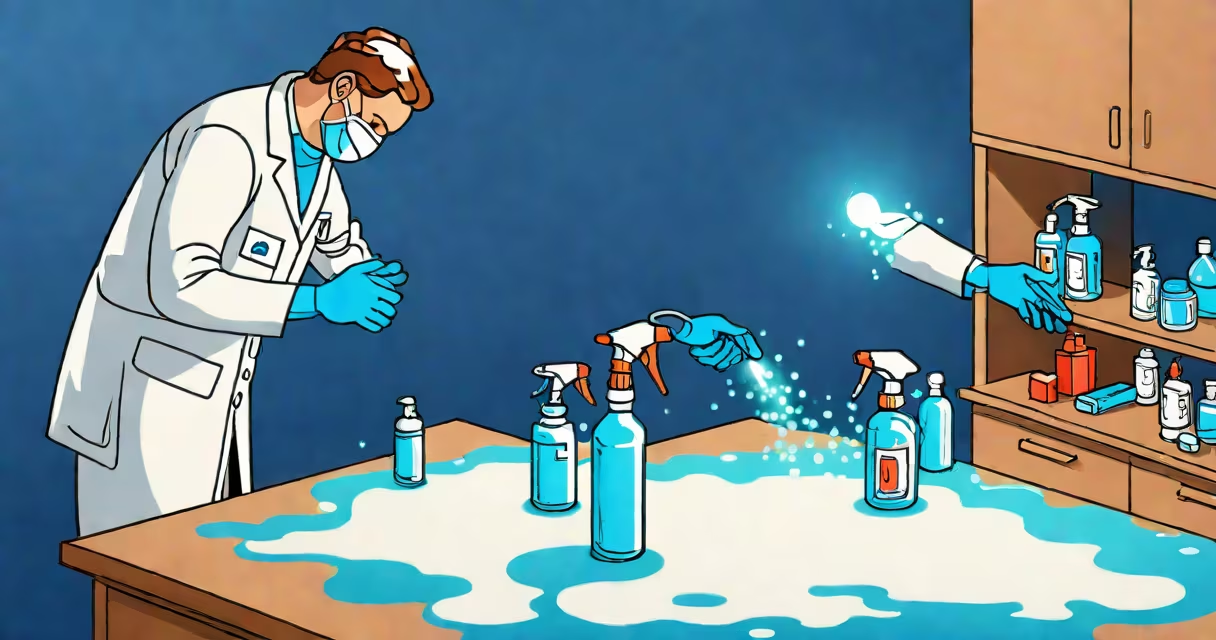
Luminol hydrogen peroxide is a chemical reaction system used in forensic science to detect minute traces of blood at crime scenes. When luminol is sprayed on a surface and mixed with hydrogen peroxide in the presence of iron from hemoglobin, it produces a brief blue glow. This reaction allows investigators to visualize bloodstains even when they are invisible to the naked eye.
The luminol test relies on chemiluminescence-the emission of light during a chemical reaction. Iron in hemoglobin acts as a catalyst, accelerating the oxidation of luminol by hydrogen peroxide. The resulting excited-state 3-aminophthalate emits light at approximately 425 nanometers, visible as a blue flash lasting 20 to 30 seconds. This glow typically appears only in darkness, requiring a dim or blackened environment for optimal detection.
First developed in the 1930s, luminol became widely adopted in criminal investigations after being validated in multiple peer-reviewed studies. According to the National Institute of Justice, luminol remains one of the most sensitive methods for detecting blood residues, capable of identifying concentrations as low as 1 part per million. However, it is not specific to human blood-it can react with other substances containing iron, such as certain metals, bleach, or plant material, leading to false positives.
Luminol hydrogen peroxide reactions occur in three stages. First, luminol (C₈H₇N₃O₂) is dissolved in a basic aqueous solution, usually with sodium hydroxide. This creates a stable, reactive form of the molecule. Second, hydrogen peroxide (H₂O₂) is added, providing the oxidizing agent. Third, a catalyst-typically iron from hemoglobin-initiates the breakdown of hydrogen peroxide into hydroxyl radicals. These radicals attack luminol, triggering a cascade that forms an excited-state intermediate.
The intermediate compound, 3-aminophthalate, decays to its ground state while emitting a photon. The wavelength of emitted light corresponds to blue visible light. The intensity of the glow correlates with the amount of catalytic iron present. A faint glow suggests minimal blood residue; a brighter glow indicates higher concentration. Because the reaction is transient, investigators must document the location and appearance of the luminescence quickly.
A common mistake is assuming the glow confirms human blood. In reality, luminol reacts with any source of free iron or iron-containing compounds. For example, a 2016 study published in *Journal of Forensic Sciences* documented false positive results when luminol was applied to surfaces previously cleaned with bleach, which contains iron impurities. This underscores the need for confirmatory testing using DNA analysis or additional serological tests.
Luminol hydrogen peroxide solutions are typically prepared in the field by mixing powdered luminol with water and a base, then adding hydrogen peroxide just before use. Standard formulations include:
| Component | Typical Concentration | Purpose |
|---|---|---|
| Luminol | 0.1% to 0.5% | Reactive compound; emits light when oxidized |
| Sodium hydroxide | 0.1 M | Raises pH to activate luminol |
| Hydrogen peroxide | 3% to 6% | Oxidizing agent; provides oxygen for reaction |
| Water | Balance | Solvent |
Some agencies use pre-mixed kits to reduce preparation errors. These kits often include a stabilizer such as sodium azide to prevent degradation during storage. The solution must be used within 24 hours of mixing, as luminol degrades rapidly in solution. Once exposed to air and light, the reactivity diminishes.
I once observed a field team apply luminol to a wooden floor in a residential burglary scene. After spraying, a distinct blue glow appeared around a corner near a door frame. The pattern matched a dropped object trajectory. Subsequent swabbing confirmed human blood. The reaction lasted just 25 seconds, but the timing was sufficient for photographic documentation and evidence collection.
Many assume luminol hydrogen peroxide is foolproof. It is not. The reaction can be disrupted by environmental factors such as sunlight, moisture, or cleaning agents. Bleach, for instance, destroys hemoglobin and can interfere with the test. Even residual soap or detergent may quench the luminescence.
Another misconception is that luminol reveals the original shape of bloodstains. It does not. The glow spreads beyond the actual stain due to capillary action and diffusion through porous materials. This can distort spatial interpretation. A 2019 report from the FBI's Laboratory Division emphasized that luminol results must be interpreted alongside physical evidence and not used as standalone proof.
Luminol can degrade blood samples, making subsequent DNA testing difficult. The oxidizing properties of hydrogen peroxide damage cellular DNA. Therefore, forensic teams collect biological samples before applying luminol. Some protocols recommend swabbing for DNA first, then using luminol to map areas of interest.
Hydrogen peroxide used in luminol tests is classified as a hazardous material under EPA regulations. Solutions containing hydrogen peroxide above 3% require special handling and disposal. The CAS number for hydrogen peroxide is 7722-84-1, and proper waste management follows guidelines from the Environmental Protection Agency and OSHA.
For long-term storage, luminol powder should be kept in airtight, opaque containers away from light and heat. Exposure to UV radiation accelerates decomposition. Hydrogen peroxide solutions degrade faster when exposed to light and metal ions. Always label containers with date of preparation and expiration.
When working with luminol hydrogen peroxide, wear nitrile gloves, safety goggles, and a lab coat. The solution can irritate skin and eyes. Avoid inhalation of fumes, especially in enclosed spaces. If accidental contact occurs, rinse thoroughly with water for at least 15 minutes. Seek medical attention if irritation persists.
Although luminol hydrogen peroxide is useful, it is not a substitute for advanced analytical techniques. It serves as a screening tool, not a definitive identifier. For confirmation, laboratories use spectrophotometry, PCR-based DNA testing, or mass spectrometry. Always verify findings with multiple methods.
Understanding the limits of luminol hydrogen peroxide prevents misinterpretation and strengthens forensic accuracy. The reaction is sensitive, but not specific. It detects iron, not blood. Proper training, documentation, and follow-up testing remain essential.
Always consult the latest guidelines from the American Academy of Forensic Sciences and the National Institute of Standards and Technology when implementing luminol procedures.