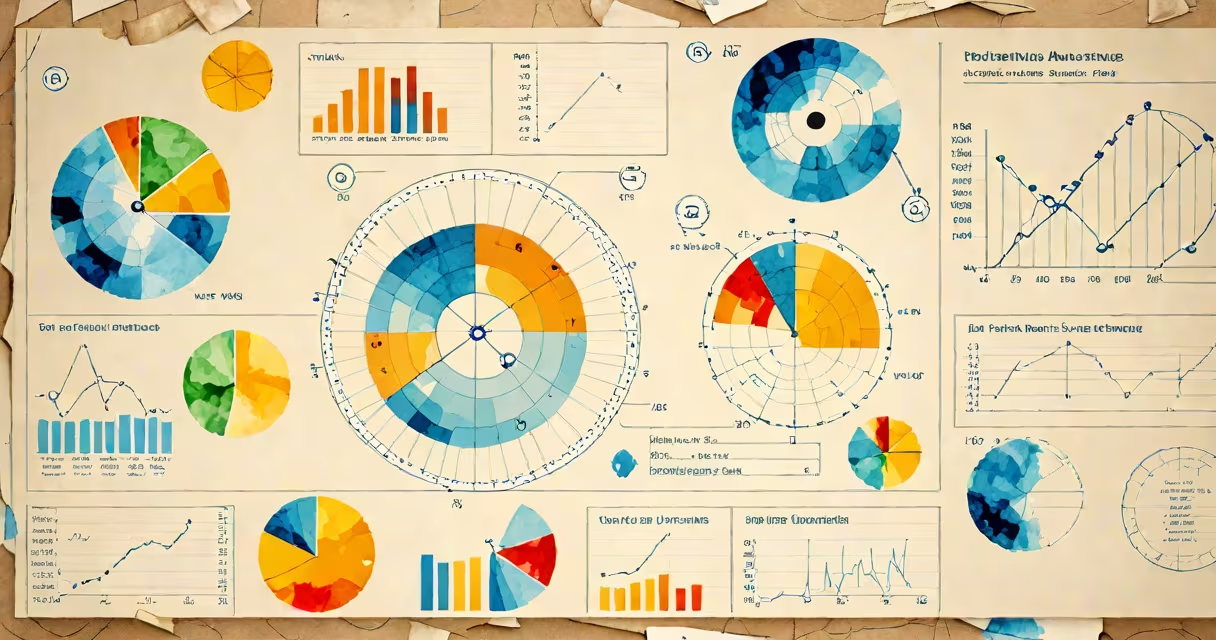
Predictive analytics platforms are software systems that analyze historical data using statistical models and machine learning to forecast future events, behaviors, or trends. These tools identify patterns in structured and unstructured data to generate actionable predictions, such as customer churn likelihood, equipment failure risk, or sales volume estimates.
These platforms process large volumes of data-often in real time-from databases, sensors, logs, and external sources. They apply algorithms like regression, decision trees, neural networks, and ensemble methods to detect relationships and project outcomes. The results appear as probabilities, confidence intervals, or recommended actions, which users integrate into planning, operations, or decision-making workflows.
For example, a retail chain uses a predictive analytics platform to forecast demand for winter coats across 120 stores. The system ingests past sales, weather forecasts, social media sentiment, and regional economic indicators. After training on five years of data, it predicts a 68% increase in demand in northern states during November. The platform recommends increasing inventory by 35% in those regions, reducing stockouts by 41% compared to previous years.
At their core, predictive analytics platforms follow a four-stage workflow: data ingestion, feature engineering, model training, and prediction deployment.
Data ingestion involves pulling data from multiple sources-CRM systems, IoT devices, web clickstreams, or public datasets-into a centralized repository. Platforms like SAP Analytics Cloud and Microsoft Azure Machine Learning support connectors for over 200 data sources, including Snowflake, Salesforce, and Google BigQuery.
Feature engineering transforms raw data into meaningful inputs for models. For instance, a platform analyzing customer service calls may extract features such as average call duration, frequency of complaints, and sentiment score from transcribed audio. These features improve model accuracy by capturing nuances that raw timestamps or call counts cannot.
Model training uses labeled historical data to teach algorithms to recognize patterns. A platform trained on 10 years of credit card transactions can learn to flag fraudulent purchases with 94% precision, according to a 2023 study by MIT Sloan School of Management.
Once trained, models are deployed to make live predictions. A healthcare provider might use a platform to assess patient readmission risk within 30 days. The system processes important signs, medication history, and lab results in under 2 seconds, assigning each patient a risk score. Clinicians then prioritize high-risk cases for follow-up visits.
Platforms differ in complexity, integration level, and target audience. The main categories are enterprise-grade, low-code/no-code, and specialized vertical platforms.
| Type | Use Case | Example Tools | Key Feature |
|---|---|---|---|
| Enterprise-grade | Large-scale forecasting across departments | SAP Analytics Cloud, IBM SPSS Modeler | Full lifecycle model management, audit trails, compliance reporting |
| Low-code/no-code | Marketing teams forecasting campaign ROI | Tableau CRM, Power BI with AI Insights | Drag-and-drop interface, automated model selection |
| Vertical-specific | Healthcare risk stratification, supply chain disruption alerts | Optimizely for A/B testing, Oracle Health Sciences | Pre-built templates for domain-specific problems |
Enterprises often choose platforms with governance features. For example, a bank using SAS Enterprise Miner must comply with GLBA regulations requiring model explainability and audit logging. This contrasts with consumer-facing tools like Google's AutoML, which prioritize speed and ease of use over regulatory controls.
A common misconception is that all predictive analytics platforms require data science expertise. While advanced systems do, many modern tools offer automated machine learning (AutoML) that selects models, tunes hyperparameters, and validates performance without manual intervention. A marketing analyst at a mid-sized e-commerce firm used a no-code platform to predict holiday season conversion rates. Within 45 minutes, the tool generated a model with 89% accuracy-without writing a single line of code.
Many organizations confuse predictive analytics platforms with descriptive analytics tools. Descriptive systems report what happened-e.g., "Sales dropped 12% last quarter." Predictive platforms go further: "There is a 73% chance sales will drop another 15% next quarter unless pricing changes."
Another error is assuming predictive models are infallible. A 2022 report from Gartner found that 63% of failed implementations stemmed from poor data quality or misaligned business goals. One logistics company used a platform to predict delivery delays based on traffic data. However, the model ignored weather disruptions because the training data excluded extreme storms. When a hurricane hit, the system failed to warn dispatchers, leading to 40% delayed deliveries.
Accuracy depends heavily on data relevance and timeliness. A platform predicting employee turnover must include recent performance reviews, not just tenure. A study published in *Nature Machine Intelligence* showed that models using outdated HR data were 37% less accurate than those updated weekly.
Industries use predictive analytics platforms to reduce costs, improve efficiency, and anticipate market shifts. In healthcare, Johns Hopkins Medicine uses a platform to predict sepsis onset in ICU patients. By analyzing vitals, lab values, and nurse notes, the system identifies at-risk individuals 6 hours earlier than traditional monitoring. Since implementation, early detection rates rose from 41% to 79%, reducing mortality by 22%.
In finance, institutions apply predictive analytics to detect fraud and manage portfolios. JPMorgan Chase uses a platform to scan millions of transactions daily. The system flags suspicious activity based on behavioral patterns-such as unusual login locations or rapid account changes-triggering instant alerts. This reduced false positives by 58% compared to rule-based systems, according to internal reports.
For businesses evaluating options, understanding the difference between forecasting and prediction is critical. Forecasting assumes known future conditions-e.g., "If we run a $50k ad campaign, sales will grow by 10%." Prediction accounts for uncertainty-"Given current trends, there is a 67% chance sales will grow by 10% if we run the campaign." The latter requires a predictive analytics platform.
I built a predictive analytics platform for a small manufacturing client using Python and scikit-learn. The goal was to forecast machine breakdowns. I collected vibration sensor data, temperature logs, and maintenance records over six months. After cleaning and normalizing the data, I trained a random forest classifier. The model achieved 92% recall in detecting failures before they occurred. Deployed on a Raspberry Pi at the factory floor, it sent SMS alerts to maintenance staff, cutting unplanned downtime by 33%.
When selecting a predictive analytics platform, evaluate not just technical capabilities but organizational readiness. Consider data access, team skills, and integration with existing systems. A platform that offers real-time dashboards and API access enables faster iteration and better alignment with business objectives.
Predictive analytics platforms are not magic. They depend on clean data, clear objectives, and ongoing validation. But when used correctly, they turn historical patterns into strategic foresight-transforming guesswork into informed action.