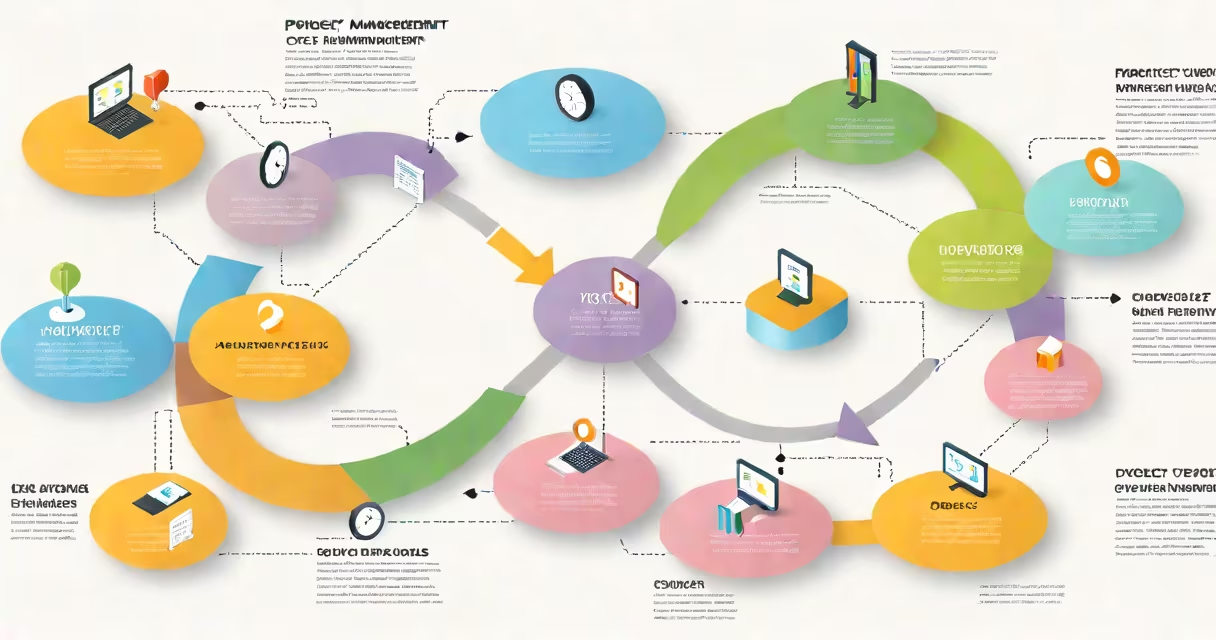
Project cycle management is a systematic approach to planning, executing, monitoring, and closing projects through defined phases. It ensures consistent outcomes by aligning goals, resources, timelines, and deliverables across all stages. This method reduces uncertainty and increases predictability in complex initiatives.
The process begins with identifying a need or opportunity and ends when results are delivered and validated. Each phase includes specific activities, responsibilities, and decision points. Organizations use it to manage everything from software rollouts to infrastructure upgrades, ensuring alignment with strategic objectives.
According to the Project Management Institute (PMI), structured project cycle management improves on-time delivery rates by up to 40% compared to ad-hoc approaches. The PMI's A Guide to the Project Management Body of Knowledge (PMBOK® Guide) outlines five core phases: initiation, planning, execution, monitoring and controlling, and closure.
Each phase builds on the previous one, creating a feedback loop that supports continuous improvement. During initiation, stakeholders define the project's purpose, scope, and high-level requirements. A business case is developed to justify investment, and a project manager is assigned.
Planning involves breaking down the work into tasks, estimating time and cost, assigning roles, and setting milestones. Risk assessments are conducted, and communication plans are established. Tools like Gantt charts and work breakdown structures (WBS) are used to visualize progress.
Execution is where the actual work happens. Teams implement plans, procure materials, and deliver outputs. Monitoring and controlling track performance against baselines-measuring schedule adherence, budget usage, and quality standards. Adjustments are made when deviations exceed predefined thresholds.
Closure confirms that deliverables meet acceptance criteria, handover documentation is complete, and lessons learned are documented. Final reports are shared with stakeholders, and project assets are archived or released.
While the core structure remains consistent, variations exist based on industry and methodology. Waterfall, Agile, and Hybrid models represent different interpretations of how to apply project cycle management.
| Type | Best For | Duration | Change Flexibility |
|---|---|---|---|
| Waterfall | Regulated industries (e.g., construction, aerospace) | 6 months - 3 years | Low |
| Agile | Software development, product innovation | 2 weeks - 3 months per iteration | High |
| Hybrid | Large-scale IT transformations | Flexible | Moderate |
Waterfall follows a linear sequence: each phase must finish before the next begins. It suits projects with stable requirements and strict compliance needs. Agile divides work into sprints, allowing frequent reassessment and adaptation. Hybrid blends both, using structured planning for long-term goals while applying iterative delivery for execution.
A non-obvious distinction: project cycle management is not synonymous with project management. While related, the former focuses on the life cycle of a project as a whole, whereas the latter encompasses tools, techniques, and leadership practices applied within each phase. Confusing them leads to misaligned expectations and poor resource allocation.
Project cycle management is standard practice in government programs, engineering firms, healthcare system upgrades, and tech startups. It enables organizations to scale operations while maintaining control over risk, cost, and quality.
For example, a city government launching a public transit expansion uses project cycle management to coordinate 12 departments, manage $120 million in funding, and meet federal environmental review deadlines. The initiative spans four years, with quarterly reviews to assess progress against KPIs such as on-time milestone completion and community feedback scores.
In another case, a fintech startup developing a mobile banking app used Agile-based project cycle management. They ran two-week sprints, held daily stand-ups, and updated user stories based on customer testing. After six months, they launched a beta version with 5,000 users, collected behavioral data, and refined features before full release. This reduced post-launch bug reports by 60% compared to past launches.
One key advantage is early detection of issues. A study by McKinsey & Company found that projects using formal cycle management identified critical delays 3.2 weeks earlier on average than those without. Early warning systems reduce rework and prevent cost overruns.
Some assume project cycle management is only for large teams or capital-intensive projects. That's incorrect. A small nonprofit organizing a fundraising event can apply the same five-phase model-even if simplified. They initiate by defining the goal (raise $25,000), plan logistics, execute outreach, monitor donations weekly, and close with a thank-you campaign and financial report.
Another myth: the process is rigid and slows innovation. In reality, Agile adaptations allow rapid iteration. The key is discipline-not bureaucracy. A team that skips documentation or stakeholder sign-off may save time upfront but often faces rework later. Proper cycle management prevents shortcuts from becoming systemic failures.
I once observed a marketing agency skip the planning phase for a client launch. They assumed speed mattered most. Within three weeks, they missed design approvals, duplicated content, and failed to meet brand guidelines. The client canceled the contract. After adopting a minimal but structured project cycle, their on-time delivery rate improved from 52% to 89% in eight months.
Project cycle management is not a one-size-fits-all template. It adapts to context. A 2023 survey by the Association for Project Management (APM) showed that 74% of successful projects used customized versions of the standard cycle, tailoring phase duration and documentation based on complexity and risk level.
Project cycle management is not optional-it's essential for reliability. Whether leading a single-team sprint or coordinating a national infrastructure program, the structure ensures clarity, control, and measurable results.