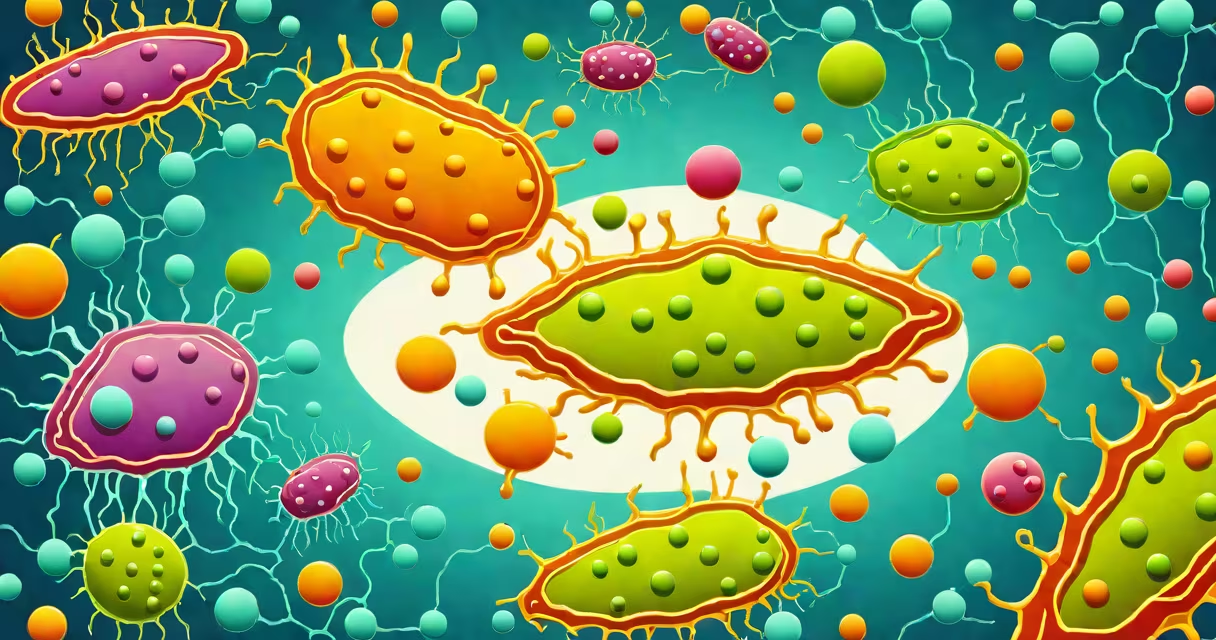
Prokaryotes and eukaryotes differ in cellular structure, specifically in the presence of a nucleus and membrane-bound organelles. Prokaryotes lack a defined nucleus and organelles; their DNA floats freely in the cytoplasm. Eukaryotes have a true nucleus enclosed by a nuclear envelope and contain specialized organelles such as mitochondria and the Golgi apparatus.
These differences form the basis of biological classification. All life falls into one of two domains: Bacteria and Archaea (prokaryotes), and Eukarya (eukaryotes). The distinction is not merely academic-it affects how cells function, reproduce, and evolve. For example, bacteria like *Escherichia coli* grow rapidly in nutrient-rich environments because they lack complex internal structures. Human cells, which are eukaryotic, require complex coordination between organelles to maintain homeostasis.
The divergence between prokaryotes and eukaryotes occurred over 1.8 billion years ago. Evidence from molecular phylogenetics shows that eukaryotes likely arose from an archaeal ancestor through endosymbiosis-the process where a host cell engulfed a bacterium that became mitochondria. This event enabled energy-intensive processes like multicellularity and complex nervous systems.
Prokaryotes operate with minimal internal compartmentalization. Their DNA is a single circular chromosome located in a region called the nucleoid. Ribosomes, responsible for protein synthesis, are free-floating in the cytoplasm. Metabolic pathways occur directly in the cytosol or across the plasma membrane. For instance, *Salmonella typhimurium* uses membrane proteins to transport nutrients and expel toxins without relying on vesicles or organelles.
Eukaryotes rely on internal membranes to separate functions. The nucleus houses linear chromosomes wrapped around histone proteins. Transcription occurs in the nucleus; translation happens in the cytoplasm via ribosomes attached to the rough endoplasmic reticulum. Energy production takes place in mitochondria, which evolved from alpha-proteobacteria. A single human liver cell contains approximately 1,000 mitochondria, each capable of generating hundreds of ATP molecules per second.
Prokaryotes divide by binary fission-DNA replicates, the cell elongates, and splits into two genetically identical daughter cells. Eukaryotes undergo mitosis, a multi-phase process involving spindle fibers, centrosomes, and precise chromosome segregation. Errors in mitosis lead to aneuploidy, a known driver of cancer. In contrast, prokaryotic reproduction introduces variation primarily through horizontal gene transfer, such as conjugation, transformation, and transduction.
A table comparing core structural features highlights the functional implications of the prokaryote-eukaryote divide:
| Feature | Prokaryotes | Eukaryotes |
|---|---|---|
| Nucleus | Absent (nucleoid region) | Present (membrane-bound) |
| Membrane-bound organelles | None | Yes (mitochondria, lysosomes, Golgi) |
| Cell size | Typically 0.2-5 μm | Typically 10-100 μm |
| Cell wall composition | Peptidoglycan (bacteria); pseudopeptidoglycan (archaea) | Present in plants and fungi; absent in animals |
| Chromosome structure | Single circular DNA molecule | Multiple linear chromosomes |
One non-obvious distinction: while both cell types use ribosomes for protein synthesis, prokaryotic ribosomes are smaller (70S) and structurally distinct from eukaryotic ones (80S). This difference underpins antibiotic selectivity-drugs like streptomycin bind to bacterial 70S ribosomes without affecting human 80S ribosomes.
Another key point: eukaryotes often have introns-non-coding sequences within genes-while prokaryotes rarely do. In humans, average genes span 27,000 base pairs, with 90% composed of introns. In *E. coli*, genes are typically 1,000-3,000 base pairs long with little to no intronic sequence. This impacts gene regulation and RNA processing.
Prokaryotes dominate Earth's biosphere. They inhabit extreme environments-deep-sea hydrothermal vents, acidic hot springs, and Antarctic ice. *Thermococcus gammatolerans*, a hyperthermophilic archaeon, thrives at 113°C, surviving temperatures that denature most proteins. These organisms contribute to biogeochemical cycles, fixing nitrogen, breaking down methane, and cycling sulfur.
Eukaryotes include all animals, plants, fungi, and protists. Their complexity enables multicellularity. A single human brain contains ~86 billion neurons, each forming thousands of synaptic connections. This level of integration requires coordinated signaling, energy supply, and waste removal-all managed by specialized organelles.
Despite their differences, both groups share core biochemical processes. Both use DNA as genetic material, employ the same genetic code, and rely on ATP for energy. However, the scale and regulation differ. A single *Saccharomyces cerevisiae* yeast cell divides every 90 minutes under optimal conditions. A human fibroblast takes about 24 hours to complete the cell cycle.
Many assume that prokaryotes are "primitive" or less advanced. This is incorrect. Prokaryotes exhibit high metabolic diversity and adaptability. Some cyanobacteria perform oxygenic photosynthesis, producing oxygen as a byproduct. This process transformed Earth's atmosphere around 2.4 billion years ago during the Great Oxidation Event.
Another misconception: all eukaryotes are larger. While generally true, exceptions exist. The parasitic protist *Pneumocystis jirovecii* measures just 1-4 μm-smaller than many bacteria. Conversely, some prokaryotes form filaments exceeding 1 mm in length, such as *Thiomargarita namibiensis*, which reaches 750 μm-visible to the naked eye.
I once observed *Bacillus subtilis* colonies growing in a petri dish under UV light. After 24 hours, they formed complex branching patterns resembling fractals. This behavior, governed by quorum sensing and sporulation, demonstrates complex social dynamics in a single-celled organism-challenging the idea that simplicity equals low function.
Understanding prokaryotes vs eukaryotes differences reveals how evolution shaped life's architecture. The absence of organelles in prokaryotes limits their internal specialization but enhances speed and efficiency. Eukaryotes trade speed for complexity, enabling tissues, organs, and behaviors that define higher life forms.
For further insight into biological classification and cellular variation, explore the distinctions among diabetes types, where cellular dysfunction manifests in metabolic regulation.