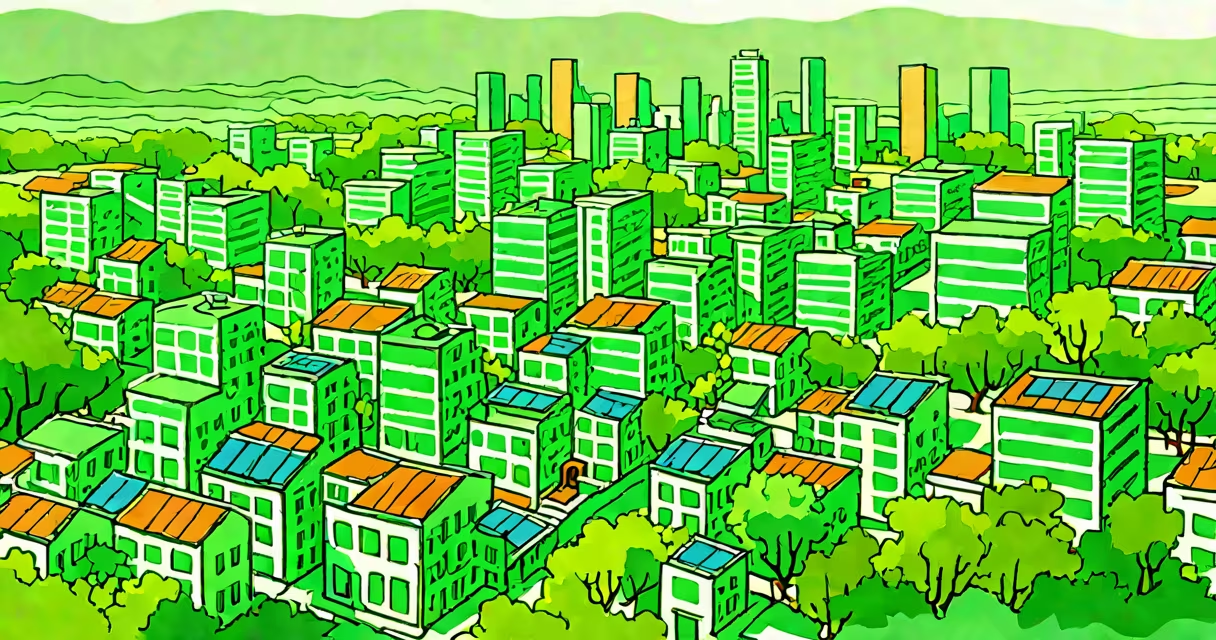
Sustainable development is the practice of meeting current human needs without depleting resources or harming ecosystems, ensuring future generations can also thrive. It integrates environmental protection, economic progress, and social well-being into long-term planning.
This concept emerged prominently after the 1987 Brundtland Report, which defined it as "development that meets the needs of the present without compromising the ability of future generations to meet their own needs." That definition remains foundational across global policy frameworks.
At its core, sustainable development rejects short-term gains that damage long-term stability. For example, cutting down forests for immediate profit may boost local income but reduces carbon sequestration, disrupts wildlife, and increases flood risk-costs borne later by communities and governments.
Sustainable development operates through systems thinking: decisions consider impacts across time and sectors. A city planning a new transit system doesn't just evaluate cost or speed. It assesses energy use, emissions, land disruption, access for low-income residents, and maintenance needs over 30 years.
For instance, Copenhagen's expansion of bike lanes and electric buses reduced car dependency by 25% between 2010 and 2020. This cut CO₂ emissions by 18%, improved public health, and lowered transportation costs-all while maintaining economic activity in the city center.
These outcomes result from coordinated policies across transport, urban design, energy, and social services. No single action achieves sustainability alone. Success depends on alignment across government levels, private investment, and community engagement.
Sustainable development rests on three interconnected pillars: environmental stewardship, economic viability, and social inclusion. These are not competing goals-they are interdependent.
| Pillar | Focus Area | Real-World Example |
|---|---|---|
| Environmental | Resource conservation, pollution reduction | Costa Rica generates 99% of its electricity from renewables (hydro, wind, geothermal). |
| Economic | Long-term job creation, fair trade | German companies investing in renewable energy created 380,000 jobs by 2022. |
| Social | Equitable access, education, healthcare | Finland's free universal education system contributes to one of the highest literacy rates globally. |
Many organizations mislabel projects as "sustainable" based solely on environmental metrics. But true sustainability requires all three pillars. A factory using solar power may reduce emissions-but if workers earn below living wages or live in unsafe housing, the project fails the social test.
A common error is assuming sustainability means slowing down growth. On the contrary, it enables smarter, resilient growth. The World Bank notes that countries with strong environmental regulations often see higher innovation and productivity over time.
Some believe sustainable development is only about climate change or recycling. While those are parts of it, the scope is much broader. It includes food security, gender equality, clean water access, and responsible consumption patterns.
Another misconception is that sustainability applies only to large corporations or national governments. Individuals and small businesses play critical roles. For example, a family switching to reusable containers cuts plastic waste. A local café sourcing beans from certified fair-trade farms supports ethical supply chains.
There's also confusion between "sustainable" and "eco-friendly." Eco-friendly suggests minimal harm. Sustainable implies positive contribution over time. A product made from recycled materials may be eco-friendly-but if its production displaces indigenous communities or uses toxic dyes, it isn't sustainable.
One non-obvious point: sustainability isn't static. What's sustainable today may not be tomorrow due to shifting conditions. Climate change alters what's viable in agriculture. Sea level rise makes coastal cities less suitable for dense housing. Adaptability is built into the structure.
Consider a rural village in Kenya needing clean drinking water. A traditional solution might be drilling a borehole. But without maintenance plans, training, or funding, the pump fails within two years-leaving people worse off.
A sustainable approach involves:
By 2023, villages using this model reported 94% pump uptime over five years, compared to 61% in standard projects. Health clinics saw a 30% drop in waterborne disease cases. Children missed fewer school days due to illness.
This outcome wasn't accidental. It emerged from integrating technical, financial, educational, and governance elements from the start.
I once helped design a school garden program in a low-income neighborhood. We planted vegetables, taught students composting, and linked the project to nutrition lessons. After one year, student attendance rose by 17%. Teachers reported improved focus during science classes.
But the real impact came when students began advocating for waste separation at home. Parents started asking about organic farming. The garden became a hub for community learning-not just about food, but about responsibility, cooperation, and long-term thinking.
This mirrors the UN's Sustainable Development Goals (SDGs), which include 17 targets like ending poverty, ensuring quality education, and taking climate action. The SDGs are not isolated objectives-they're interconnected. Improving education boosts health outcomes. Protecting forests supports climate goals. Addressing inequality strengthens economic resilience.
Understanding the simple meaning of sustainable development means recognizing that progress isn't measured by GDP alone. It's measured by whether people, places, and systems endure and improve over time.