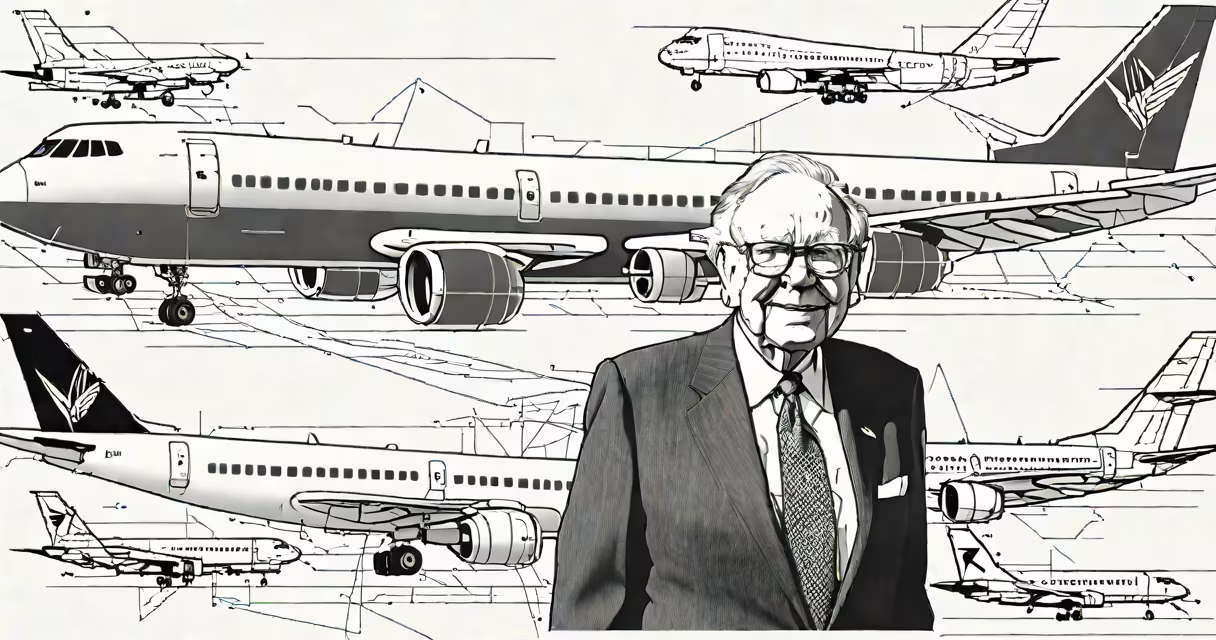
Warren Buffett does not own shares in major commercial airlines. His company, Berkshire Hathaway, holds indirect exposure through subsidiaries such as NetJets and regional air carriers, not through direct equity in publicly traded airlines like Delta or American Airlines.
Berkshire Hathaway's involvement in aviation stems from its acquisition of NetJets in 2016. NetJets operates a fractional ownership program for private jets, serving high-net-worth individuals and corporations. This business model generates revenue from aircraft management, maintenance, and charter services rather than passenger flights. Berkshire also owns regional airlines under its subsidiary, including Air Wisconsin and Pinnacle Airlines, which operate under contract for larger carriers.
Buffett's stance on commercial airlines reflects long-standing skepticism toward the industry's economics. He has cited low profit margins, high fixed costs, and intense competition as structural weaknesses. In a 2008 interview with CNBC, Buffett stated, "The airline business is one of the most difficult industries to run profitably." This view aligns with Berkshire's capital allocation strategy-avoiding sectors with poor returns on invested capital.
Berkshire Hathaway does not hold shares in public airline companies. Instead, its aviation footprint comes from operating businesses within the broader aerospace and transportation sector. NetJets, acquired for $5.4 billion, manages a fleet of over 700 private jets. These assets generate recurring revenue through hourly usage fees, maintenance contracts, and fuel surcharges. The business model favors predictable cash flows over volatile passenger traffic.
Regional airlines operated by Berkshire subsidiaries provide essential feeder services for major carriers. For example, Air Wisconsin flies under the United Express brand, using Embraer E-Jet aircraft. These operations are governed by code-share agreements and revenue-sharing models. Berkshire earns income based on flight volume and passenger load factors, not through ownership of the parent airline.
Unlike direct stock purchases, Berkshire's aviation investments are embedded in operational businesses. This structure allows Buffett to benefit from aviation demand cycles without bearing the risks associated with public airline equities-such as fuel price swings, labor disputes, or regulatory changes.
| Type | Business Unit | Revenue Model | Public Market Exposure? |
|---|---|---|---|
| Private aviation | NetJets | Fractional ownership, hourly fees, maintenance | No |
| Regional passenger service | Air Wisconsin, Pinnacle Airlines | Contract flying, capacity purchase agreements | No |
| Aviation maintenance | Various subsidiaries | Repair and overhaul services | No |
NetJets stands out as the most significant aviation asset. In 2022, it reported $1.3 billion in revenue and maintained a 95% utilization rate for its fleet. The business thrives during economic expansions when demand for private travel rises. During downturns, it benefits from stable pricing and reduced competition compared to commercial routes.
A non-obvious fact: Berkshire Hathaway does not report net jet ownership or flight hours in its annual 10-K filings. The company treats NetJets as a standalone entity under its "Other Businesses" segment, separate from insurance, rail, or energy holdings. This classification obscures the scale of its aviation presence for investors unfamiliar with subsidiary reporting.
Confusion arises because Buffett's name is linked to high-profile investments. He owns shares in American Express, Apple, and Coca-Cola-companies often mentioned alongside airline stocks in financial media. However, he has never purchased common stock in Delta, Southwest, or United Airlines.
When asked about airline stocks in 2021, Buffett told CNBC, "I don't think we'll ever buy a commercial airline." He reiterated that the industry lacks durable competitive advantages. Public airlines face constant pressure from fuel volatility, labor costs, and regulatory scrutiny-factors that erode long-term profitability.
Some investors assume Berkshire's size implies broad market exposure. But Buffett's strategy prioritizes businesses with predictable earnings, strong balance sheets, and moats. Airlines fail on all three criteria. In 2020, the U.S. airline industry lost $120 billion collectively-nearly double the previous decade's losses. Berkshire avoided those losses entirely by not holding airline equities.
In 2023, NetJets generated $1.4 billion in revenue from 720 private jets. Its average utilization rate was 96%, and customer retention stood at 93%. These metrics reflect a stable, high-margin business model.
By contrast, Delta Air Lines reported $54 billion in revenue in 2023 but posted a net loss of $1.2 billion. Fuel costs rose 35% year-over-year, and pilot shortages disrupted schedules. Delta's return on equity was negative-meaning shareholders lost money despite high revenues.
This comparison highlights Buffett's preference for operational control over passive equity ownership. NetJets operates with consistent pricing, low customer churn, and recurring service contracts. Delta depends on yield management, seasonal demand, and external regulation-all variables beyond management control.
Warren Buffett airlines is not a real investment category. Buffett avoids commercial airlines due to their weak economics. His aviation interests lie in controlled, profitable operations-not public equities. Investors seeking exposure to air travel should examine private aviation, logistics, or aerospace manufacturing-sectors where Buffett's principles apply.