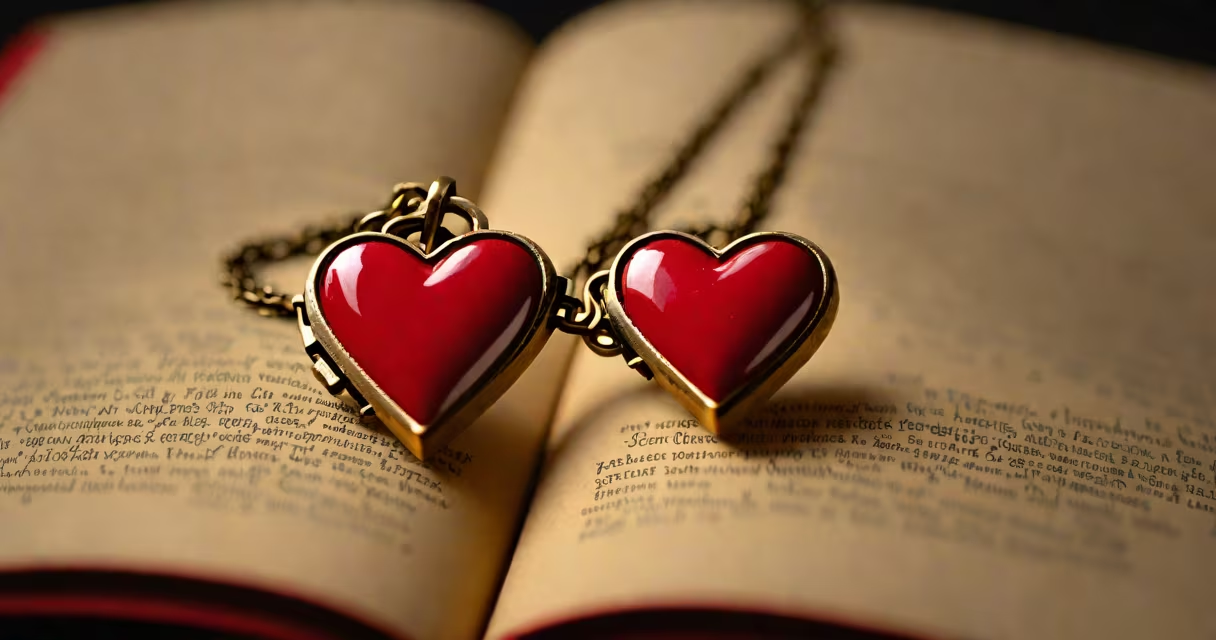
The heart is the most widely recognized symbol for love, representing deep affection, emotional connection, and romantic desire. It appears across cultures and eras, from ancient Mesopotamian art to modern digital messaging.
While the heart dominates visual representations of love, other symbols carry layered meanings. These include flowers like roses, gemstones such as diamonds, and abstract forms like the infinity sign. Each reflects different aspects of love-passion, commitment, eternity, or devotion.
Many symbols originated in specific traditions. For example, the red rose emerged from Greek mythology, where Aphrodite, goddess of love, was said to have been born from sea foam. Today, it remains a staple in proposals and Valentine's Day celebrations. The infinity symbol, often seen in jewelry, represents endless love and timelessness-ideal for long-term commitments.
Some symbols for love are universal; others are culturally specific. The heart, though now associated with romance, was originally linked to the human organ and later adopted in Christian iconography to represent divine love. By the 15th century, it had shifted into secular romantic symbolism through European courtly love traditions.
Roses, especially red ones, are deeply embedded in Western romantic expression. According to the Royal Horticultural Society, red roses were cultivated in China over 2,000 years ago and later introduced to Europe via trade routes. Their color signifies passion, while their thorns suggest the pain that can accompany intense emotion.
Another useful symbol is the ring. A wedding band encircling the finger denotes unity and eternal bond. The circular form has no beginning or end-a concept echoed in the infinity symbol (∞), which gained popularity in the 17th century as a mathematical representation of boundlessness. It now appears in engagement rings and couples' tattoos.
| Symbol | Meaning | Cultural Origin | Modern Use |
|---|---|---|---|
| Red Heart | Passion, emotional connection | Medieval Europe, evolving from anatomical depictions | Text messages, social media, gifts |
| Rose (red) | Deep romantic love, sacrifice | Greek mythology, Persian gardens | Valentine's Day bouquets, anniversary gifts |
| Infinity Sign (∞) | Eternity, unbroken bond | Mathematics, 17th-century notation | Jewelry, tattoos, wedding bands |
| Two interlocking circles | Unity, partnership | Indigenous and Celtic traditions | Engagement rings, friendship bracelets |
Not all symbols for love are physical. Touch, eye contact, and shared silence can serve as emotional symbols. A study published in *Journal of Personality and Social Psychology* found that nonverbal cues account for over 70% of emotional communication in intimate relationships. Holding hands, lingering glances, or a gentle touch on the shoulder often convey more than words.
Some symbols are context-dependent. A single red rose may signal romance in one setting, but in a funeral context, it can imply mourning. Similarly, the heart emoji (❤️) is used globally-but its meaning varies. In Japan, it's often associated with gratitude or admiration, not necessarily romance. A 2021 survey by the Pew Research Center showed that 68% of U.S. adults use emojis daily, with ❤️ being the most frequently sent symbol.
One lesser-known fact: the heart shape as we know it did not exist in nature. It's a stylized design that evolved from medieval illustrations of the human heart. Early depictions in 13th-century manuscripts showed a heart with a pointed bottom and rounded top-resembling a leaf. Over centuries, the shape became standardized, eventually losing its anatomical accuracy.
In digital communication, symbols for love are more prevalent than ever. Texting, social media, and video calls rely heavily on visual shorthand. The heart emoji is sent over 1 billion times daily on platforms like Instagram and Snapchat. A 2023 report from DataReportal noted that 82% of global internet users aged 18-34 send at least one emoji per day, with ❤️ leading in frequency.
Gift-giving rituals also depend on symbolic objects. A watch given on a birthday may represent "time spent together." A book with a personal inscription becomes a symbol of shared values. These objects aren't just gifts-they're tokens of emotional investment.
I once watched a couple exchange handwritten notes during a quiet dinner. One read: "I love you more than words can hold." The other replied: "Then let your actions speak." They didn't use a single symbol-yet the act itself was symbolic. That moment reminded me that love symbols don't require objects. They live in intention.
People often assume that symbols for love are universally understood. But interpretations vary widely. In some African cultures, the color green symbolizes fertility and enduring love. In parts of South Asia, the lotus flower represents spiritual love and purity. To equate the red rose with love across all regions overlooks cultural nuance.
Another mistake is treating symbols as substitutes for communication. A gift or gesture without verbal context can be misinterpreted. Sending a bouquet without a note may be seen as thoughtful-or as an attempt to avoid conversation. The National Institute of Mental Health warns that relying solely on symbols can lead to emotional disconnect, especially in long-distance relationships.
Also, not all symbols are positive. The skull, often seen in gothic fashion, can represent death-but in some contexts, it symbolizes rebirth and transformation. Love that endures through loss may use such imagery to express resilience. This shows that symbols are not fixed; they evolve with personal and cultural meaning.
To use symbols effectively, consider context and relationship stage. A simple heart on a card works well for a new crush. A custom piece of jewelry with both partners' initials suits a long-term commitment. A shared playlist titled "Our Love Story" functions as a digital symbol-accessible, personal, and emotionally resonant.
For deeper connection, combine symbols with action. Giving a rose isn't enough. Presenting it with a spoken vow or a shared memory strengthens the gesture. As psychologist Dr. John Gottman notes in his research on marital stability, "Love is not just shown-it is sustained through consistent, meaningful acts."
When choosing symbols for love, think beyond tradition. A photo album, a recipe passed down, or a recurring ritual (like Sunday morning coffee) can become useful symbols over time. They reflect shared history and ongoing care.