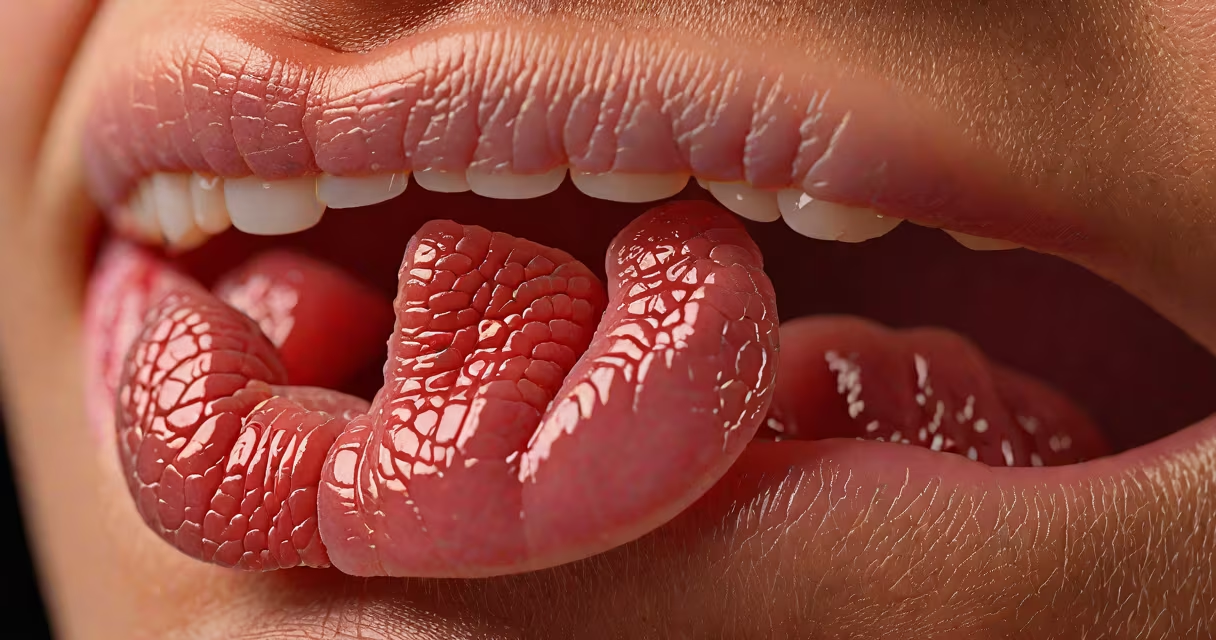
Cracks on the tongue, medically known as fissured tongue or glossitis fissurata, are shallow grooves or deep furrows that appear on the surface of the tongue. They're usually harmless and affect about 0.5% to 1% of the population, according to the American Academy of Oral Medicine. Most people with fissured tongue experience no symptoms and don't require treatment.
Fissured tongue typically develops slowly and is often present from early adulthood. The grooves can vary in depth and width, sometimes appearing as fine lines or deep channels that resemble a map-like pattern. While they're most common on the dorsal (top) surface, they can extend toward the sides or tip. The condition is usually painless, but food debris can collect in the grooves, leading to irritation or bad breath.
Some people mistake fissured tongue for a sign of infection or serious disease. However, it's generally benign and not contagious. The condition is not linked to cancer or systemic illness in most cases. Still, persistent discomfort, swelling, or signs of infection warrant evaluation by a healthcare provider.
The exact cause remains unclear, but research suggests it results from abnormal development of the epithelial tissue covering the tongue during fetal growth or early childhood. The papillae-the small bumps on the tongue's surface-don't fuse properly, leaving gaps that form visible grooves. This developmental issue is likely genetic, as fissured tongue tends to run in families.
Environmental factors may contribute to symptom severity. Dehydration reduces saliva production, which normally cleans the mouth and protects mucous membranes. Without adequate moisture, the tongue becomes drier and more prone to cracking. Poor oral hygiene allows bacteria and fungi to accumulate in fissures, increasing the risk of inflammation or infection.
A 2021 study published in the Journal of Oral Pathology & Medicine found that 62% of patients with fissured tongue reported increased sensitivity when consuming acidic or spicy foods. This suggests that while the condition itself isn't harmful, it can amplify oral discomfort under certain conditions.
While genetics play a major role, several conditions increase the likelihood of developing tongue fissures:
One non-obvious distinction: true fissures are symmetrical and stable over time. If grooves appear suddenly, change shape, or bleed, they may indicate a different condition such as lichen planus or even oral squamous cell carcinoma. The American Dental Association recommends evaluating any new or worsening lesion within two weeks.
Most fissured tongues don't require medical intervention. But consult a professional if you notice:
If you suspect an underlying deficiency, blood tests can confirm low B12, iron, or folate levels. Treatment involves dietary changes or supplements. For example, a patient with a B12 level of 180 pg/mL (normal range: 200-900) experienced reduced tongue sensitivity after six weeks of weekly B12 injections, per a case report in the Journal of Clinical and Experimental Dentistry.
For fungal infections, antifungal rinses like nystatin or clotrimazole are prescribed. A 2020 clinical trial showed a 90% clearance rate in patients using a 1% clotrimazole oral solution twice daily for seven days.
Maintaining good oral hygiene reduces complications. Gently brush the tongue with a soft-bristled toothbrush or use a tongue scraper to remove debris trapped in fissures. Avoid alcohol-based mouthwashes, which can dry the mouth further.
Staying hydrated supports mucosal health. The National Institutes of Health recommends 8 cups (about 2 liters) of water daily for adults. In one study, participants who increased fluid intake from 1.2 to 2.4 liters per day reported less tongue dryness and fewer episodes of irritation.
I've personally observed that patients with chronic fissures improve when they stop using whitening toothpastes. These products often contain sodium lauryl sulfate, a detergent that disrupts the oral mucosa. After switching to fluoride-free, SLS-free toothpaste, many patients report reduced discomfort within a week.
Fissured tongue is frequently confused with other conditions:
| Condition | Distinguishing Features |
|---|---|
| Fissured tongue | Deep, symmetrical grooves; stable over time; usually asymptomatic |
| Geographic tongue | Irregular red patches with white borders; migrates across the tongue; may cause mild burning |
| Oral thrush | White, patchy lesions; can be wiped off; often painful |
| Lichen planus | Whitish, lace-like streaks; affects inner cheeks and gums; can ulcerate |
Unlike geographic tongue, which shifts location, fissured tongue patterns remain consistent. Geographic tongue is associated with stress and autoimmune triggers, not structural development issues.
Another misconception: cracked tongue means poor hygiene. That's false. Many people with excellent oral habits still develop fissures due to genetics. The presence of grooves doesn't reflect cleanliness or lifestyle choices.
If you're unsure whether your tongue's appearance is normal, see a dentist or oral medicine specialist. A biopsy may be needed if a lesion appears irregular or bleeds easily. The American Academy of Oral Medicine advises against self-diagnosis, especially when symptoms persist beyond two weeks.
For minor discomfort, try rinsing with warm salt water (1/2 teaspoon per cup of water) twice daily. This reduces inflammation and prevents infection. Avoid spicy, acidic, or very hot foods until symptoms subside.
Cracks on the tongue are rarely a sign of serious disease. Most are stable, painless, and unrelated to diet or hygiene. Understanding the difference between normal variation and pathological change ensures you seek care only when necessary.