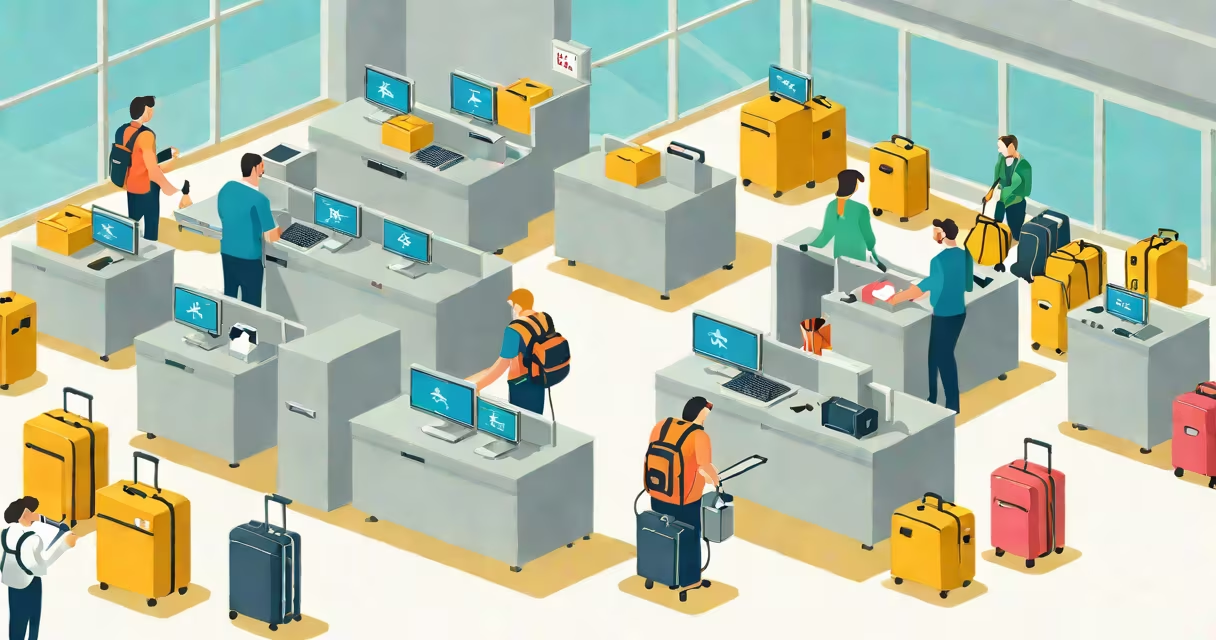
What can you take through airport security? Most personal items, including clothing, toiletries in containers under 3.4 ounces (100 ml), electronics, and prescription medications, are allowed in carry-on bags. Prohibited items include firearms, large knives, flammable liquids, and certain tools.
The Transportation Security Administration (TSA) sets federal rules for what travelers may bring through airport screening. These rules apply to domestic flights within the U.S. and international departures from U.S. airports. Items must pass through X-ray machines and may be subject to physical inspection. The goal is to prevent threats while minimizing delays.
Travelers often misunderstand which items require special handling. For example, liquids must fit in a single quart-sized clear bag, and each container must be under 3.4 ounces. This rule applies to shampoo, toothpaste, lotion, and even baby formula. Liquids in larger containers must be checked.
Security checkpoints use a layered process. First, passengers remove shoes, jackets, and laptops from their bags. Then, all carry-ons go on a conveyor belt through an X-ray machine. Officers review images for anomalies such as dense materials or unusual shapes.
If a bag triggers an alarm or appears suspicious, a secondary screening occurs. This may involve a pat-down or a manual search. The TSA reports that about 1 in 600 passengers undergo additional screening, though numbers vary by airport and time of year.
For example, during a 2023 audit, the TSA found that 92% of carry-ons passed initial scan without incident. The remaining 8% required follow-up, most due to electronics or liquid violations. These checks help maintain consistent standards across 450+ U.S. airports.
Items allowed in carry-ons include:
Prohibited items include:
| Item Type | Why It's Restricted | TSA Reference |
|---|---|---|
| Fully loaded firearms | Can be discharged accidentally; pose immediate threat | TSA Firearms Policy |
| Large knives (over 4 inches) | Can be used as weapons; difficult to detect in X-rays | TSA Prohibited Items List |
| Flammable liquids (e.g., gasoline, lighter fluid) | High risk of fire or explosion | TSA Hazardous Materials Rules |
Some items are allowed but must be declared. Examples include:
A common mistake is assuming that all food is allowed. While solid foods like sandwiches or fruit are permitted, liquids such as soup or sauce must comply with the 3.4-ounce rule. A traveler once had a thermos of chicken broth confiscated because it exceeded 100 ml, despite being sealed.
Liquids are among the most frequently challenged categories. The "3-1-1" rule states: one quart-sized clear bag, one item per bag, each container under 3.4 ounces. This includes gels, creams, and pastes. Toothpaste counts as a gel.
Electronics over 16 inches long (like large tablets or gaming consoles) must be removed from bags and placed in bins separately. Laptops must be taken out of cases and screened individually. In 2022, the TSA reported that 15% of electronic-related delays occurred because devices were left in sleeves or pockets.
Prescription medications are allowed in carry-ons, even if they exceed 3.4 ounces. Passengers should carry prescriptions or doctor notes. A traveler flying from Chicago to Miami had a 20-day supply of insulin seized until they produced a letter from their physician. The TSA allows medications in original packaging, but it's wise to carry a copy of the prescription.
Non-prescription items like cough syrup or antiseptic wipes are subject to the 3.4-ounce limit. Travelers sometimes forget that hand sanitizer must be under 3.4 ounces unless it's for medical reasons. A 2023 study by the FAA found that 43% of passengers who brought hand sanitizer over 3.4 ounces were asked to discard it.
Many believe that all liquids are banned. That's false. The rule targets volume, not substance. Water, juice, and perfume are allowed if under 3.4 ounces. A traveler once brought a 2-ounce bottle of rosewater in a carry-on and was cleared without issue.
Another myth is that TSA agents can confiscate anything they want. This is incorrect. Agents follow strict guidelines. If an item is prohibited, it must be returned to the passenger upon request, unless it poses a safety risk. The TSA's official policy states that confiscated items are held for 30 days before disposal.
Some assume that checked bags are safer from scrutiny. Not true. Checked luggage undergoes explosive detection screening using trace detection and X-ray systems. The TSA uses advanced imaging technology to scan bags for explosives. In 2023, 1 in 1,200 checked bags triggered a secondary inspection due to suspicious material.
I once witnessed a passenger attempt to carry a small electric scooter through security. The device had a lithium battery rated at 120 watt-hours. The agent stopped it, explained that such batteries must be carried in the cabin, and offered to help re-pack the item. The passenger avoided a delay by complying.
Always consult the TSA's official website before traveling. The site offers a searchable database of items, including rare or niche products. For example, a traveler planning to bring a vape pen with a removable battery must ensure the battery is carried in the cabin and not in checked luggage.
For complex situations-such as carrying medical equipment, large quantities of medication, or unusual items-contact the airline or TSA directly. The TSA's hotline (1-866-289-9673) provides real-time guidance. The agency also maintains a mobile app with updated screening rules.
Knowing the rules ensures faster passage and fewer surprises. Always double-check your bag before reaching the checkpoint. The difference between a smooth trip and a delay often comes down to one overlooked item.