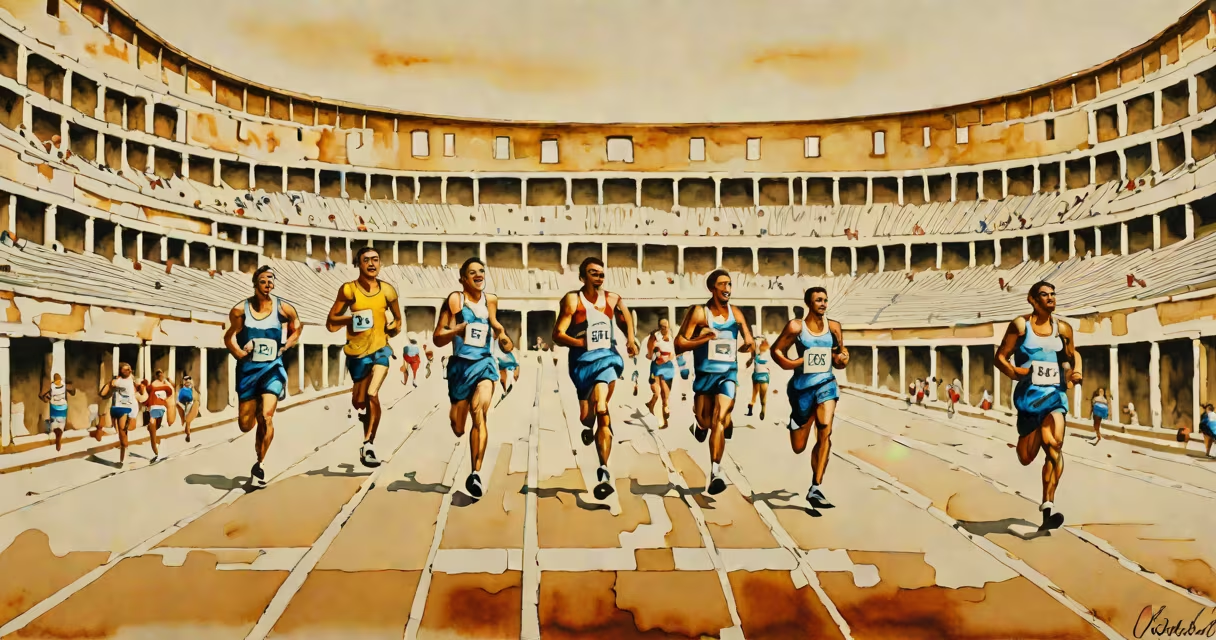
Paul uses the image of a race to describe the Christian life in 1 Corinthians 9:24-27, urging believers to pursue their faith with focus, self-control, and relentless effort. He compares spiritual growth to training for a prize, warning that only those who discipline themselves will succeed.
Paul's reference to athletes competing in ancient Greek games was not metaphorical fluff-it reflected a lived reality. The Isthmian Games, held near Corinth, drew thousands. Athletes trained for years under strict diets and routines. Paul knew this context well. He wasn't suggesting Christians should run marathons-he was using a familiar cultural frame to make a deeper point: spiritual victory demands sacrifice.
The passage begins with a rhetorical question: "Do you not know that in a race all the runners run, but only one gets the prize?" The Greek word for "prize" is stephanos, a wreath of olive leaves awarded to victors. It was not gold or silver-it was honor. Paul's point: the ultimate reward is not material wealth but divine approval. The prize is eternal life, not earthly fame.
Paul shifts from observation to personal application. He says, "I do not run like someone running aimlessly. I do not fight like a boxer beating the air." This is not a call to frantic activity. It's a declaration of intentionality. The Greek verb skotodromō (to run blindly) appears nowhere else in the New Proof. Paul rejects random effort. He calls for purposeful movement toward a goal.
He then describes his own training: "I beat my body and bring it into subjection." The word kōdō means to strike or discipline. Not punishment, but control. Paul doesn't mean physical abuse. He's speaking of self-restraint-limiting desires, avoiding distractions, resisting temptation. This is not legalism. It's stewardship of the self as a temple of the Holy Spirit (1 Corinthians 6:19).
A common misunderstanding is that Paul is talking about earning salvation through effort. That's incorrect. The Bible teaches salvation is by grace through faith (Ephesians 2:8-9). But Paul's point is clear: once saved, believers must live with discipline. Like an athlete who trains daily, Christians must practice self-control to remain faithful.
Paul's model isn't about one-time effort. It's about sustained habits. The following table outlines key parallels between ancient athletic training and Christian discipleship:
| Training Aspect | Ancient Athletic Practice | Christian Equivalent |
|---|---|---|
| Duration | Years of preparation | Lifetime commitment to growth |
| Diet | Strict food regimens | Fasting, moderation in pleasures |
| Discipline | Regimented schedules | Regular prayer, Scripture reading |
| Focus | Zero distraction during competition | Single-minded pursuit of God's will |
For example, Paul's "beating" of the body isn't literal. In Acts 20:31, he says he "denied himself sleep" while preaching. He fasted (Acts 13:3), avoided wine (1 Corinthians 10:31), and endured persecution. These weren't signs of weakness-they were tools of endurance.
Many interpret 1 Corinthians 9:24-27 as a call to perfectionism. They assume failure means losing salvation. That's not what Paul says. He's not threatening loss of eternal life. He's warning against losing the prize-meaning failure to receive the reward of eternal life due to unfaithfulness.
Paul makes this distinction in Philippians 3:14: "I press on toward the goal for the prize of the upward call of God in Christ Jesus." The prize is not earned by performance, but it is received by those who persevere. The difference is critical. A runner who trains hard but falls short still earns respect-but only the winner receives the crown.
Another error is treating the passage as a blueprint for church leadership. Some pastors quote it to justify burnout. But Paul didn't say "preach until you collapse." He said "train with discipline." His model is sustainable. He speaks of self-control, not exhaustion.
Consider a young believer named Sarah. She attends church weekly, prays daily, and volunteers at a food pantry. But she struggles with social media addiction. Her phone distracts her from Scripture and prayer. She feels guilty but keeps returning to it.
Applying 1 Corinthians 9:24-27, Sarah doesn't need to quit everything overnight. She can begin by setting boundaries-no phone during devotions, no scrolling before bed. She disciplines her habits, not to earn favor, but to grow in faith. Over time, the distractions fade. Her attention sharpens. She finds joy in quiet moments with God.
This is what Paul meant: not perfection, but progress. Not self-punishment, but self-mastery. The goal isn't to be flawless-it's to stay in the race.
When Paul says "I beat my body," he's not describing violence. He's describing stewardship. He saw the body as a vessel-not for pleasure, but for service. He wrote in Romans 12:1: "Present your bodies as a living sacrifice." The same idea appears here: the body belongs to God, and we must train it to serve.
Paul's own life reflects this. He endured shipwrecks (2 Corinthians 11:25), beatings (2 Corinthians 11:23), and imprisonment (Philippians 1:7). Yet he kept going. He didn't stop because he had won. He kept going because he had not yet reached the goal.
Modern culture promotes instant results. Social media rewards quick wins. But Paul's message counters that. He says lasting achievement requires patience, routine, and sacrifice. The Christian life isn't a sprint-it's a marathon.
Scripture supports this. Hebrews 12:1-2 says, "Let us run with endurance the race that is set before us." The word "endurance" comes from hypomone, meaning "remaining under pressure." It's not about avoiding struggle-it's about persisting through it.
Paul's analogy remains useful because it's grounded in reality. He wasn't inventing a spiritual game. He was drawing from a system people understood: the Olympics. He used what was known to explain what was unseen.
Understanding 1 Corinthians 9:24-27 changes how we view our daily choices. Not every decision matters equally-but consistent discipline does. Choosing to pray instead of scroll. Saying no to gossip. Showing up when tired. These are not small acts. They are the building blocks of spiritual strength.