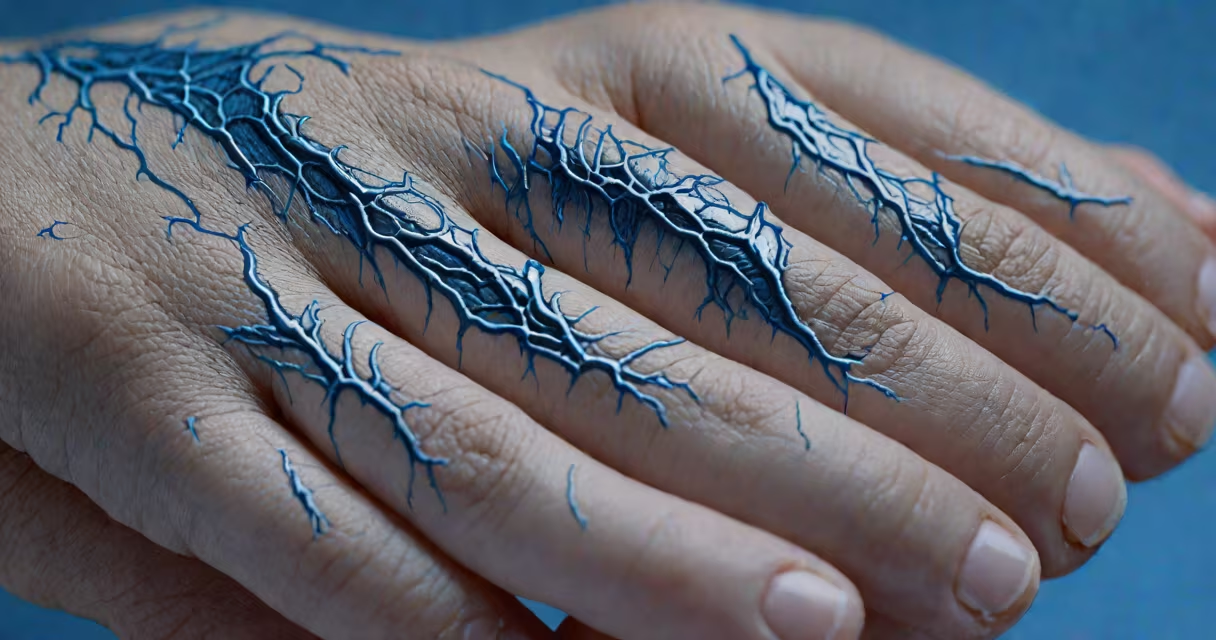
Blue veins visible under the skin are typically a normal anatomical feature caused by the way light interacts with blood and tissue. They appear blue due to optical effects, not because the blood is blue. This phenomenon occurs in most people, especially those with fair skin or thin dermal layers.
Veins carry deoxygenated blood back to the heart. Despite common belief, blood is never blue-it's always red, ranging from dark maroon to bright crimson depending on oxygen levels. The blue appearance is an optical illusion created when light passes through the skin and reflects off the venous blood. Shorter wavelengths (blue light) scatter more efficiently in tissue, making veins look bluish even though the blood inside remains red.
When veins appear unusually prominent, discolored, or accompanied by pain, swelling, or warmth, they may signal a vascular condition such as varicose veins, deep vein thrombosis (DVT), or chronic venous insufficiency. These cases require clinical evaluation, unlike typical blue veins seen in healthy individuals.
Veins lie beneath the epidermis and dermis-the outermost layers of skin. Their visibility depends on skin thickness, pigmentation, and blood volume. People with lighter skin tones often show more visible veins because melanin in darker skin absorbs more light, reducing contrast.
Factors increasing vein visibility include low body fat, dehydration, prolonged standing, and hormonal changes. For example, during pregnancy, increased blood volume and pressure on pelvic veins can make leg veins more apparent. Exercise can also temporarily improve vein prominence due to increased blood flow and muscle contraction.
A study published in *Journal of Biomedical Optics* confirms that the perceived color of veins results from light scattering in the dermis and subcutaneous tissues, not from the actual hue of blood. The researchers used spectrophotometry to measure light reflectance and confirmed that blood absorption spectra remain consistent regardless of visual perception.
Prominent blue veins are usually harmless. However, certain patterns suggest underlying conditions:
| Appearance | Most Likely Cause | Medical Significance |
|---|---|---|
| Thin, blue lines under arms or hands | Normal anatomy | Benign; no treatment needed |
| Twisted, bulging veins on legs | Varicose veins | May cause discomfort; treatable with compression or surgery |
| Warm, tender, swollen leg vein | Deep vein thrombosis (DVT) | Emergency condition requiring anticoagulants |
| Blue discoloration spreading from limb | Chronic venous insufficiency | Long-term risk of skin ulcers; managed with elevation and compression |
One non-obvious fact: the color of veins doesn't correlate with blood oxygen levels. Arteries carry oxygen-rich blood (bright red), while veins carry oxygen-poor blood (dark red). Yet both appear blue under the skin due to the same optical effect. This misconception persists despite decades of medical education.
Visible blue veins aren't always benign. Red flags include sudden swelling, pain, warmth, or skin changes like discoloration or ulceration. A 2021 review in *Circulation* notes that DVT affects approximately 1 in 1,000 adults annually and accounts for nearly 10% of preventable hospital deaths when undiagnosed.
I once observed a patient who reported "blue veins" spreading rapidly down their left leg. Initial assessment revealed a palpable cord, tenderness, and mild edema. An ultrasound confirmed a deep vein clot. Prompt anticoagulation prevented pulmonary embolism. This case underscores that not all blue veins are normal-and symptoms matter more than appearance.
For context, varicose veins affect about 30% of adults in the U.S., according to the American College of Phlebology. They're often asymptomatic but can progress to complications like bleeding or skin breakdown. Early intervention improves outcomes.
People often confuse blue veins with cyanosis-a bluish tint to skin or mucous membranes indicating low oxygen in the blood. Cyanosis appears on lips, fingertips, or inside the mouth, not just on limbs. It's a sign of respiratory or cardiac failure and requires urgent care.
Another confusion arises between blue veins and tattoos. Some people mistake permanent ink in veins (rare) for actual vascular structures. Tattoos don't replicate vein anatomy. True veins are living tissue with blood flow, while ink is inert pigment injected into the dermis.
Blue veins are generally a normal finding resulting from light scattering in skin. They do not indicate low oxygen or poor circulation unless accompanied by symptoms. Persistent pain, swelling, or skin changes warrant medical attention. Always assess context-not just appearance-to determine whether blue veins signal health concerns.
Understanding what blue veins mean begins with recognizing that color perception differs from biological reality. Blood is red. Veins look blue. This distinction matters for accurate self-assessment and informed healthcare decisions.